
DATE: 2026/06/04
Overcoming Warehouse Space Constraints: SEER Robotics’ Advanced Technologies Address Complex Overseas Industrial Conditions
In its global expansion, SEER Robotics remains firmly committed to pragmatic implementation. Facing the most challenging and complex logistics pain points in industrial environments, the company is dedicated to delivering high-value, deployable automation solutions that can truly solve real-world problems for global customers.
For North American and Australian markets, safety compliance and local labor protection requirements represent the primary threshold for introducing automation equipment. Non-compliant products not only expose enterprises to legal risks but also fail to integrate into local production environments. Therefore, for SEER Robotics, safety and compliance are not optional add-ons—they are a foundational requirement embedded in the system architecture.
Core products under SEER Robotics have obtained both UL and CE certifications. This indicates that the equipment fully complies with the most stringent industry standards across the Americas, Europe, and Australia, covering control systems, electrical safety, and mechanical safety. With internationally recognized compliance credentials, SEER Robotics removes market-entry barriers for overseas partners, ensuring every deployment can be executed with confidence.
01 | Core Challenges in High-Density Warehousing
Beyond compliance assurance, overseas advanced manufacturing and high-density warehousing scenarios present multiple layers of operational complexity.
Rising land costs are driving warehouse systems toward higher, denser, and more compact configurations. Narrower aisles, taller racking systems, and denser storage layouts are becoming standard requirements for global customers.
However, improved space utilization directly translates into stricter requirements for robotic mobility, operational precision, and control stability. To address these challenges, SEER Robotics delivers targeted and effective solutions for high-density warehousing environments.
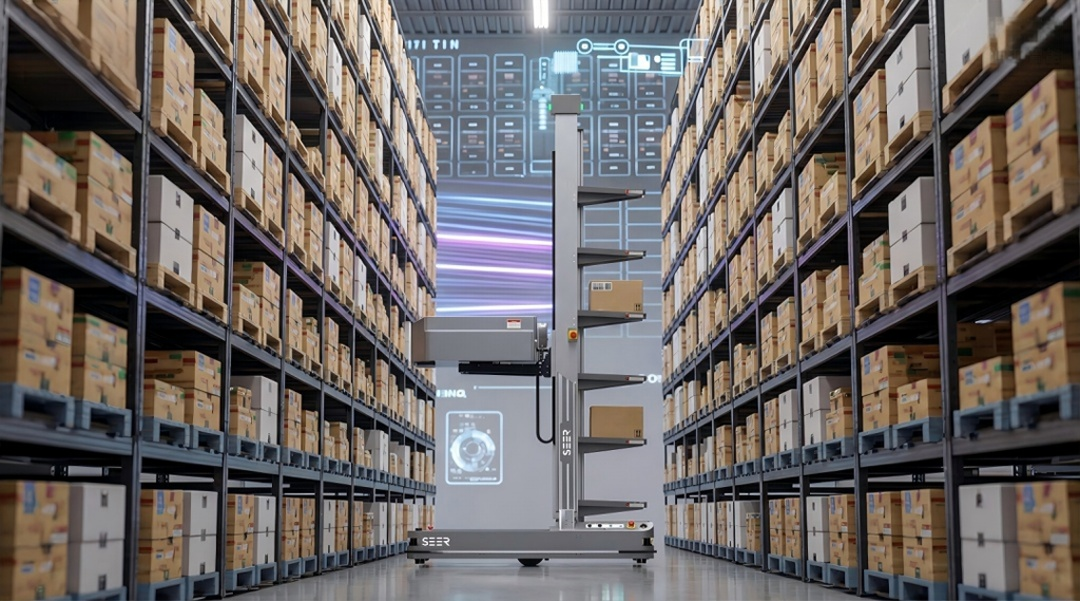
02 | Narrow Aisle Operation: Efficient Mobility in Constrained Spaces
To maximize storage capacity, enterprises increasingly reduce aisle widths and increase rack density, enabling warehouses to store more goods within limited floor space.
For robots, additional safety margins can ensure operational security but reduce overall space utilization. As aisles become narrower, available passage width decreases and tolerance for positioning errors becomes smaller. In multi-robot collaboration scenarios, insufficient positioning accuracy or suboptimal path planning can easily lead to collisions or traffic congestion, significantly impacting operational efficiency.
SEER Robotics leverages LiDAR-based SLAM navigation and multi-sensor fusion positioning to enable precise mobility in constrained environments.
At the path planning and traffic management level, the M4 intelligent robot management system utilizes multi-agent collaborative planning algorithms to support dynamic global coordination. It continuously detects moving obstacles in real time, automatically generates avoidance paths, and performs multi-robot path optimization and traffic control, effectively resolving congestion in mixed-fleet operations.
As a result, even in long narrow aisles, multi-intersection zones, and highly dynamic environments, robots can continuously perceive surroundings, optimize trajectories in real time, and achieve smooth navigation and autonomous obstacle avoidance while maintaining safe operational distances.
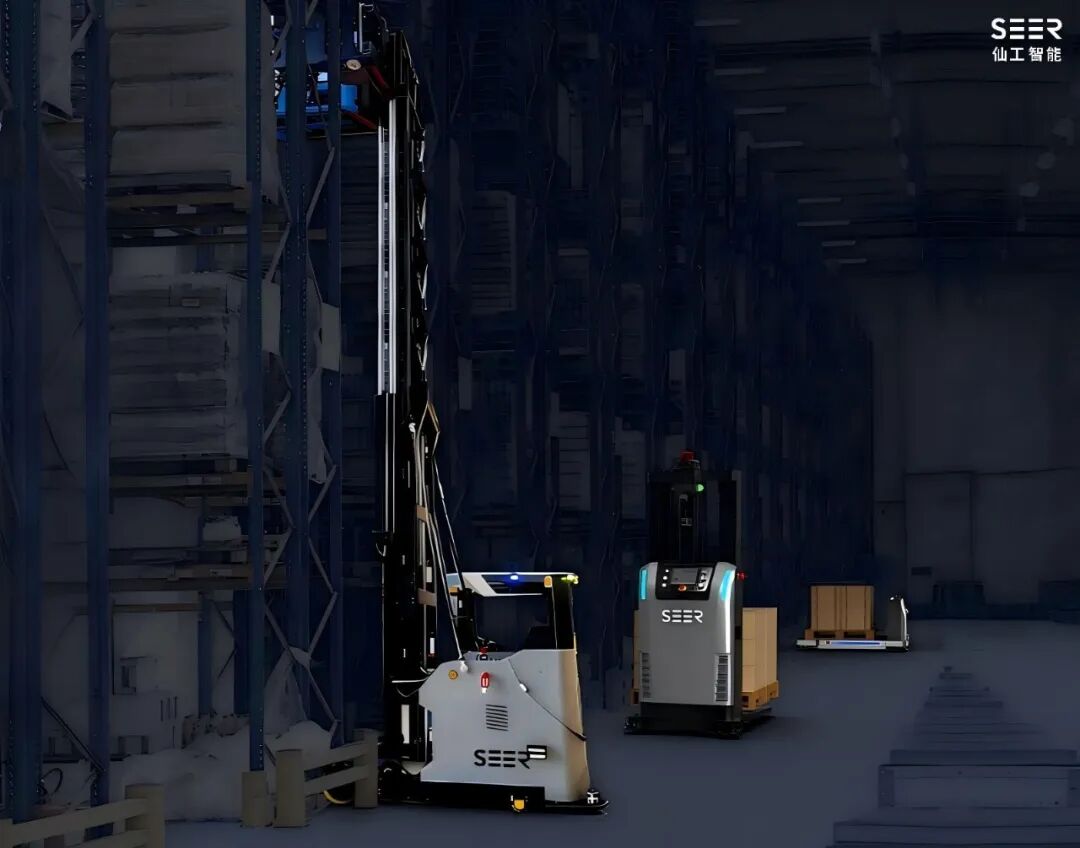
03 | High-Rack Operations: Stable Handling at Elevated Heights
In addition to narrower aisles, warehouse systems are increasingly expanding vertically. Higher rack configurations significantly increase storage capacity but impose stricter requirements on automation systems.
Unlike ground-level operations, even minor deviations in high-rack environments are amplified with height, making elevated operations far more demanding in terms of overall robotic performance.
Small deviations in load positioning, fork misalignment, or slight instability during lifting can result in failed operations, cargo damage, or safety risks.
Therefore, high-level operations require not only navigation capability, but full-system coordination across perception, control, positioning, and handling.
SEER Robotics integrates end-effector visual recognition, precision motion control, and error compensation algorithms to enable end-to-end accurate execution—from cargo identification and path planning to fork insertion and lifting operations.
Upon reaching the target position, the system performs real-time recognition of pallet and rack alignment and continuously conducts dynamic calibration during operation. This ensures stable fork engagement and precise load handling. Even in high-rack or heavy-load scenarios, the system maintains consistent and reliable performance.
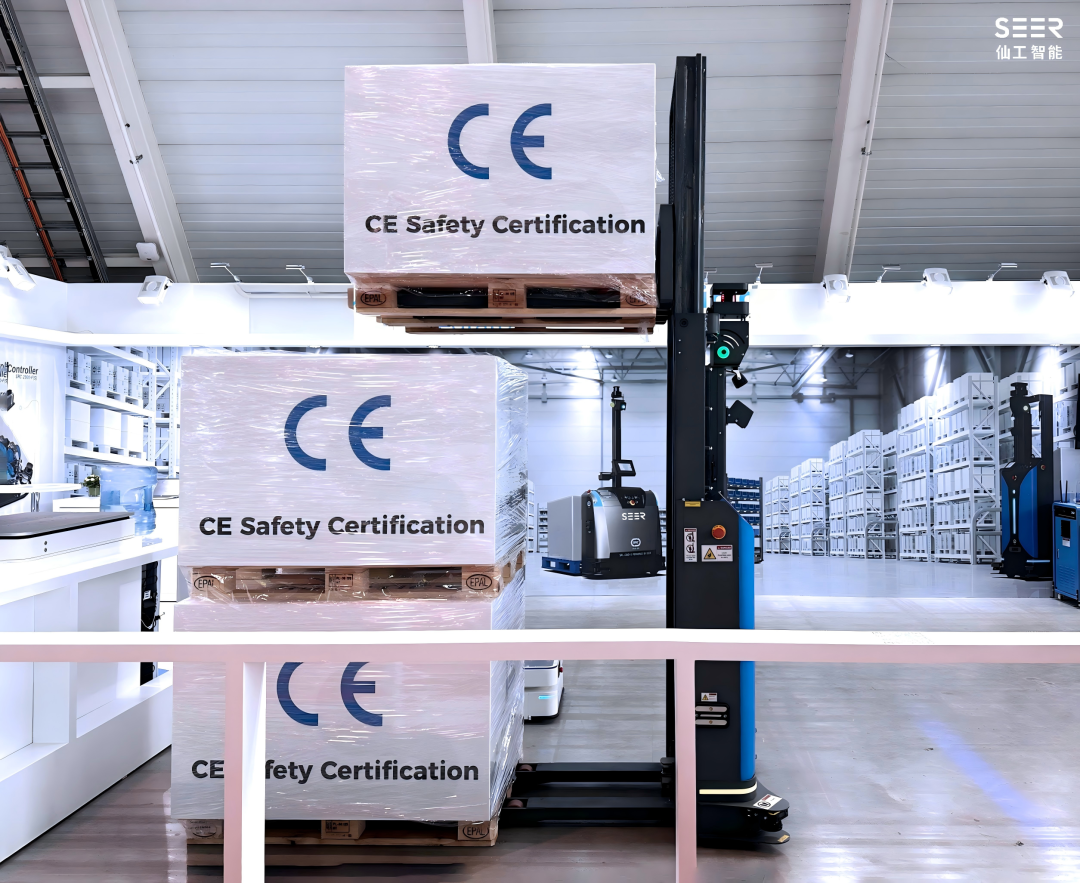
04 | Accurate Stacking: Precision Alignment for Multi-Layer Containers
In industrial environments, multi-layer container stacking is one of the most efficient methods for increasing storage density. However, over time, containers may experience slight deformation, positional deviation, or localized wear due to repeated circulation and handling.
For robots, these subtle inconsistencies can accumulate during continuous stacking operations. Once misalignment occurs, it can lead to stacking instability, inaccurate placement, or tilted configurations, ultimately affecting overall system reliability.
SEER Robotics utilizes 3D vision perception, real-time localization, and precision motion control to accurately detect container position, orientation, and spatial relationships. During stacking operations, the system continuously monitors target states and dynamically adjusts motion trajectories, ensuring precise alignment and stable stacking even when containers are imperfectly positioned.
Conclusion
From single-layer transportation to multi-layer stacking, what is being tested is not only robot performance, but also the ability to perceive fine-grained details and execute with precision and stability in real-world conditions.


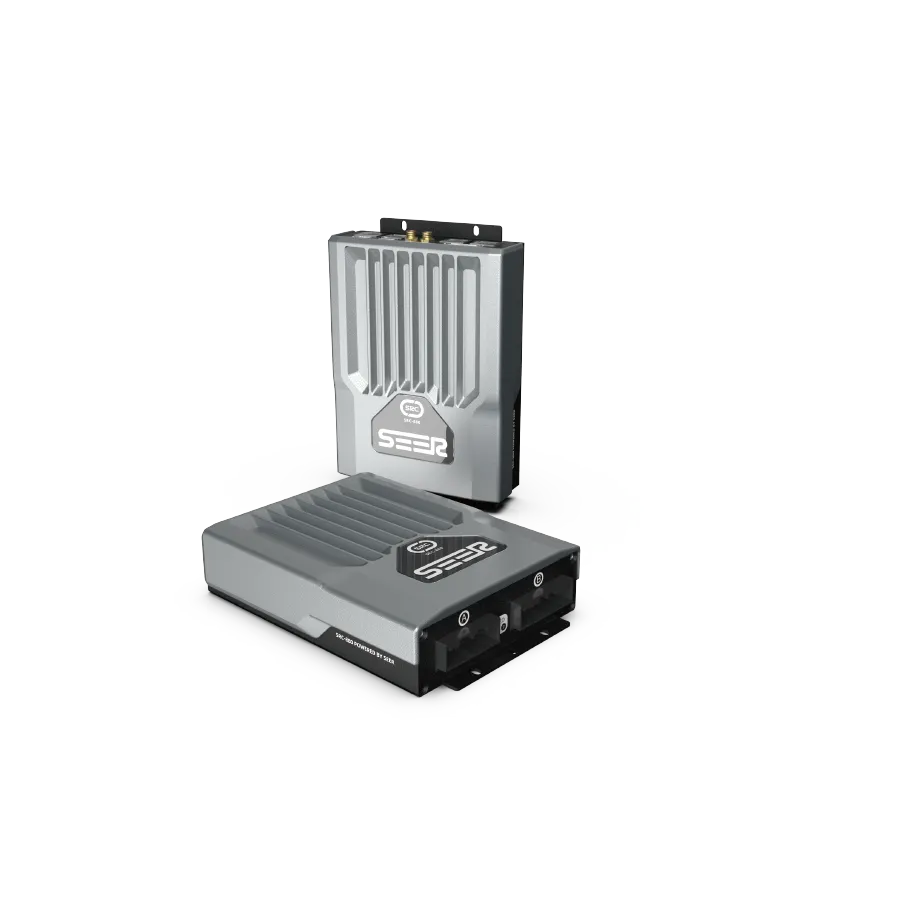
/1.png?x-oss-process=image/format,webp)
/1.png?x-oss-process=image/format,webp)
 Contact Us