
DATE: 2026/03/13
Breaking Free from Vendor Lock-In: How an Open Ecosystem Powered by VDA5050 Accelerates Smart Factory Evolution
In past discussions with customers, we are often asked a challenging question:
“If in the future we want to use not only your robots but also integrate robots from other brands, will the system still run smoothly?”
This is not merely a technical question—it reflects a deeper concern: the fear of being locked into a single vendor.
I. Eliminating Information Silos: Connecting the Entire Factory with VDA5050
For many manufacturing enterprises, the lifecycle of automation systems typically spans 10–15 years, while robots, software, and algorithms evolve much faster—often within 3–5 years.
If the system architecture is closed, a fundamental conflict arises: hardware continues to evolve, but the system cannot keep pace.
As a result, more companies are now raising a key requirement at the planning stage: the system must support the integration of multi-brand equipment.
Different robot brands excel in different scenarios. What enterprises truly need is the flexibility to choose and switch products according to business needs—rather than being bound to a single vendor.
Against this backdrop, the European manufacturing industry introduced the VDA5050 standard.
VDA5050 is a communication protocol jointly initiated by the German Association of the Automotive Industry (VDA) and the Mechanical Engineering Industry Association (VDMA), designed to enable coordinated scheduling among robots from different manufacturers.
Through this standard, robots from various vendors can operate under a unified scheduling system, enabling true multi-brand collaboration, centralized management, and continuous system scalability.
For manufacturers, VDA5050 is more than just a technical protocol—it represents an industry mechanism to avoid vendor lock-in, ensuring that intelligent logistics systems are no longer tied to a single brand.
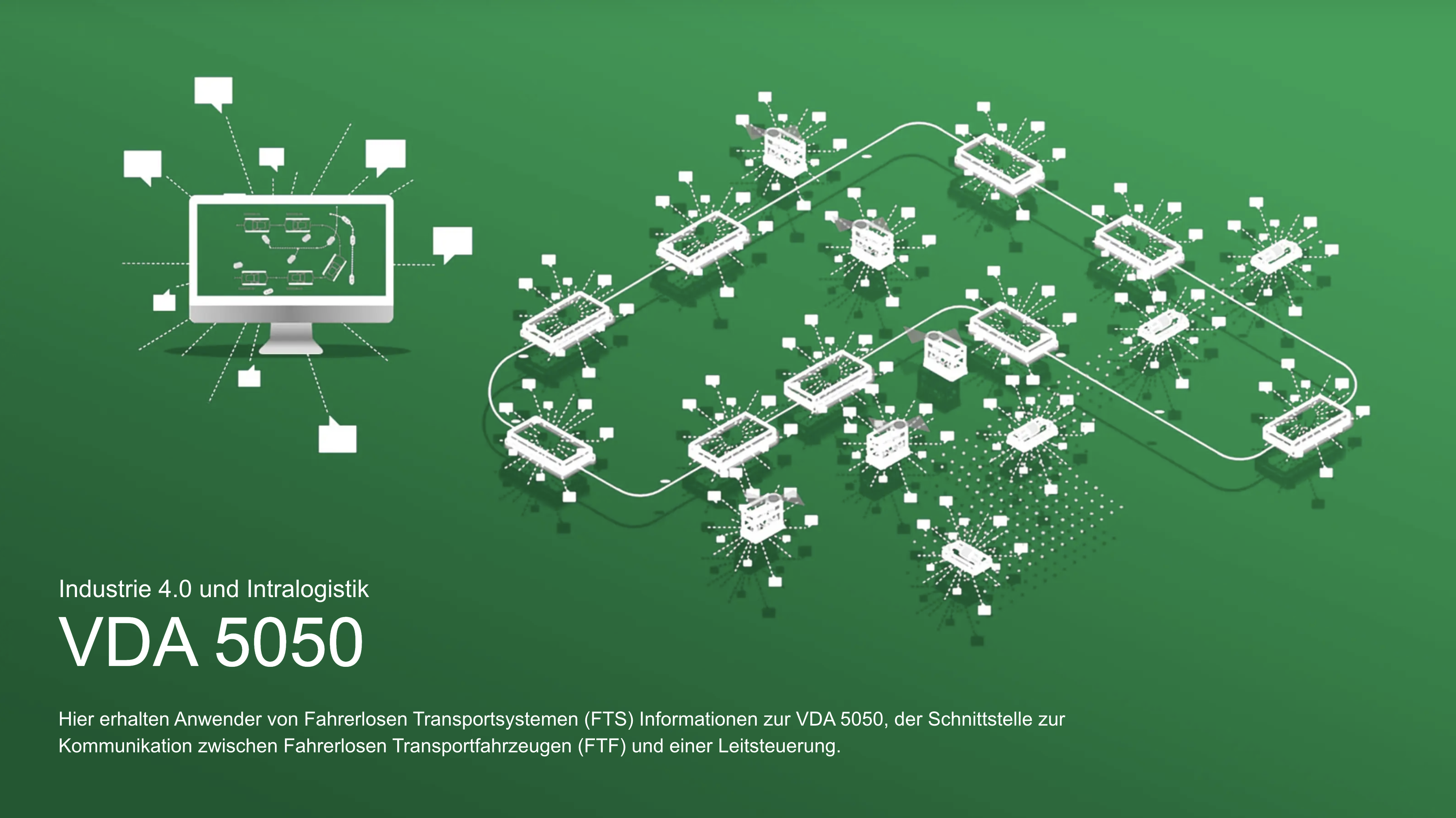
II. VDA5050 Compatibility: SEER Robotics Redefines the Depth of Openness
The reason SEER Robotics has ranked No. 1 globally in robot controller shipments for three consecutive years lies not in the number of robots delivered, but in how it has redefined the depth of openness.
SEER Robotics has built an open ecosystem architecture based on its “robot brain” and, through its platform, provides access to over 1,000 curated robot models. More importantly, it offers comprehensive and in-depth compatibility with the VDA5050 protocol, fundamentally solving the challenge of coordinating multi-brand, multi-type robots.
1. Multi-brand orchestration in a unified system
Whether robots powered by SEER Robotics’ control system or third-party robots compatible with VDA5050, all can collaborate seamlessly within a single scheduling system—eliminating the complexity of managing multiple parallel systems.
2. Cross-type robot collaboration
Different robot forms—including lifting robots, autonomous forklifts, tote-handling robots, as well as humanoid robots and quadruped robots—can operate under unified underlying logic and be flexibly combined like building blocks to meet diverse operational needs.
3. Seamless system scalability
New devices can be integrated without restructuring the existing system architecture. Plug-and-play capability transforms initial investments into reusable digital assets.
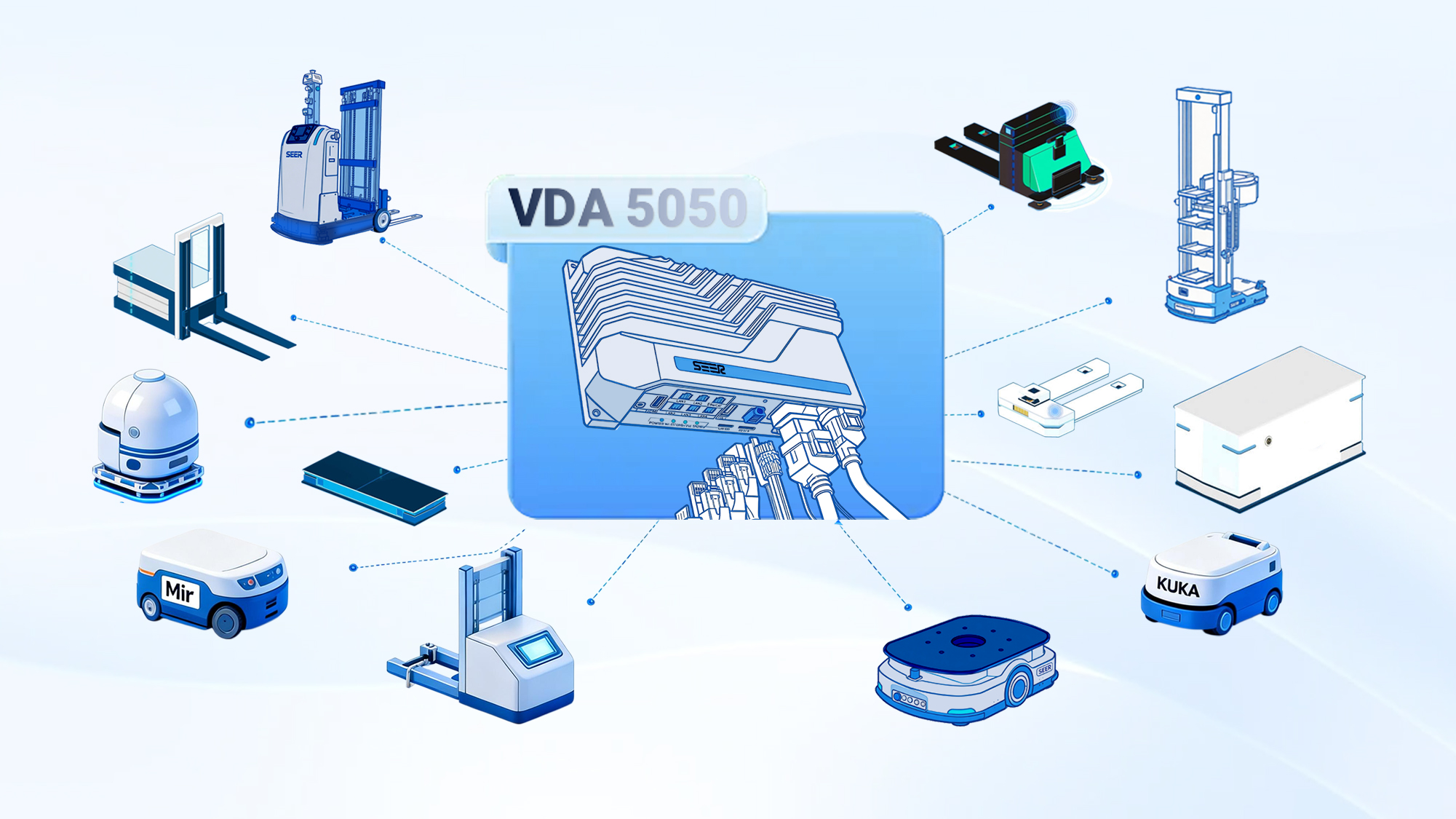
For system integrators aiming to expand into the European market, VDA5050 compatibility serves as the most efficient gateway.
With SEER Robotics’ open platform, integrators can leverage a unified control system and standardized protocols to rapidly build multi-brand solutions—without the need for extensive custom interface development—significantly reducing the complexity and compliance risks associated with international project delivery.


/1.png?x-oss-process=image/format,webp)
/1.png?x-oss-process=image/format,webp)
 Contact Us