
DATE: 2026/04/24
Complex Integration and Human-Robot Collaboration: How SEER Robotics Precisely Empowers the Americas Market
The Americas market is currently undergoing a transformation from traditional automation toward digitalized and flexible manufacturing. However, companies expanding into the region face significant challenges, including high labor costs, stringent equipment safety standards, and rigorous requirements for deep system integration and after-sales responsiveness.
For customers across the Americas, robots are expected to deliver more than basic operational capability—they must integrate seamlessly into existing factory ecosystems. Enterprises place greater emphasis on whether robots can effectively connect with ERP, WMS, and various industrial systems, transforming fragmented material handling tasks into transparent and traceable data flows.
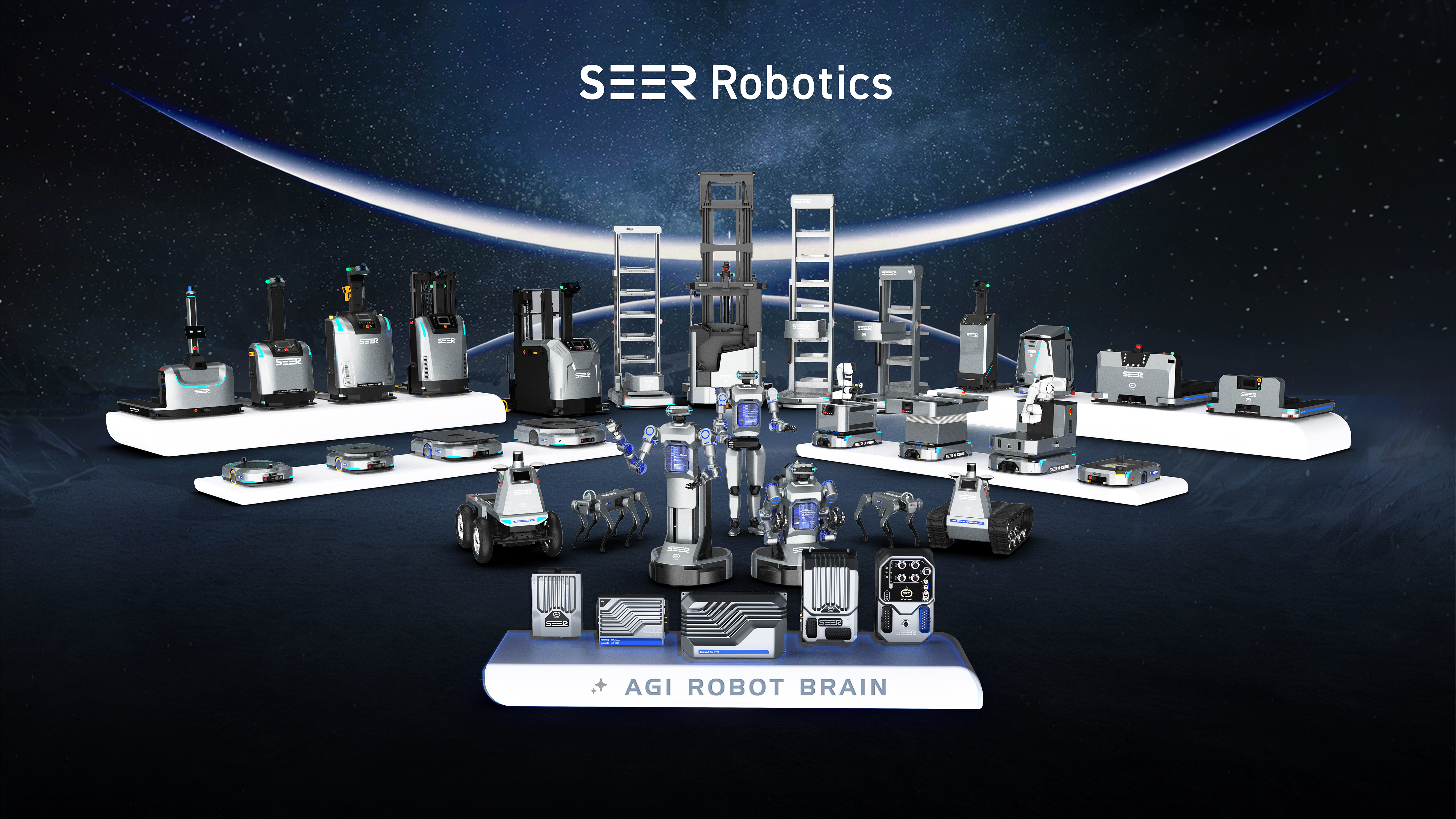
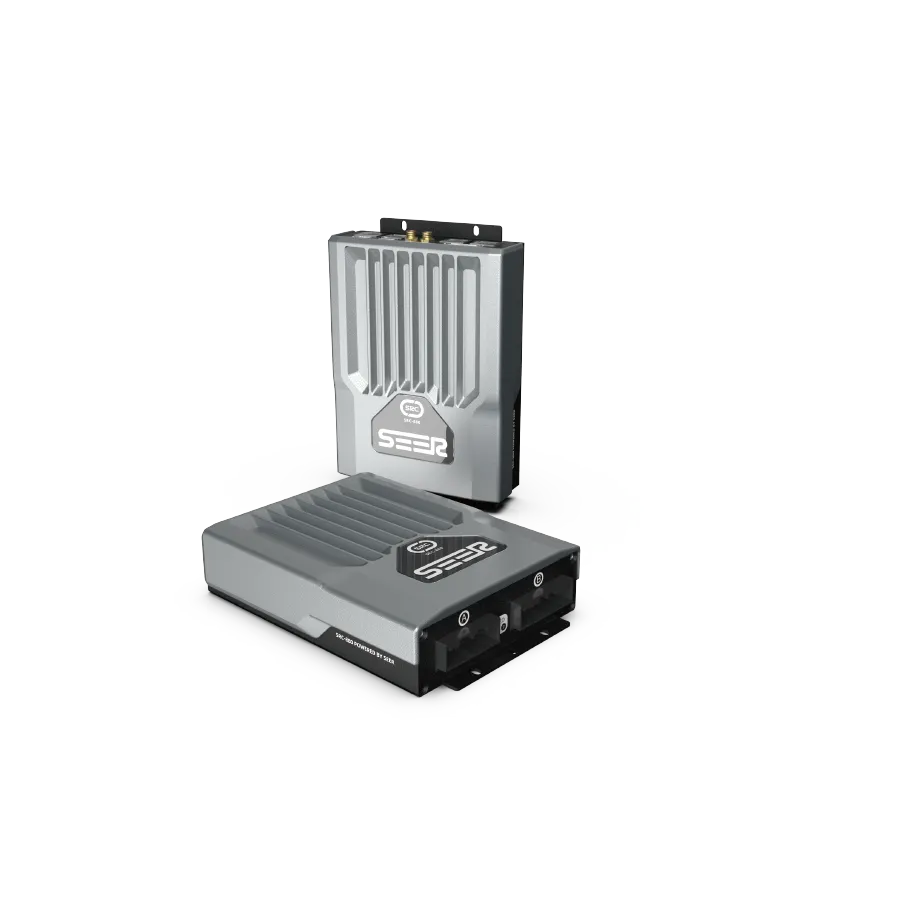
Today, intelligent robots powered by SEER Robotics control systems have been successfully deployed in multiple countries worldwide. Through the following three representative customer cases, we demonstrate how our “robot brain” technology effectively addresses real-world operational challenges in the Americas.
Case 1 | Schneider Electric: Enabling Robot Collaboration in High-Concurrency Scenarios
As a globally recognized Lighthouse Factory, Schneider Electric maintains exceptionally rigorous standards for intralogistics automation. Its U.S. facility faced a critical challenge: enabling large-scale fleet collaboration, allowing multiple types of robots to operate efficiently and safely within busy assembly workshops.
Solution
Through the deployment of the SEER Robotics M4 Intelligent Fleet Management System, Schneider Electric achieved deep collaboration across multiple robots and production processes.
Key Highlights
1. Multi-Robot Scheduling and Congestion Prevention
At narrow intersections and material transfer zones, the M4 system leverages intelligent algorithms to calculate optimal routes in real time, effectively eliminating congestion and deadlock issues during high-concurrency operations.
2. Deep System Integration
The M4 system supports seamless integration with Schneider Electric’s internal business systems. When production lines initiate material requests, tasks are automatically triggered, enabling a fully closed-loop “goods-to-person” workflow.
3. Compliance with Local Safety Standards
The solution strictly complies with robotics safety regulations in the Americas and incorporates multi-layer redundant obstacle avoidance mechanisms to ensure maximum safety in human-robot collaboration scenarios.
Case 2 | Advantech: Enabling Logistics Transparency in Flexible Manufacturing
As a global leader in the Industrial Internet of Things (IIoT), Advantech’s U.S. factory faced the typical challenges of high-mix, low-volume manufacturing. With diverse material types and constantly changing production demands, traditional fixed-track systems and manual handling methods could no longer support the flexibility required by the production lines.
Solution
SEER Robotics supported the deployment of lifting robots powered by its “robot brain” technology, enabling fully automated material transportation from warehouses to SMT production lines. This implementation significantly improved intralogistics transparency and increased material handling efficiency by more than 30%.
Key Highlights
1. High-Precision Visual Positioning
SMT loading stations require extremely high positioning accuracy. By combining SEER Robotics’ laser SLAM technology with high-precision visual positioning, the robots achieve millimeter-level docking accuracy.
2. Autonomous Navigation Across Dynamic Environments
Factory environments are highly dynamic, with materials stored in constantly changing locations. The system’s dynamic obstacle avoidance and intelligent path planning capabilities enable stable operation in high-frequency human-robot mixed environments without requiring large-scale facility modifications.
3. Low-Code Rapid Deployment
Using Roboshop, SEER Robotics’ one-stop deployment tool, local engineers at Advantech’s U.S. facility were able to quickly complete system deployment and task configuration, significantly shortening project launch cycles.
Case 3 | HOJ Innovations: Empowering Local Integrators to Build an Open Ecosystem
As a leading U.S. warehouse automation integrator, HOJ Innovations is committed to delivering end-to-end logistics solutions for customers. Faced with increasingly complex customer requirements, the company needed a more flexible, open, and highly compatible underlying robotics architecture.
Solution
SEER Robotics provided HOJ Innovations with its core control system technology, enabling the integrator to develop more competitive and highly integrated logistics solutions for end customers.
Key Highlights
1. Open Architecture Empowering Partners
Based on the open architecture of the SEER Robotics control system, HOJ Innovations can rapidly conduct secondary development and customize various robot types according to the non-standard requirements of different customers in the Americas market.
2. Eliminating Software and Hardware Silos
Across multiple HOJ projects, the SEER Robotics M4 system serves as a unified “business brain,” centrally managing collaborative operations among intelligent devices from different brands and with different functionalities.
3. Efficient Remote Maintenance
To address the geographic dispersion and high maintenance costs common in the United States, the system provides remote monitoring and fault diagnosis capabilities, enabling integrators to monitor robot operating conditions across multiple locations in real time.
Conclusion
From Schneider Electric’s large-scale collaborative scheduling, to Advantech’s flexible manufacturing transformation, and HOJ Innovations’ open integration ecosystem, SEER Robotics is helping customers across the Americas achieve true intelligent intralogistics upgrades through its advanced “robot brain” technology.
In the Americas market, customers are looking for far more than robots that simply “operate.” They require comprehensive solutions capable of deep business system integration, adaptation to complex operational environments, compliance with local safety standards, and long-term maintenance support.


/1.png?x-oss-process=image/format,webp)
/1.png?x-oss-process=image/format,webp)
 Contact Us