DATE: 2026/05/08
SEER Insights | The Brain of Embodied Intelligence Is More Than Just a VLA Model
With the open-sourcing of Xiaomi-Robotics-0 by Xiaomi, VLA has once again become one of the most discussed topics in the embodied intelligence industry.
Given current industry momentum, this level of attention is hardly surprising. By further integrating visual perception, language understanding, and action generation, VLA enables robots to function more like unified intelligent agents capable of “seeing,” “understanding,” and “acting.” Whether from the perspective of technological evolution or industry narrative, VLA is rapidly becoming one of the defining keywords of embodied intelligence.
However, equating VLA directly with the entire “brain” of a robot still captures only part of the picture.
What truly determines the upper limit of robotic intelligence has never been the model alone, but the combined effect of models, data, control systems, and real-world closed-loop capabilities.
In other words, the brain of embodied intelligence is not simply a large model. It is a complete system capability that enables stable perception, real-time decision-making, reliable execution, and continuous evolution in the physical world.
VLA Is Important, But It Is Not the Entire Robot Brain
The value of VLA lies first in providing robots with a more unified framework for understanding and action.
In the past, many robotic systems were assembled through fragmented modular architectures: one system for perception, another for planning, and another for control, with limited true integration among them. The emergence of VLA gave the industry a clearer vision of a new possibility—robots directly understanding tasks from multimodal inputs, organizing actions, and connecting “perception, reasoning, and execution” into a more natural intelligent workflow.
This marks an important step in the evolution of embodied intelligence.
At the same time, however, it is equally important to recognize that VLA solves only part of the robot brain challenge—not the entirety of it. It improves the way robots understand tasks, but it does not automatically translate into stable execution in real-world environments, nor does it inherently provide industrial-grade scalability.
Because robots ultimately operate not in the world of text, but in the physical world.
In physical environments, robots must deal not with abstract symbols, but with friction, torque, deformation, occlusion, displacement, collisions, errors, and environmental disturbances. A slight deviation in action is not simply an inaccurate response—it may directly result in failed grasping, unstable movement, interrupted operations, or even system-wide cascading failures.
As a result, while VLA can significantly enhance a robot’s understanding and action generation capabilities, it cannot independently solve the core challenges of embodied intelligence deployment: high reliability, strong generalization, and continuous evolution.
This is why SEER Robotics has consistently maintained that a true robot brain should not be viewed as a standalone model, but as an integrated system jointly built by AI capabilities and control systems.
What Embodied Intelligence Truly Lacks Is High-Quality Physical Interaction Data
If internet-scale text data was the defining resource of the large language model era, then high-quality real-world physical interaction data is becoming the defining resource of the embodied intelligence era.
One fundamental reason humanoid robot intelligence is still progressing slowly is the severe shortage of such data.
As of early 2026, the total amount of high-quality real-world physical interaction data worldwide is estimated at only around 500,000 hours—less than one twenty-thousandth of the data used to train large language models.
The gap is not merely about scale, but about fundamentally different data generation mechanisms.
Large language models primarily learn from internet data, which is naturally collectible, cleanable, reusable, and scalable. In contrast, embodied intelligence relies on continuous interaction between robots and the physical world, including positional changes, posture adjustments, contact feedback, friction variations, force control responses, task correction processes, and countless unexpected states in complex environments.
This type of data cannot simply be scraped from the internet, nor can it be fully replaced by simulation.
Simulation environments certainly help with training, but simulation is ultimately not reality. Many critical details that determine task success—such as material differences, contact deformation, environmental noise, actuator errors, and target displacement—are highly complex in the real world. These are precisely the challenges robots must overcome when transitioning from demonstrations to mass deployment.
Consider fruit picking as an example. A robot must not only identify the location of a fruit, but also adjust the robotic arm angle based on orientation, determine contact points, control gripping force in real time, and continuously correct motion trajectories during detachment.
What appears to be a simple action actually requires extensive training on massive volumes of multimodal physical interaction data.
Without sufficient real-world data, robots cannot achieve stable execution—let alone deep capability development.
This realization is shifting the industry focus.
The competition in embodied intelligence is evolving from “who has the stronger model” to “who has the stronger data closed-loop capability.”
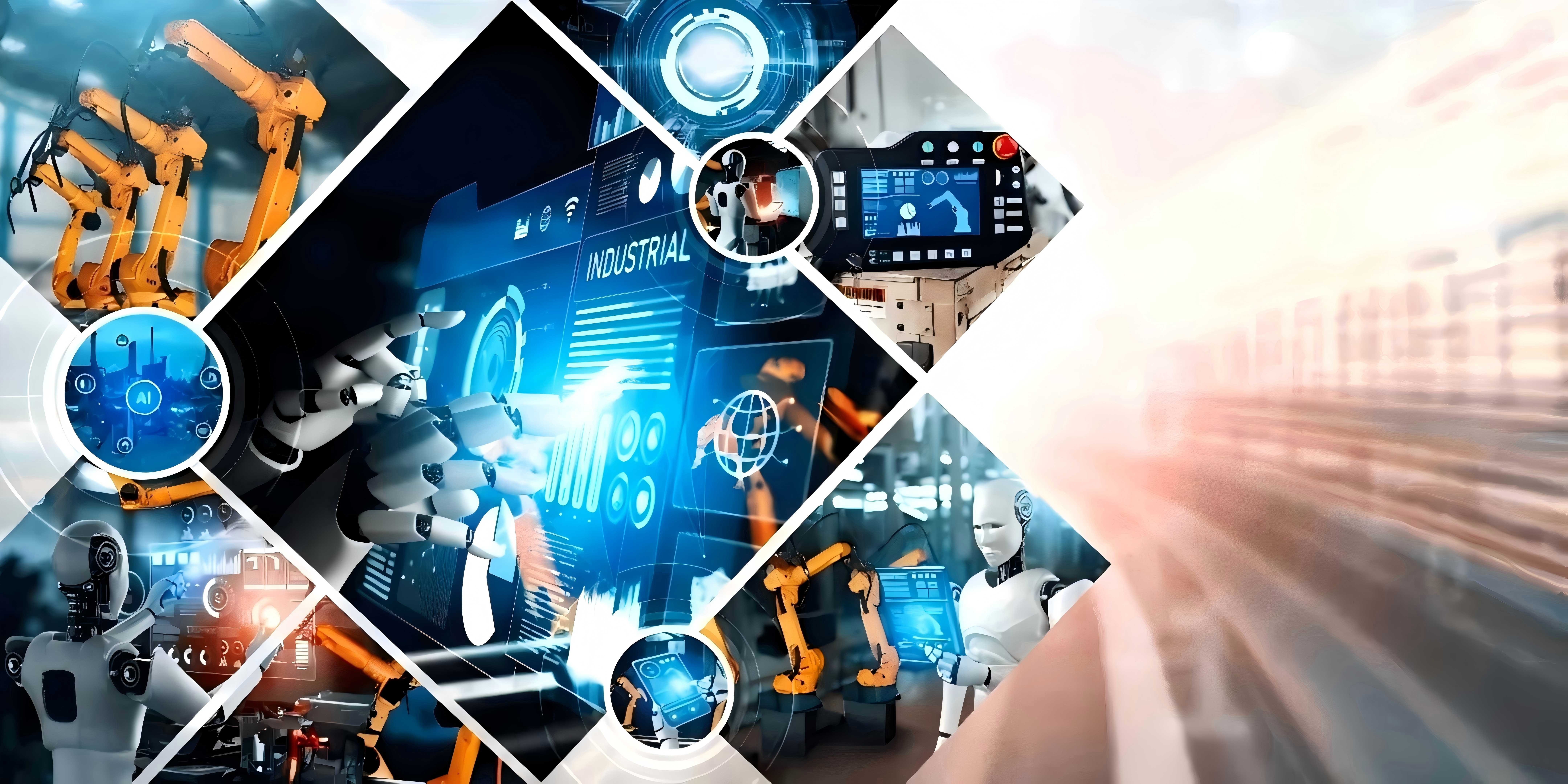
Why Humanoid Robots Face Greater Data Challenges
This is also one of the most overlooked realities in the industry today.
Humanoid robots are undoubtedly one of the most imaginative endgame forms of embodied intelligence. They possess strong general-purpose operational potential and serve as the most intuitive representation of “future robots” for the public.
However, from the perspective of data accumulation and deployment pathways, the humanoid route is also one of the most complex, expensive, and difficult approaches for establishing rapid closed-loop systems.
The reason is straightforward.
Humanoid robots possess significantly higher degrees of freedom, larger action spaces, longer coordinated control chains, and greater sensitivity to environmental changes.
As a result, for the same hour of training data, humanoid robots must cover state spaces far larger than many task-specific robotic systems.
In other words, humanoid robots are not impossible—they simply demand far higher standards for high-quality data scale, data density, and system stability than many people intuitively realize.
This is why SEER Robotics has consistently emphasized that the future of embodied intelligence should not be narrowly interpreted as “humanoids alone represent the future.” Instead, the focus must return to real-world scenarios, practical tasks, and tangible value creation.
In embodied intelligence deployment, technology pathways are determined not only by imagination, but also by data availability, control complexity, scenario maturity, and customer value realization.
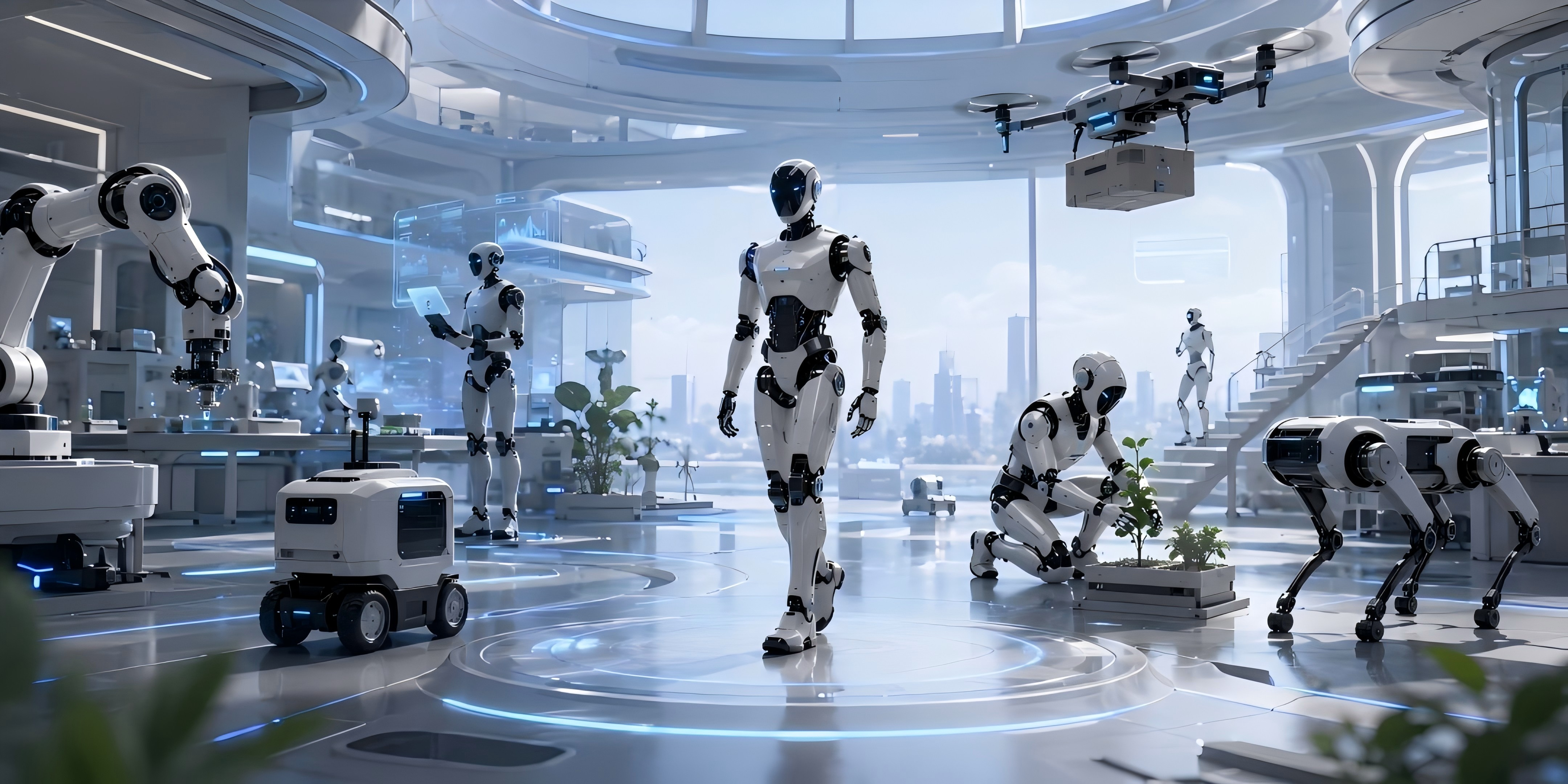
The True Robot Brain Is Ultimately a System Built on Data, Control, and Real-World Scenarios
Viewed from this perspective, the concept of a “robot brain” becomes much clearer.
A truly deployable embodied intelligence brain can never rely on a single-point model capability alone.
It must contain at least three essential layers of capability:
1. Model Capability
How robots understand tasks, organize actions, and establish higher-level cognitive and decision-making frameworks.
2. Control Capability
How robots coordinate “hands, eyes, and movement systems” together, ensuring stable execution, rapid correction, and continuous controllability in real time.
3. Data Closed-Loop Capability
Whether robots have entered real-world environments, continuously collect effective operational data, and feed that data back into models and systems to drive ongoing evolution.
None of these layers can be missing.
This is precisely why SEER Robotics continues to follow a “fusion of established and emerging technologies” approach in embodied intelligence development.
On one side, technologies such as VLA, world models, end-to-end architectures, and reinforcement learning continuously strengthen the robot brain.
On the other side, mature control systems, proven industrial scenarios, and reliable product architectures allow these new technologies to rapidly establish effective real-world closed loops.
The value lies not only in building new robotic products, but also in proving a deeper principle:
Major breakthroughs in embodied intelligence often emerge from systems engineering and scenario closed loops—not from isolated leaps in standalone model capability.
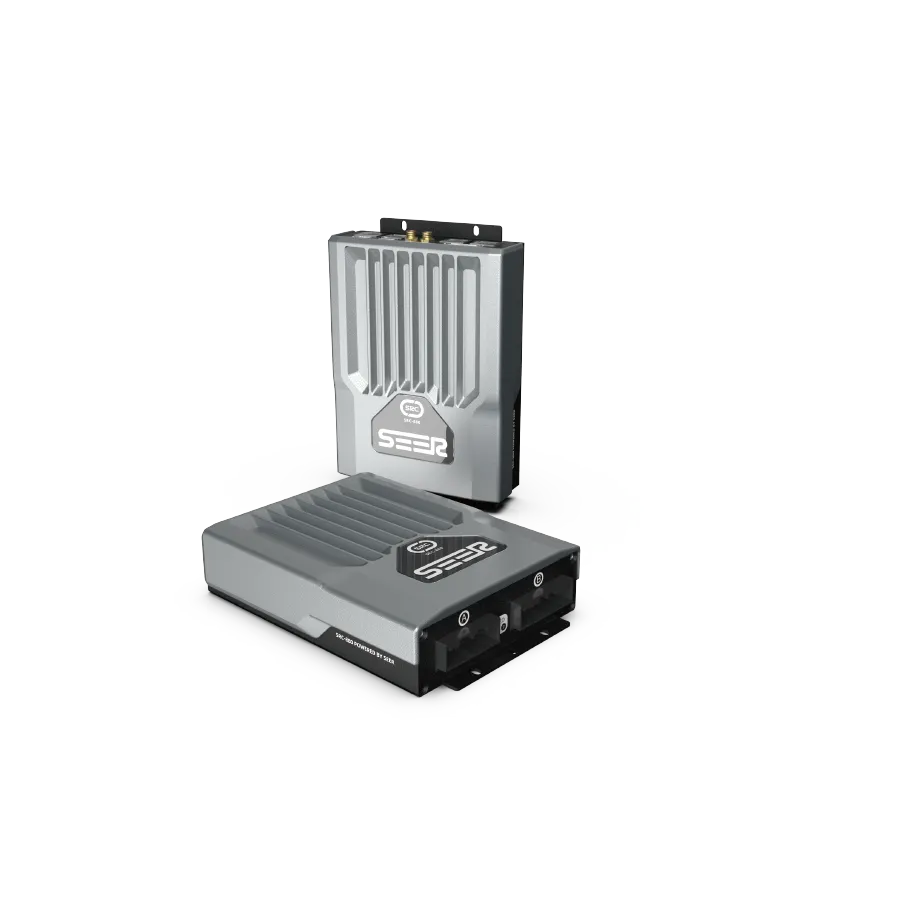
Similarly, under the direction of “established technologies + next-generation products,” SEER Robotics continues integrating robot control systems with AGI capabilities to create a truly unified robot brain.
Because only when control, perception, decision-making, and execution operate as one integrated system can robotics intelligence evolve from “demonstration capability” to “real operational productivity.”
The Industry’s Real Turning Point Will Not Be About Bigger Models, but About Closed-Loop Flywheels
Ultimately, the true dividing line in embodied intelligence may not be who releases the next larger model first, but who first establishes a continuously operating flywheel connecting models, data, control systems, and real-world scenarios.
Whoever enters real-world environments earlier gains earlier access to high-value data.
Whoever accumulates high-value data earlier gains a greater opportunity to train more stable systems.
Whoever builds stable systems earlier gains stronger advantages in real markets.
This is not a competition of isolated technologies.
It is a long-term competition of system capabilities.
VLA is important because it represents a critical direction in the evolution of embodied intelligence. But VLA is only the beginning—not the destination.
The true robot brain is not merely a VLA model. It is a long-term systems engineering effort jointly built upon data closed loops, control capabilities, scenario understanding, and sustainable deployment capacity.
This is also the direction SEER Robotics continues to pursue:
SEER Robotics, All Robots. One Platform. Fully in Your Control
The goal is not simply to build larger models, but to bring truly capable robot brains into industry, into real-world scenarios, and into scalable deployment across the physical world.


/1.png?x-oss-process=image/format,webp)
/1.png?x-oss-process=image/format,webp)
 Contact Us