DATE: 2026/11/16

AGV Towing Vehicle

AGV Towing Vehicle

AGV Towing Vehicle

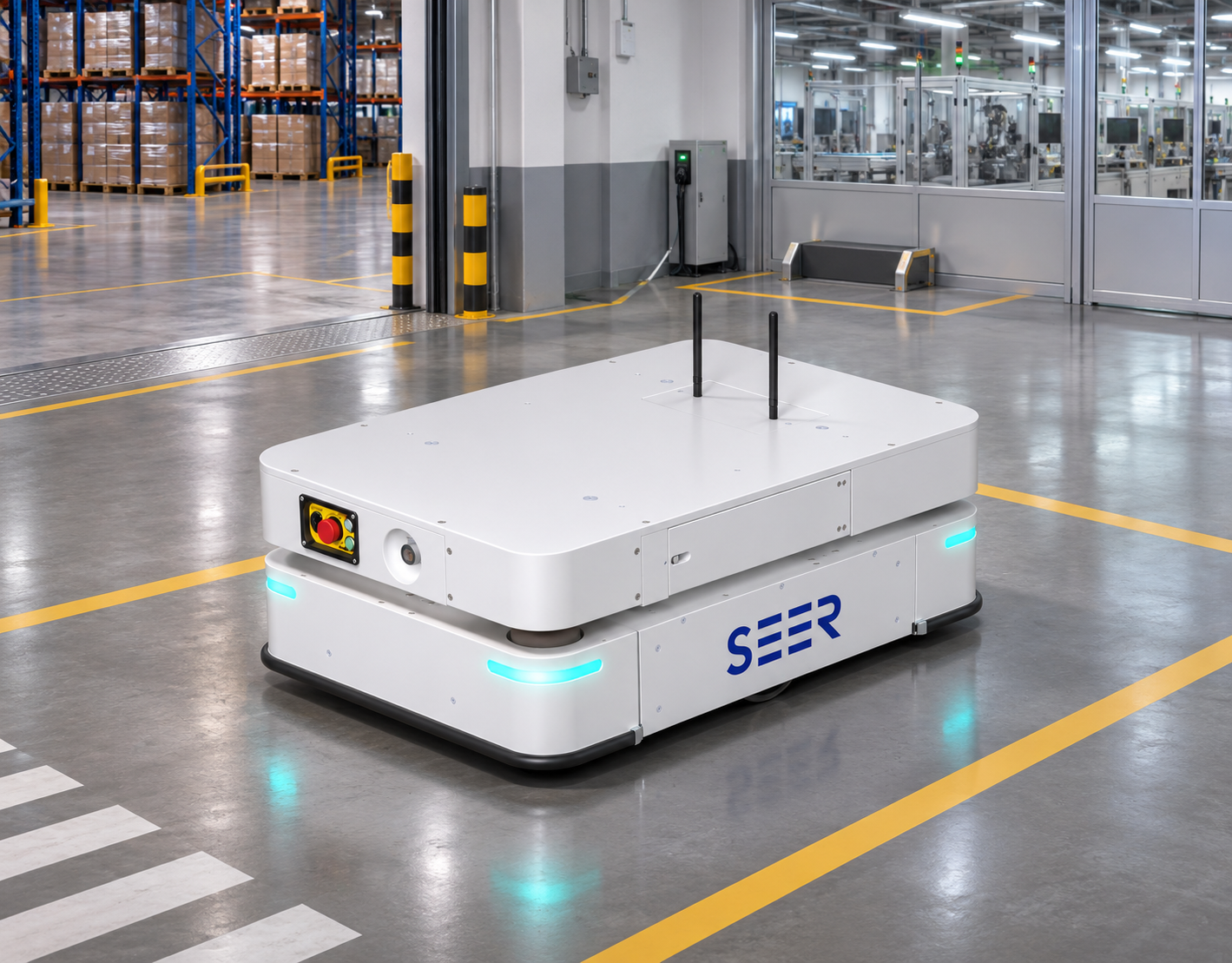
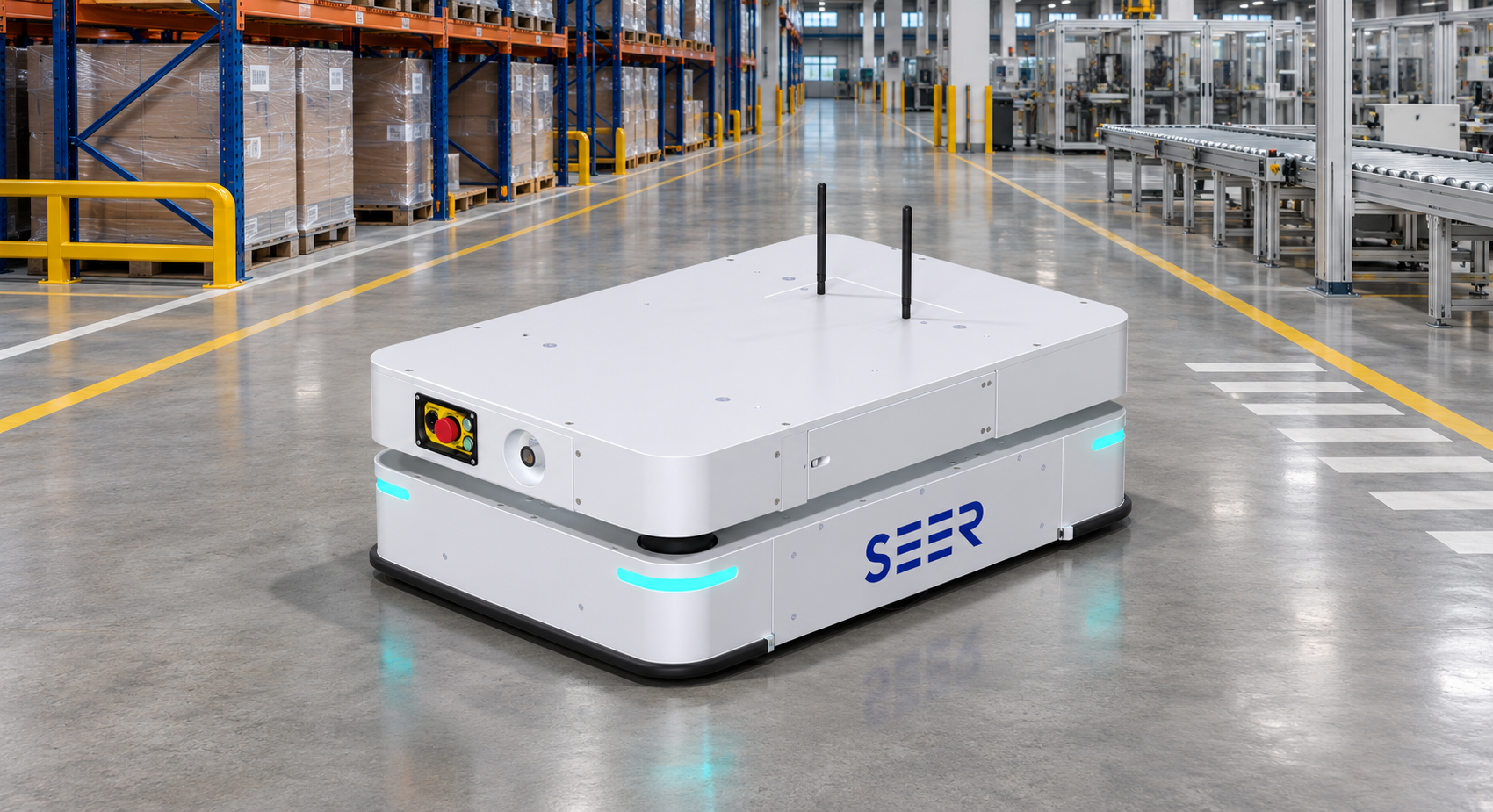
The AGV Towing Vehicle programme, based on the SEER Robotics AMB-300XS chassis, is extended by lacquering and laser SLAM navigation, and the distribution and process trans-shipment of the bridge trucks. SEER Robotics has an autonomous R & D and production capacity to provide both the original plant's chassis and core control products.

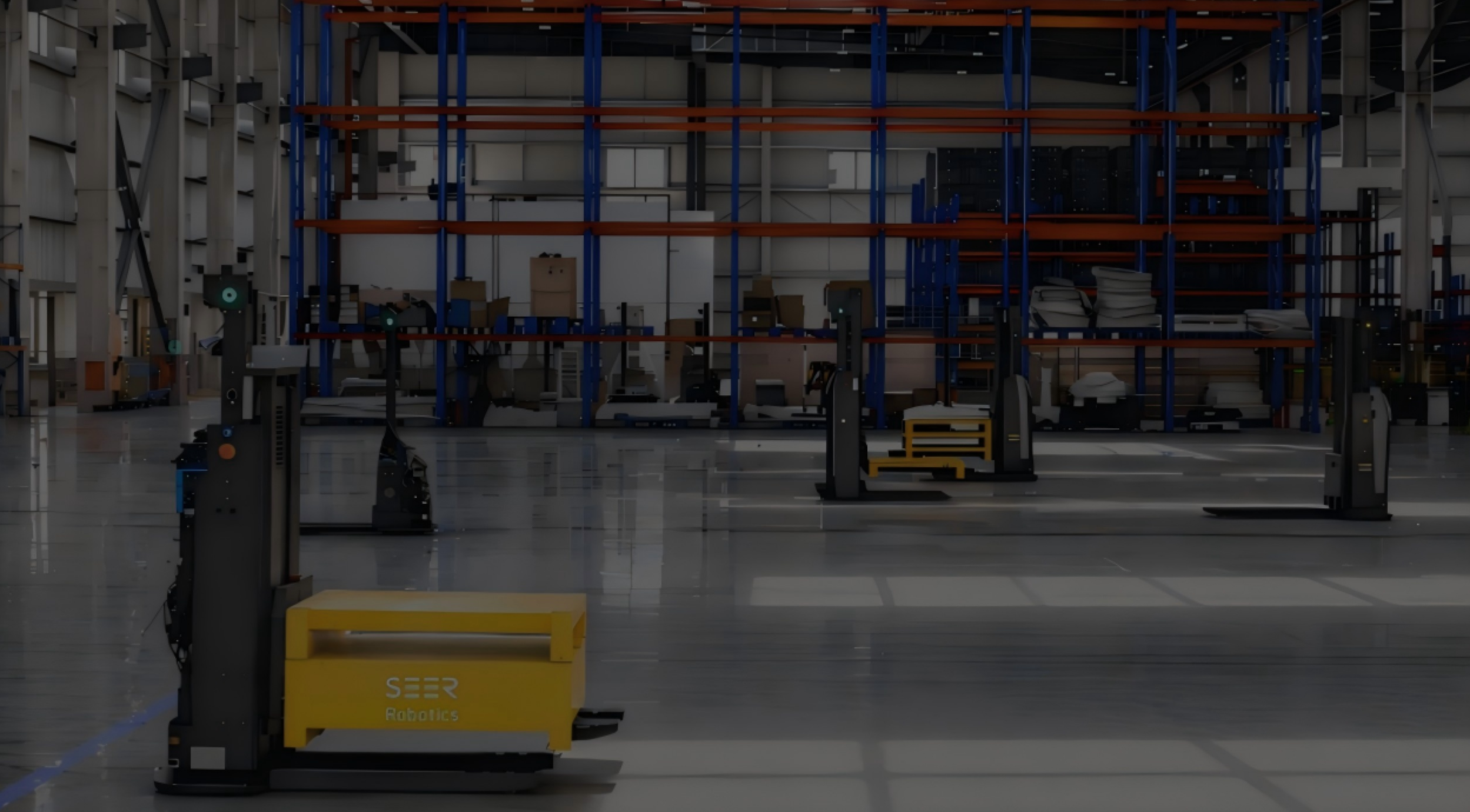
When equipped with a towing mechanism, the AGV Towing Vehicle supports warehouse-to-production-line delivery, line-side material supply, inter-process transfer and the return of empty material carts.
The following parameters apply to the AMB-300XS base platform. Towing capacity, number of trailers and towing speed are determined by the overall vehicle configuration.

Chassis dimensions (L × W × H):
842 x 582 x 302.5 mm
Rotation diameter:
972.6 mm
Minimum passage width:
722 mm

AGV Towing Vehicle Product Characteristics

The tractor can be configured as a fuel vehicle:
The chassis supports the incipient towed extension, which can be adapted to different swing patterns around the feed vehicle connecting position, bottom space and offline process configuration.
Standard interface allows control connection:
The I/O, CAN and RS485 interfaces are reserved, access to the tractor and associated detection components is facilitated, and attachment, operation and release actions are integrated into the control process.
Loving capability to support attachment validation:
Navigation position accuracy ±5 mm and angle accuracy ±0.5°, providing the basis for debugging docking points and docking positions, and final connectivity accuracy still needs to be measured in conjunction with institutional reality.
Safety chassis reduction base development:
Official network listing CE certification and ISO 3691-4: 2020 related certification, with built-in security controllers, can serve as the basis for security control for custom-made towed vehicles.
Clean platform extension application conditions:
The chassis passes the ISO Class 4 cleanness test. When used for a clean area tow, this can be used as a basis for assessing the connection agencies, supply vehicles and complete transport systems.
A variety of complementary methods facilitate the organization of shifts:
A comprehensive continuation of 12 h of the basic platform to support manual charging, automatic charging and rapid replacement, which can be arranged in conjunction with distribution intervals and actual towed conditions.
Agv Towing Vehicle Detailed Specifications
Parameter name AMB-300XS Basic Platform Specifications
Navigation methods Laser SLAM
Traction extension Supports hidden traction mechanisms, configured according to project requirements.
chassis dimensions 842×582×302.5 mm
Chassis rated load 300 kg is a load-bearing parameter and does not represent the towing weight.
Rotation Diameter 972.6 mm
Minimum passage width 722 mm, the towing capacity of the entire vehicle needs to be calculated separately.
Navigation Position Accuracy ±5 mm
Chassis driving speed ≤1.5 m/s
Battery Specifications 48V / 40Ah, ternary lithium battery
Overall range 12 h

AGV Towing Vehicle Product Comparative Advantage

For plants where materials are organized for distribution, AGV Towing Vehicle's adaptation focuses on connecting structures and operating conditions. SEER Robotics AMB-300XS supports the extension of the towed component, which can be attached around the existing vehicle configuration. Compared to the option of resettling material on a robotic stage, the towed method is to assess the retention of the original material vehicle as a transport vehicle and to reduce its intermediate reloading.

SEER Robotics AMB-300XS has provided navigation, map editing, movement control and extension interfaces compared to custom tractors that build mobile chassis and control systems from zero. The project could focus its development on tractor agencies, connection testing and drag-and-drop validation to reduce duplication in the development of basic functions.

AGV Towing Vehicle
Existing fuel vehicles continue to be used on condition
Validation of the frame, wheel and connection structures before determining whether to retain or partially modify them to reduce back-to-back procurement due to mismatched loads.
Hang-up actions are linked to the moving state
Access to institutions and test components using extended interfaces to confirm and run interlocks as project designs and avoid being attached to parking locations only.
Full layout with towed routes
At the same time, the reverse trajectory of robots, connectors and fuel vehicles is accounted for, reducing the number of head passes and interference with rear cargo vehicles.

AGV Towing Vehicle

Collection of material and route data
Record the mass of the material load, the specification of the wheel and the location of the connection, and check the slopes, ground seams and turning spaces as the basis for the towed type.
01
Check connection and lock-out
The attachment is completed in accordance with the delivery process, the institutional lock-down and the state-of-the-art tests are confirmed and the goods are checked for fixation before the vehicle is allowed to operate.
02
Validation of towed transport process
Starting with a low-speed test, check steps, turns, stops and strips, and set the route and safety zone on a full team.
03
Maintenance of ankle wheels and tractors
Periodic inspection of the wear and tear of the connectors, the demurrage of the ankles and the state of the sensors, the scheduling of recharges at the operational capacity, and the disposal of motors in case of abnormality.
04

AGV Towing Vehicle Applies To People

Logistics decision makers in automobile and engine factories

For the director of in-house logistics, the head of automation and the production management team. Enterprises that are suitable for the use of feeder joiner processes can organize automation programmes around vehicle connections, transport rhythms and routes.

Head of material distribution at electronic manufacturing workshops

Directed to warehouse managers, line logistics managers and operators. A workshop suitable for distribution between the warehouse and multiple production areas can be arranged for delivery and recovery tasks along the fuel vehicle cycle.

Regional logistics managers showing manufacturing enterprises

Targeting logistics teams that need to integrate cross-regional material flows. The transportation of auxiliary materials and revolving vehicles can be assessed, with emphasis on checking ground conditions, traffic space and handover locations.

Operating team to manage warehouse and production lines

For warehouse managers and production logistics managers who need to reduce the number of manual carts. It would be appropriate to select a stable, duplicate distribution route pilot, which would then be applied on a fuel vehicle-compatibility and mission-volume basis.

Certificates And Factories

证书大图

As the world’s leading controller manufacturer, SEER Robotics has independent intellectual property rights of SRC series controllers and production lines. It is the real source manufacturer, providing you with highly competitive ex-factory prices and faster delivery speed. Products comply with international standards and have been deployed in many countries and regions around the world. Through standardized communication protocols, the stable operation and technical compatibility of the system in multinational plant projects are ensured.

证书小图

FAQ

Q: AMB-300XS is a standard towed vehicle?
A: It's a robot chassis that supports a latent pull extension. The full AGV Towing Vehicle will also need to be equipped with tractors, connection tests and associated controls, as well as to complete the calibration of fuel vehicles and on-site.
Q: 300 kg rated load equal to 300 kg towed weight?
A: No. 300 kg is a chassis carrying parameter and cannot be used to determine the permissible tow mass. The pull capacity is also dependent on driver configuration, institutional strength, retrenchment, slope and brake conditions, which need to be confirmed in a complete programme.
Q: Must all existing trucks be replaced?
A: Not necessarily. The strength of the frame, the function of the foot wheel, the cleanness of the bottom and the location of the connection may be checked first. Material vehicles that meet the requirements can be assessed for retention, and some of them may require additional connects or adjustments to the wheel configuration.
Q: Can auto-link and unconnect?
A: Depending on the agency selected and the control programme. The chassis provides support for extended interfaces and towed applications, but automatic removal cannot be directly considered a standard car-to-car function, and actions and detection requirements should be specified in the procurement scope.
Q: Can the 722 mm channel be used for tow transport?
A: 722 mm is the minimum traffic width of the chassis. The tractor truck will need to be recalculated by the profile of the group, the length of the connection, the extent of the turn-sweeping and the spacing of the security space, and will not follow the parameters of the chassis single channel.
Q: Does the chassis reach ISO Class 4 and represent the whole towed vehicle that also meets the cleaner level?
A: No direct equivalence. With the addition of tractors and fuel vehicles, the wheel, connectors and frictions may alter the dusting of the system. Before entering the clean area, it should be verified in full configuration and operational status.