
DATE: 2026/09/15
LTT 2026 Recap | Recreating a Japanese Factory on the Show Floor: How SEER Robotics Adapts to Real-World Operations
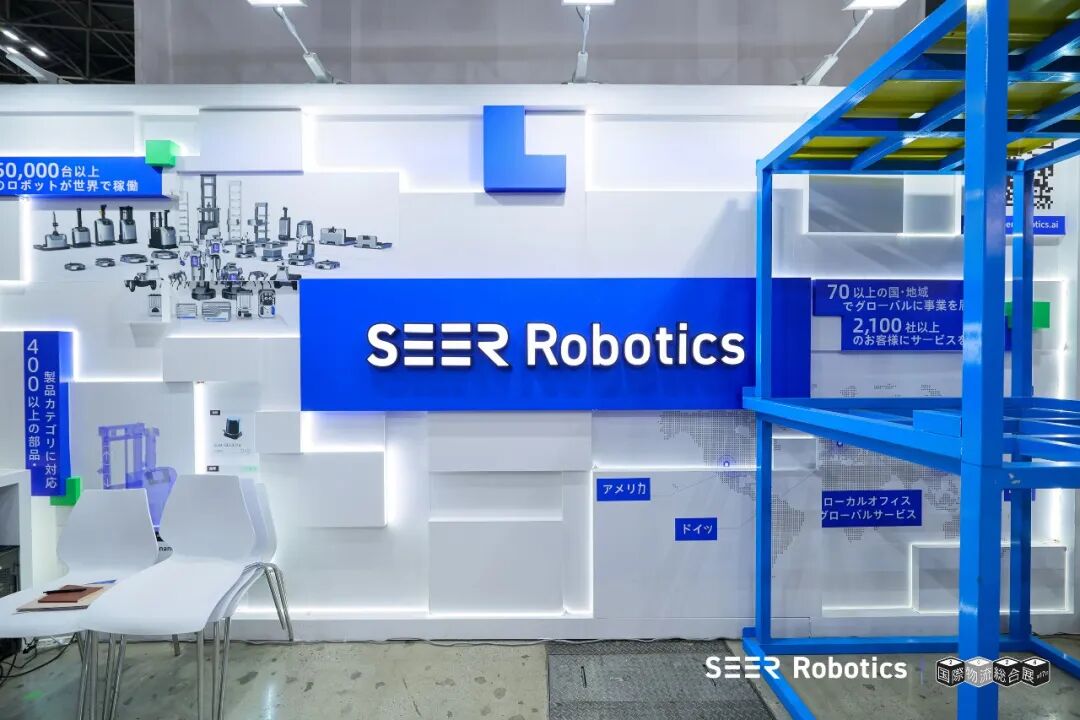
On September 11, Logis-Tech Tokyo 2026 (LTT 2026) concluded in Tokyo, Japan. At Booth E2-L02, SEER Robotics presented a range of intelligent robots built around its Robot Brain, showcasing automation solutions designed for the realities of Japanese production environments.
Recreating a Japanese Factory Environment on the Show Floor
Many factories in Japan have been operating for years, with established layouts, equipment, racks, and workflows already in place. Compact facilities, narrow aisles, and pallets and racks of different specifications are all practical constraints that robots must accommodate when entering these environments.
For the Japanese market, the question is therefore not simply whether a robot can perform a task. The more important issue is whether it can be deployed without requiring major changes to the existing facility, while adapting to current equipment, load carriers, and operating processes.
At LTT 2026, SEER Robotics recreated a compact Japanese factory environment directly within its booth. Japanese-style pallets, low-clearance racks, and narrow-aisle storage areas were reproduced at actual operating scale, allowing visitors to see how different robots perform under conditions that closely reflect real factory environments in Japan.
This is also one of the key principles behind the broad robot portfolio SEER Robotics has developed for the Japanese market: rather than expecting every site to accommodate the same robot, the robot should be selected to fit the site.
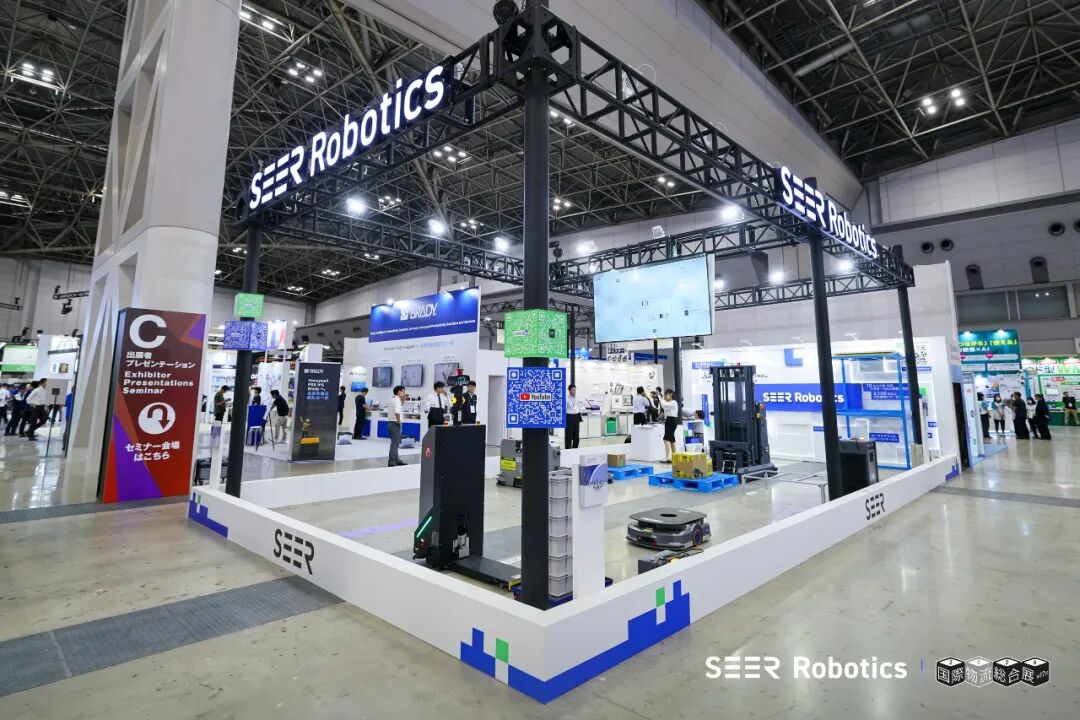
Adapting to Existing Space and Load Carriers with Minimal Site Modification
Different facilities have different space constraints, load carriers, and operating requirements. A single robot form factor is therefore unlikely to cover every application.
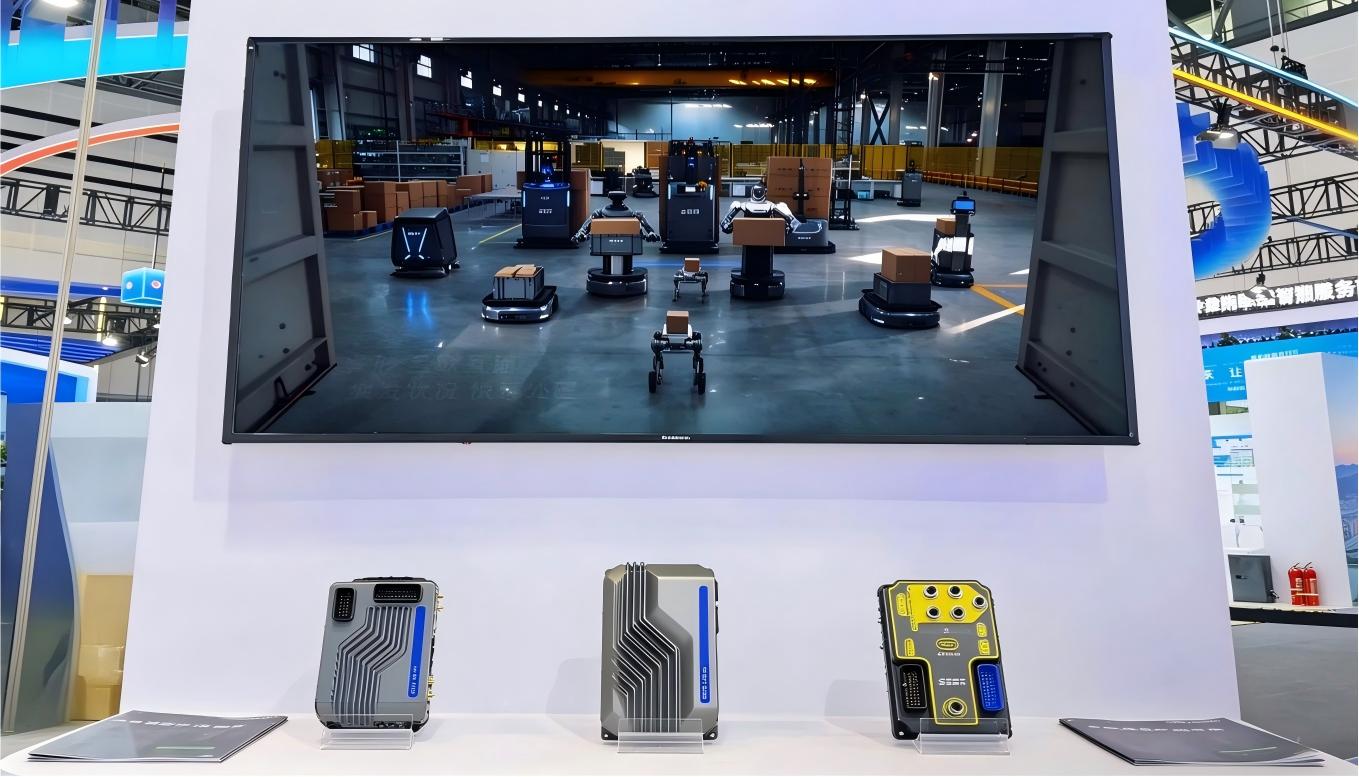
Built around its Robot Brain, SEER Robotics offers multiple types of intelligent robots for different operating scenarios, providing a broader range of deployment options while minimizing changes to existing environments.
For high-level storage applications, the SSR-1400EU Reach Truck combines a compact vehicle design with a reach mast that allows the forks to extend independently toward the load. This enables pallet handling, transport, and stacking at height within constrained aisle spaces.
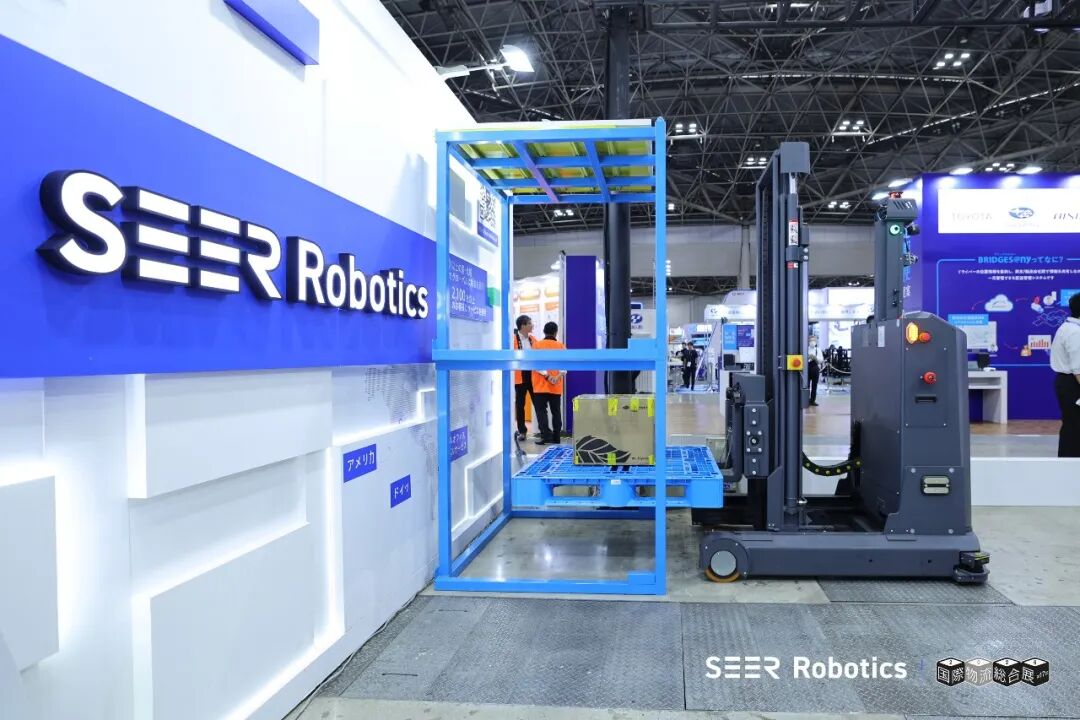
Japanese companies may also use pallets that vary in size, specification, and physical condition. The SPT-1500UL E-Type Forklift Robot uses AI vision to identify pallets of different specifications and conditions. Its patented E-shaped fork design is adapted to Japanese-standard pallets and is designed to handle real-world conditions such as misaligned, damaged, or film-wrapped pallets.
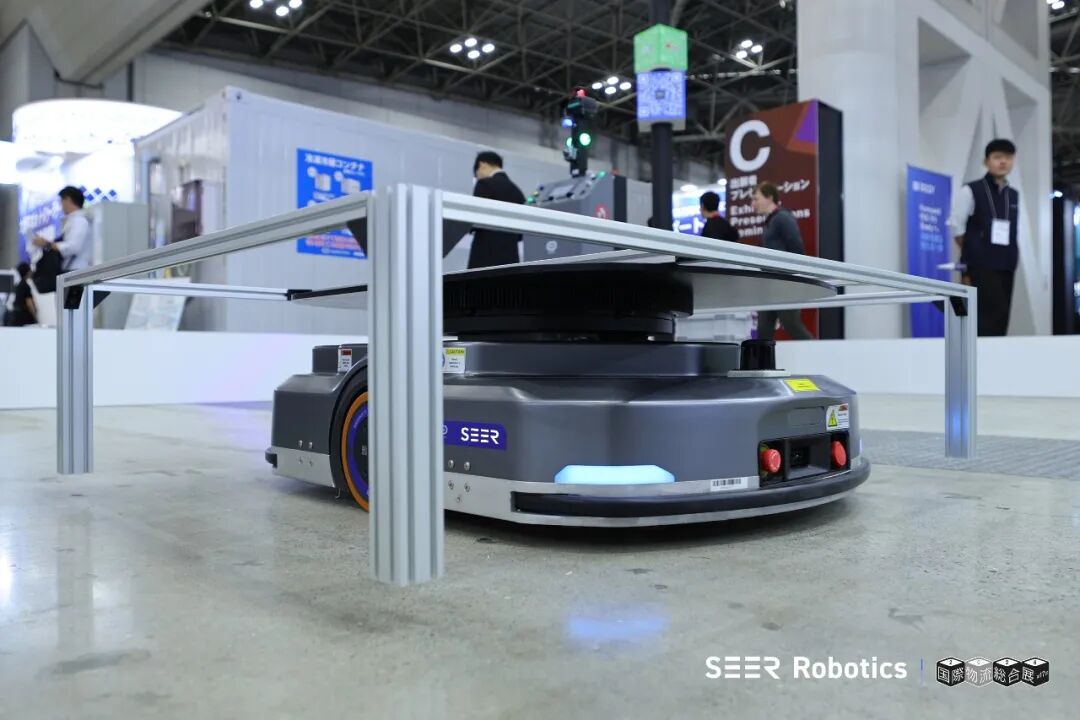
For low-clearance and densely arranged rack environments, the SJV-CSK06 Rotary Lifting Robot has a turning diameter of only 965 mm, enabling it to maneuver and transport loads through narrow aisles and tightly spaced racks. It can also perform lifting operations beneath racks with a ground clearance of just 31 cm.
On the production floor, the SOF-300EU Single-Fork Arm Intelligent Forklift features an ultra-narrow 500 mm body and an 800 mm turning radius. It can operate in equipment-dense areas with limited aisle space, making it suitable for small-batch, high-frequency material delivery between production lines.
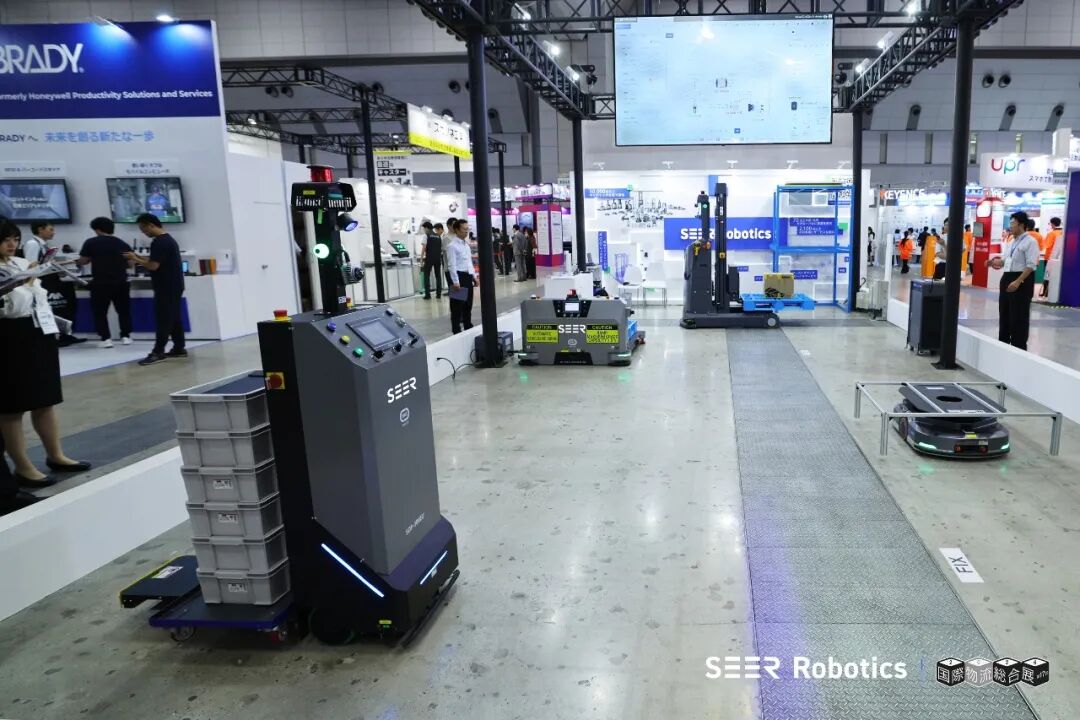
From high-bay storage and pallet handling to rack lifting and narrow-aisle material transport, the four robots address different operational requirements while following the same principle:
Do not redesign the facility around the robot. Select the robot that fits the facility.
For Japanese factories with established layouts and operating processes, this approach can reduce the amount of site modification required and allow automation to be introduced more naturally into existing production environments.
From Multi-Robot Operations to Multi-Brand Coordination with VDA 5050
When a single robot is introduced into a factory, it typically addresses a specific automation task.
As more robots, more tasks, and more workflows involving both automation and people are introduced, the challenge changes. Companies must consider how different robots work together, how tasks are allocated, and how robots connect
with existing business and production systems.
This is where the SEER Robotics M4 Intelligent Robot Management System comes into play. At LTT 2026, the multi-robot solutions on display were centrally scheduled and managed through M4.
M4 supports centralized scheduling across multiple robot types, brands, and fleet sizes. It can also manage storage locations, materials, and tasks, while integrating with enterprise and industrial systems such as PLCs, WMS, and MES, enabling robots to operate as part of existing production processes.
Another important question for manufacturers is what happens when future robot fleets include more than one brand.
SEER Robotics robot products support the VDA 5050 standard, enabling connectivity with compatible third-party fleet management and orchestration systems through standardized interfaces. This allows robots from different manufacturers
and of different types to participate in a more open automation environment.
This interoperability is already being implemented within the wider robotics ecosystem. SEER Robotics has been integrated into the ecosystem of NAiSE, a German third-party robot fleet management and orchestration platform, and has received official certification.
NAiSE provides an open platform for the unified management and coordination of robots from multiple brands and categories, using standardized interfaces including VDA 5050 to connect robots from different manufacturers.
The integration of SEER Robotics products into this open ecosystem means they can participate in multi-brand robot environments, giving international customers greater flexibility when scaling deployments across different robot types and suppliers.
Robot fleets can expand. Brands can remain flexible. Management can stay unified.
SEER Robotics is also continuing to develop a more open robotics ecosystem together with industry organizations and partners, extending the range of applications that can be supported through open interfaces and collaboration.
From one robot to multiple robot types, and from a single brand to multi-brand coordination, an open underlying architecture allows manufacturers to expand their robot fleets as requirements evolve without being locked into a single product or system.
Building Local Lifecycle Support for the Japanese Market
For international markets, getting a robot into a facility is only the first step.
From product selection and deployment to long-term operation, successful automation also depends on local teams, service capabilities, and support for safety and compliance requirements.
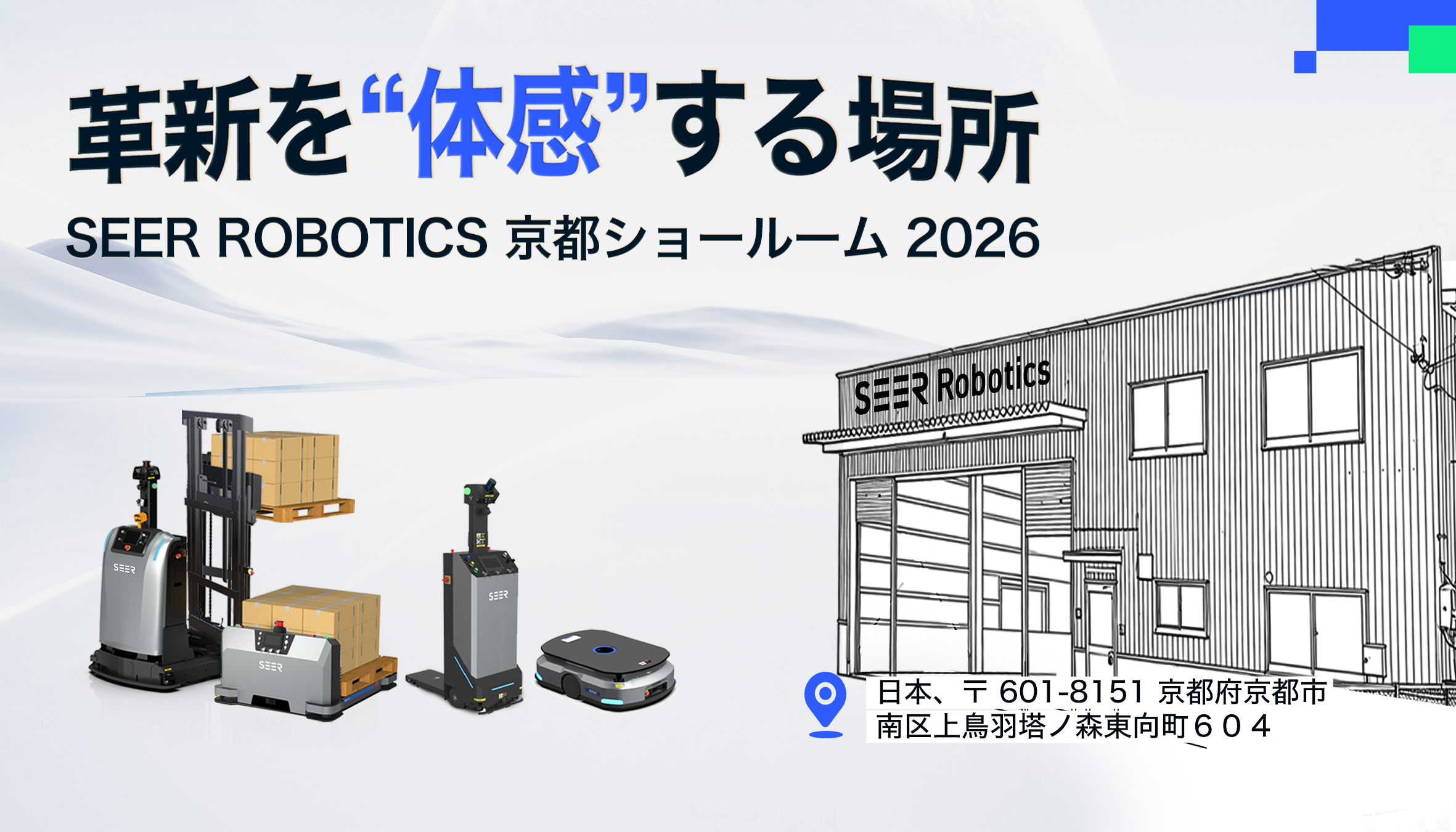
SEER Robotics has established a local office in Kyoto, Japan, supported by a dedicated local team providing business, technical, solution, and deployment support for customers in the Japanese market.
SEER Robotics also operates a local showroom in Kyoto, where customers and partners can experience robot products, validate solution concepts, and view multi-robot coordination demonstrations.
Customers can evaluate products against the specific conditions of their own factories—including available space, load carriers, and operating processes—and further assess potential deployment solutions before implementation.
Beyond Japan, SEER Robotics continues to develop its global service infrastructure through regional teams and service networks that provide localized support across different countries and markets.
Safety and compliance are equally important for robots operating internationally. Relevant SEER Robotics products meet applicable international requirements including CE and UL, while safety systems incorporating components such as safety laser scanners and safety controllers support deployment across different operating environments.
From early-stage consultation and solution design to deployment, delivery, technical support, and ongoing maintenance, SEER Robotics continues to strengthen its service capabilities across the robot lifecycle.
It is a shift from simply bringing products into a market to establishing local capabilities within that market—and from completing a single delivery to supporting customers over the long term.
This forms an important part of SEER Robotics' continued development in Japan and its broader expansion across international markets.
From Japan to More Real-World Operations Worldwide
LTT 2026 provided a concentrated view of how SEER Robotics is adapting its products and services to the needs of the Japanese market.
From a full-scale recreation of typical Japanese factory conditions to a robot portfolio addressing different operational requirements; from unified multi-robot scheduling and management to open interoperability based on VDA 5050; and from local teams, an office, and a showroom in Japan to a broader international service network, SEER Robotics is bringing intelligent robots into real production environments in ways that reflect local operating conditions.
The objective is not simply to place robots inside factories, but to enable them to integrate with environments that already exist and continue creating value within those operations.
Starting with Japan and extending to markets worldwide, SEER Robotics will continue to work more deeply within real industrial environments, combining localized products, solutions, and services to help intelligent robots integrate more effectively into factories around the world.
Register below to request tickets
 Contact Us