
DATE: 2026/09/07
SEER Robotics Brings Embodied Intelligence Products to Pinghe School’s RoboFest Robotics Technology Festival
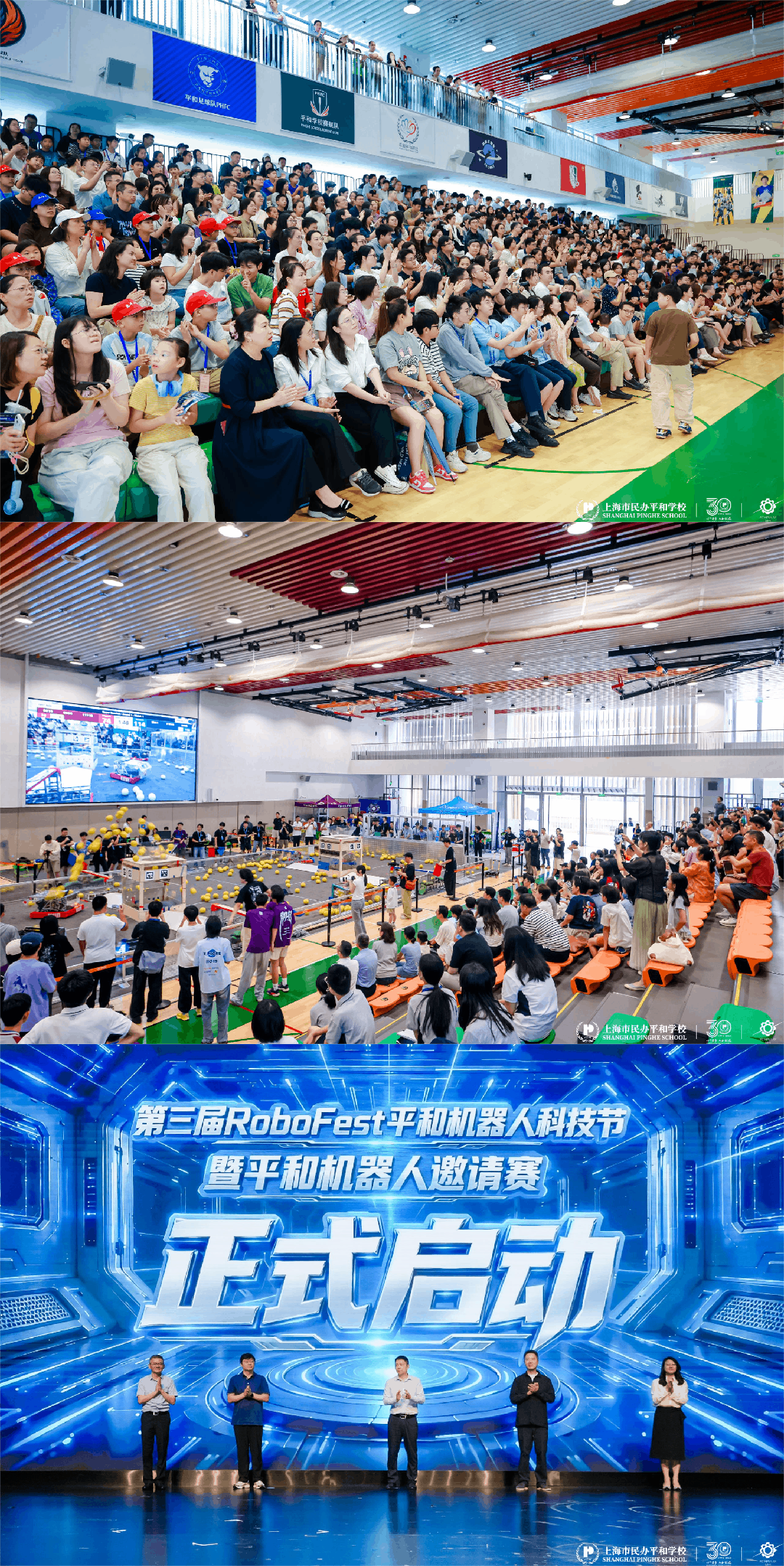
On September 5, Pinghe School held the launch ceremony for its 30th anniversary celebrations together with the third RoboFest Robotics Technology Festival.
Under the theme “Convergence · Intelligent Transformation,” this year’s festival brought together technology companies, research institutions, experts, academics, and young students to explore the future of artificial intelligence and robotics.
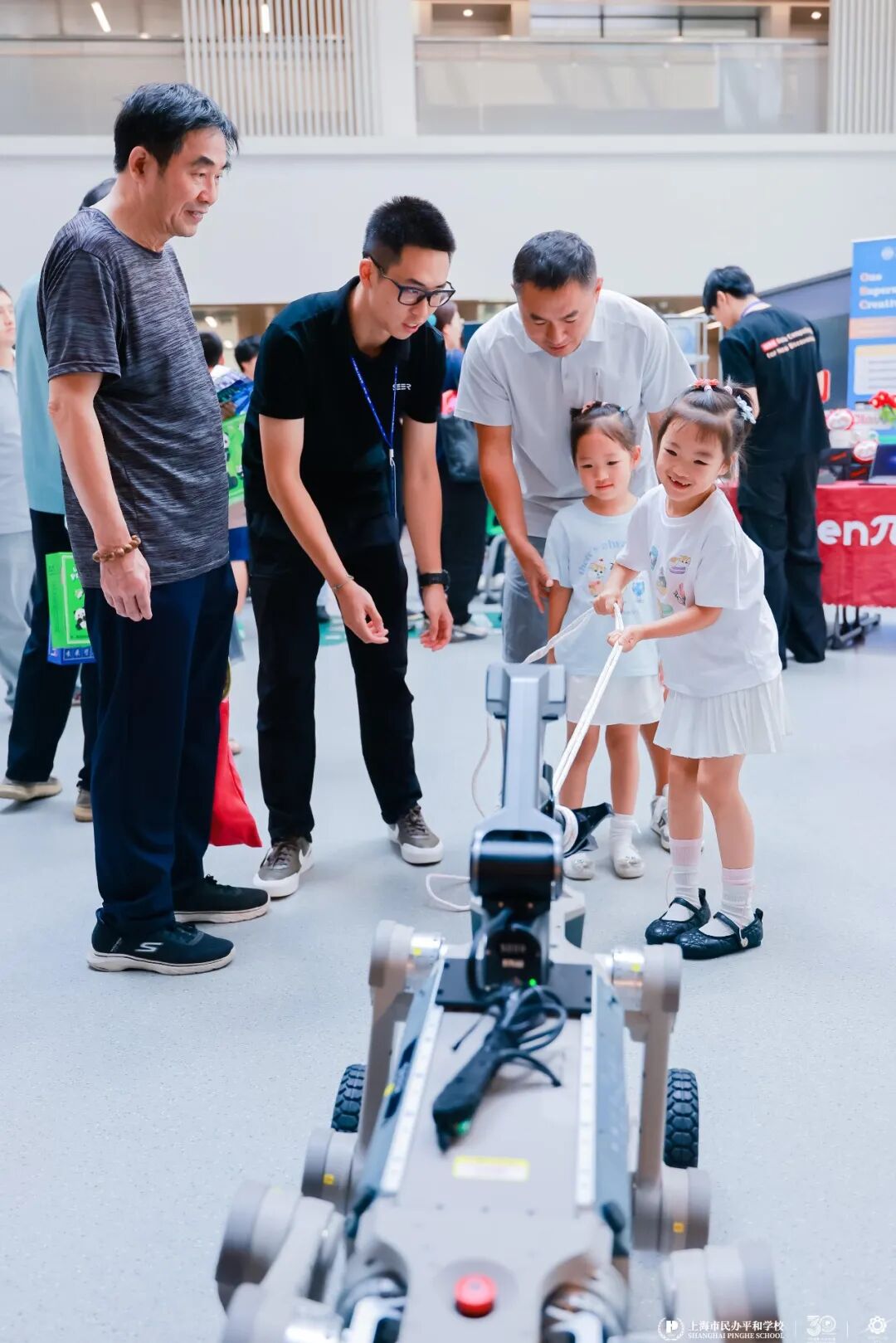
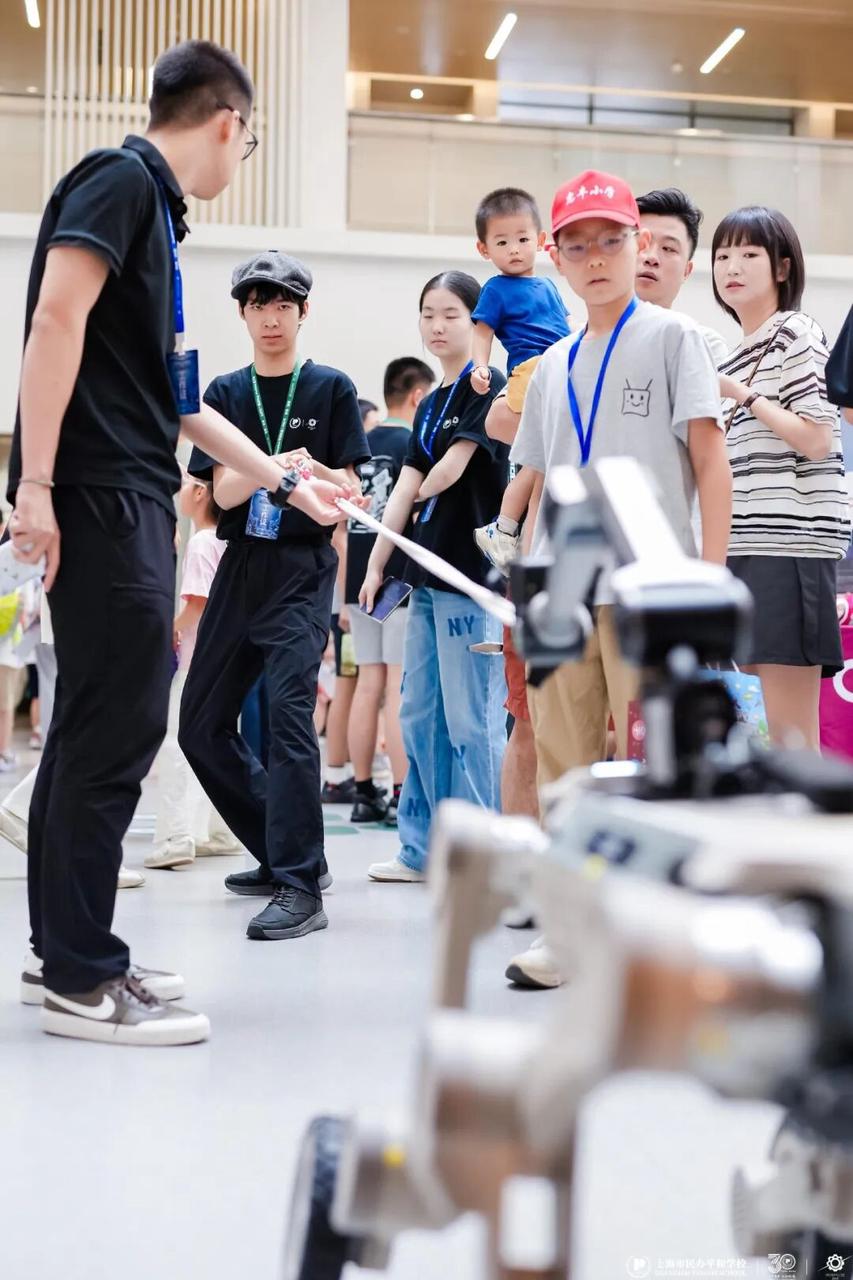
At the Intelligent Transformation exhibition area, SEER Robotics presented a quadruped robot powered by the SEER Robotics Robot Brain, along with a Tower of Hanoi embodied intelligence demonstration.
Through close interaction with students and teachers, technologies that might once have seemed distant or abstract were brought directly into the school environment—and closer to a new generation of learners.
From Seeing Robots to Understanding How They Work
As robots increasingly enter real-world environments such as service applications, they are also becoming a tangible way for younger generations to understand emerging technologies.
A quadruped robot provides an intuitive introduction to robotics. Its distinctive physical form and visible motion capabilities allow students to observe firsthand how a robot perceives its surroundings, maintains balance, and translates decisions into movement.
The Tower of Hanoi demonstration offered another perspective on embodied intelligence.
When the colors or positions of the rings changed, the robot did not require the task to be manually reprogrammed. It could still identify the relevant objects, understand the task, and complete the stacking process autonomously.
These seemingly simple changes make the intelligence behind the robot easier to understand.
A robot is not merely executing a sequence of predefined motions. It must perceive changes in its environment, understand the objective of the task, make decisions, and translate perception and decision-making into continuous physical action.
For students, this turns the experience from simply seeing a robot into understanding how robots perceive, reason, and act.
What they encounter is no longer simply a novel technology product, but a tangible example of how artificial intelligence can connect with and operate in the physical world.
This is also one of the areas SEER Robotics has continued to explore through its work in Robot Brain technology and embodied intelligence.
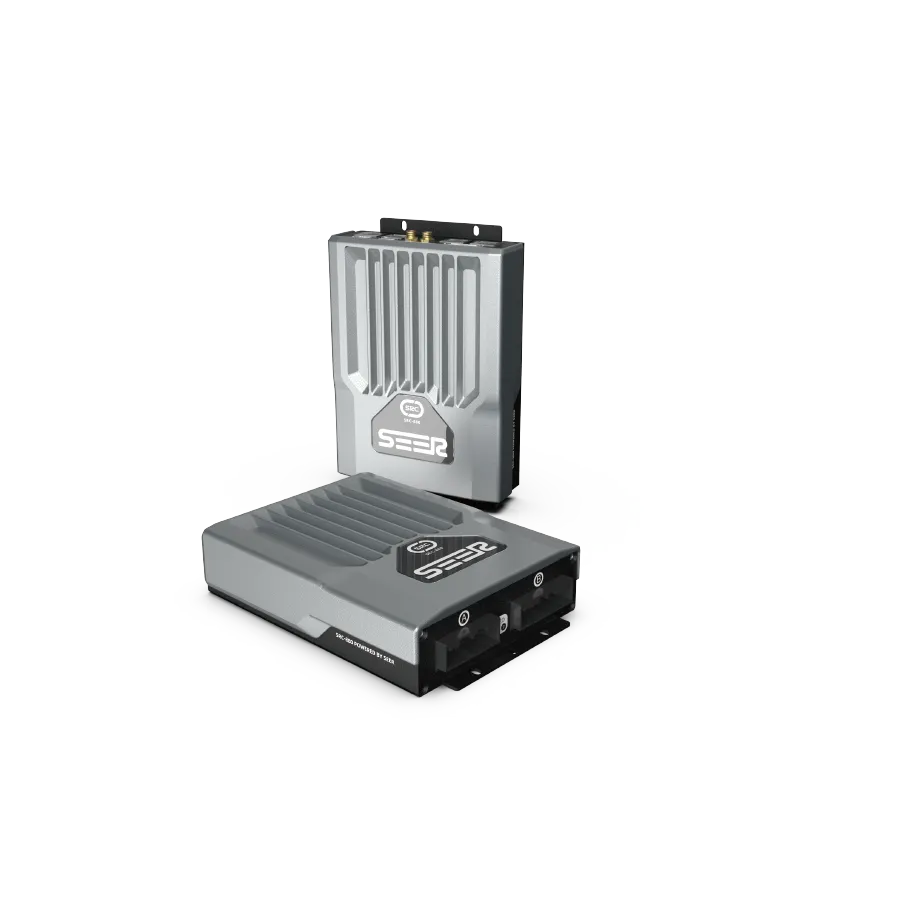
The SEER Robotics Robot Brain is based on a three-layer architecture comprising Model, Cerebellum, and Nerve, designed to strengthen robots’ capabilities in perception, decision-making, and action and enable different robotic forms to operate more effectively in real-world environments.
Bringing Industrial Technology into Education and Connecting Innovation with the Future
The value of technological innovation is not limited to creating more advanced products.
It also lies in giving more people the opportunity to experience technology, understand how it works, and see how they might participate in shaping what comes next.
For technology companies, engagement in science and technology education therefore goes beyond a single exhibition or interactive demonstration.
Schools connect with the next generation, while companies connect with real industrial applications.
When technologies, products, and practical experience from industry enter the classroom, students gain more than a glimpse of what the future might look like. They can see how far today's technology has already progressed and discover the real-world problems that remain to be solved.
This is also one way in which technology companies can contribute to science and technology education and fulfill their broader social responsibilities.
SEER Robotics has long worked within the robotics industry, building technology and practical experience through real-world industrial applications.
By bringing these technologies into schools, SEER Robotics aims to extend innovation beyond industrial environments and make it part of how younger generations encounter and understand technology.
From a quadruped robot capable of autonomous physical interaction to an embodied intelligence demonstration that adapts its execution as environmental conditions change, these experiences make advanced technologies more tangible and easier to understand.
They also turn questions such as “How does a robot understand the world?” into something students can observe directly.
Behind these activities is a long-term commitment to talent development and broader access to technology: giving more young people opportunities to engage with real technologies, build an intuitive understanding of AI and robotics, and gain earlier exposure to the possibilities of future innovation.
Starting from the Campus, Exploring What Comes Next
From seeing a robot, to understanding how it works, and perhaps one day building one themselves, the value of technology education is not necessarily to turn every student into a robotics specialist.
It is to give curiosity the opportunity to become experience—and to give questions the chance to connect with the real world.
Through robotics, the RoboFest Robotics Technology Festival brought schools, companies, and young students together, creating a direct connection between technologies being developed in industry today and the curiosity of the next generation.
SEER Robotics also hopes to continue opening up more real technologies, products, and application scenarios to young people, allowing robotics to become not only an important part of industrial transformation, but also a way for the next generation to understand technology and explore the future.




 Contact Us
