
DATE: 2026/06/27
SEER Robotics Founder & CEO Zhao Yue: Unlocking the Era of Embodied Infrastructure Through a Real-World Data Flywheel
June 24 marked a milestone for SEER Robotics (06106.HK), as the company officially debuted on the Main Board of the Hong Kong Stock Exchange, becoming the first publicly listed company in Hong Kong focused on the "robot brain."
On June 26, SEER Robotics hosted a celebration gala in Shanghai. During the event, Founder and CEO Zhao Yue shared, for the first time, his systematic outlook on the future of the robotics industry and unveiled the company's strategic direction for the next three years.
The event brought together representatives from government agencies, investment institutions, shareholders, and ecosystem partners. Distinguished guests included Li Hui, Deputy Mayor of Shanghai Pudong New Area; Sun Lei, Head of Investment Banking and Co-Head of the Investment Banking Executive Committee, Managing Director at CICC; and Dong Zhonglang, Managing Partner of Hidden Hill Capital, among others, who delivered keynote remarks.
Together, these industry leaders witnessed SEER Robotics' landmark entry into the capital market and highly recognized the company's ecosystem value as the first publicly listed "robot brain" company amid the global wave of hard-tech innovation.

Standing at a new starting point in the capital market, both the industry and investors are asking: In the grand narrative of embodied intelligence, how will the physical world be redefined? What role will SEER Robotics play, and what will serve as its foundation?
In his keynote, Zhao Yue did not present a conventional business roadmap. Instead, he outlined a clear long-term vision—from controllers, to today's open platform, and ultimately to the embodied infrastructure of the future. Throughout this evolution, SEER Robotics is committed to building the foundational capabilities for intelligent systems in the real world.
The following is adapted from Zhao Yue's speech at the listing celebration gala.
Every Leap from 0 to 1 Creates a New Industry Entry Point
When people think of SEER Robotics, they often associate it with controllers, software, robots, ecosystem development, and more recently, embodied AI models and data infrastructure. These are not isolated businesses or disconnected initiatives, but milestones along one consistent strategic trajectory.
"We are not building an ever-growing portfolio of unrelated products. We are continuously establishing new foundational capabilities for the robotics era. Every leap from 0 to 1 creates a new industry entry point, while every expansion from 1 to N lays the groundwork for the next, higher-dimensional breakthrough from 0 to 1." — Zhao Yue
1. Controllers: Giving Robots a Common Language
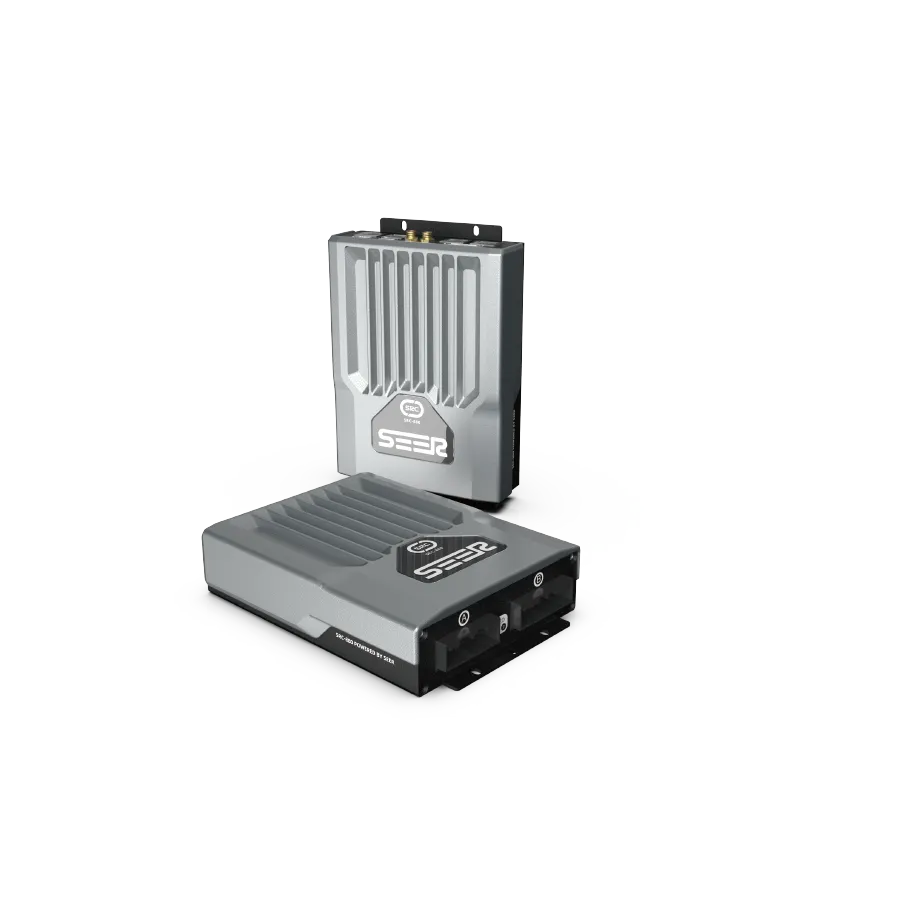
While much of the industry focused on improving robot hardware performance, SEER Robotics chose to begin at the very foundation by pioneering the robot controller. Through continuous industry adoption and ecosystem collaboration, an increasing number of robots now operate on a unified architecture, accelerating large-scale deployment.
According to China Insights Consultancy, SEER Robotics ranked No. 1 globally in intelligent robot controller shipments for three consecutive years from 2023 to 2025, with its global market share increasing to 25%. Based on robot controller shipments in 2025, SEER Robotics ranked first globally and in China, capturing 24.8% and 45.2% market share, respectively.
At the controller stage, SEER Robotics accomplished far more than developing a single product. It established a unified foundational capability and technical language for robots, creating the industry's first standardized entry point.
2. Open Platform: Connecting the Real World
Following the large-scale adoption of its controllers, SEER Robotics advanced to the next milestone by building an open platform. Through its Nebula Platform, scheduling system, and unified architecture, an increasing variety of robot types, industrial applications, and real-world scenarios have been connected within a single intelligent system.
As a result, robots can now be built with modular simplicity, while development, deployment, and collaboration efficiency continue to improve at scale.
Today, robots powered by the SEER Robotics Brain have been deployed in more than 1,000 factories worldwide, serving over 2,100 customers across more than 20 industries.
At the open platform stage, SEER Robotics accumulated far more than robot deployments—it enabled the real world itself to be connected through a unified intelligent system.
The Robotics Industry Is Entering the Era Where Data Determines Success
In the past, the robotics industry sought to answer one question:
How can robots complete a task?
In the future, the defining question will become:
How can robots continuously learn new tasks?
This represents not only a leap in capability, but also a fundamental shift in industry competition.
Previously, robots relied on predefined rules, with competition centered on individual machine performance. Going forward, robots will rely on learning, with success determined by their ability to continuously evolve. The foundation of that evolution is not the model alone, but a continuous stream of high-quality real-world data.
"The greatest barrier to embodied intelligence is not simply the model itself, but the ability to continuously acquire high-quality real-world data." — Zhao Yue
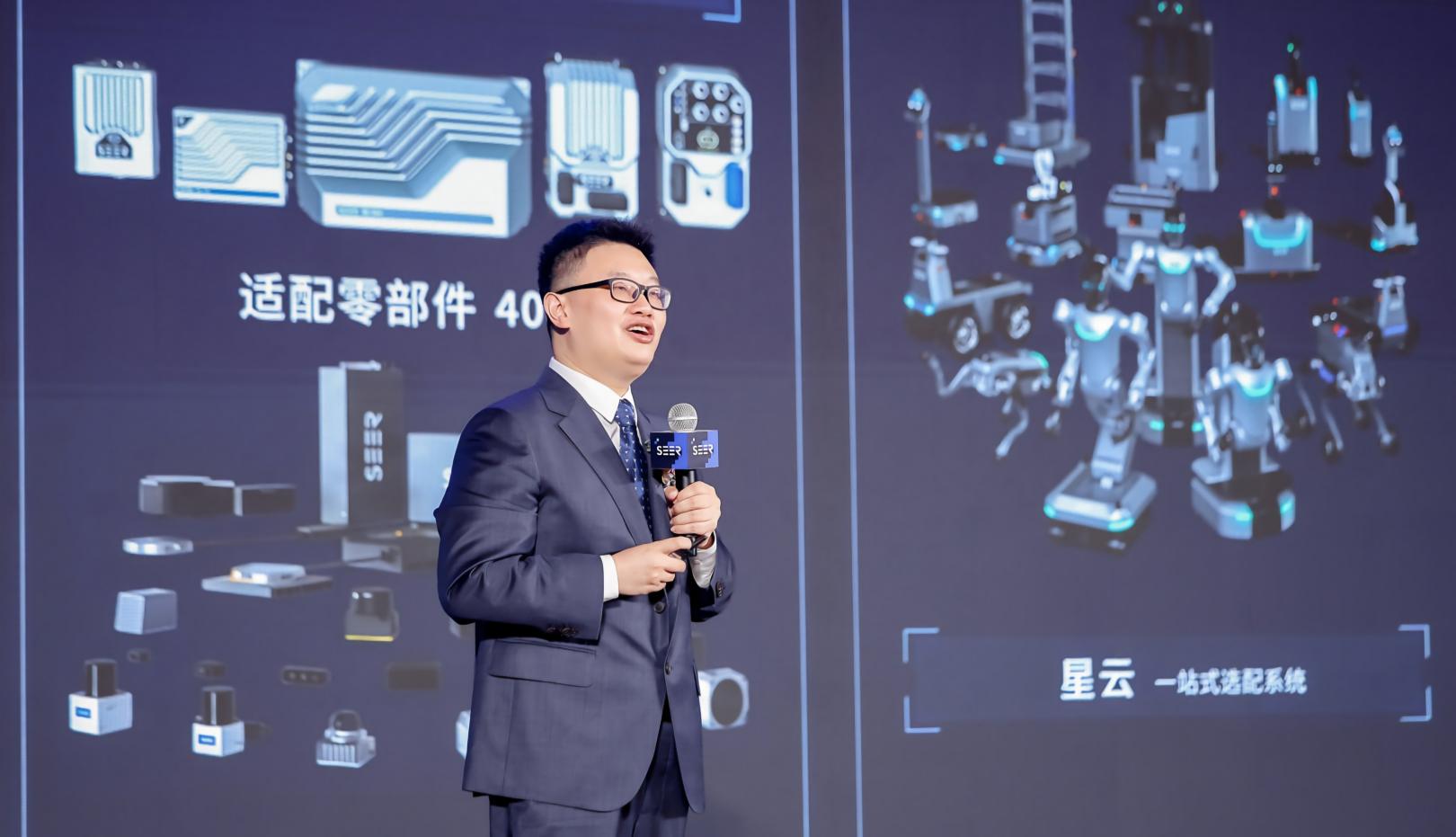
1. Diversity Determines How Broadly Models Understand the World
The data that truly enables embodied AI to evolve continuously cannot come from a single robot, a single task, or a single scenario. Instead, it is generated through the ongoing operation of diverse robot forms across industries and environments.
SEER Robotics has delivered tens of thousands of robots across multiple categories, including humanoid robots, quadruped robots, embodied forklifts, composite robots, and cleaning robots, serving more than 20 industries.
The greater the diversity of robot forms and application scenarios, the broader a model's understanding of the real world becomes.
2. Consistency Determines Whether Data Can Become Intelligence
More data does not necessarily create more value.
If data generated by different robots and sensors cannot be expressed through a unified standard, it cannot support continuous training, iterative improvement, or accumulation into model capabilities.
Through its unified control system, SEER Robotics has standardized data across different robot types and application scenarios, enabling all robots to generate value through a common data language.
What truly drives intelligent evolution is not massive volumes of data, but continuously connected data.
3. Sustainability Determines Whether Models Can Continue to Grow
Laboratories can collect data, and one-time projects can accumulate datasets. However, the data required to continuously improve AI models must be collected sustainably, at scale, and with long-term cost efficiency.
SEER Robotics derives its data from robots operating continuously across more than 1,000 factories worldwide. Every transportation task, scheduling decision, and collaborative operation generates new data assets within real production environments.
The broader the deployment, the more continuous the data feedback—and the faster the models evolve.
4. Authenticity Determines How Far Models Can Ultimately Go
Robots must learn not only from successful task execution, but also from exceptions, corrections, collaboration, and feedback encountered in the real world. These valuable training samples cannot be fully reproduced through simulation.
SEER Robotics remains committed to a real-world data strategy, enabling robots to learn continuously in real factories, real logistics operations, and real manufacturing environments, where models are constantly refined through authentic feedback and experience.
The real world is the ultimate training ground for the robot brain.
Building the Embodied Infrastructure of the Real World
For SEER Robotics, going public does not mark the end of one chapter—it marks the beginning of assuming greater responsibility.
"SEER Robotics is not simply aiming to participate in the robotics industry. We are building the next generation of intelligent systems for the physical world. Together with our global ecosystem partners, we will build the embodied infrastructure of the real world through an open and collaborative approach." — Zhao Yue
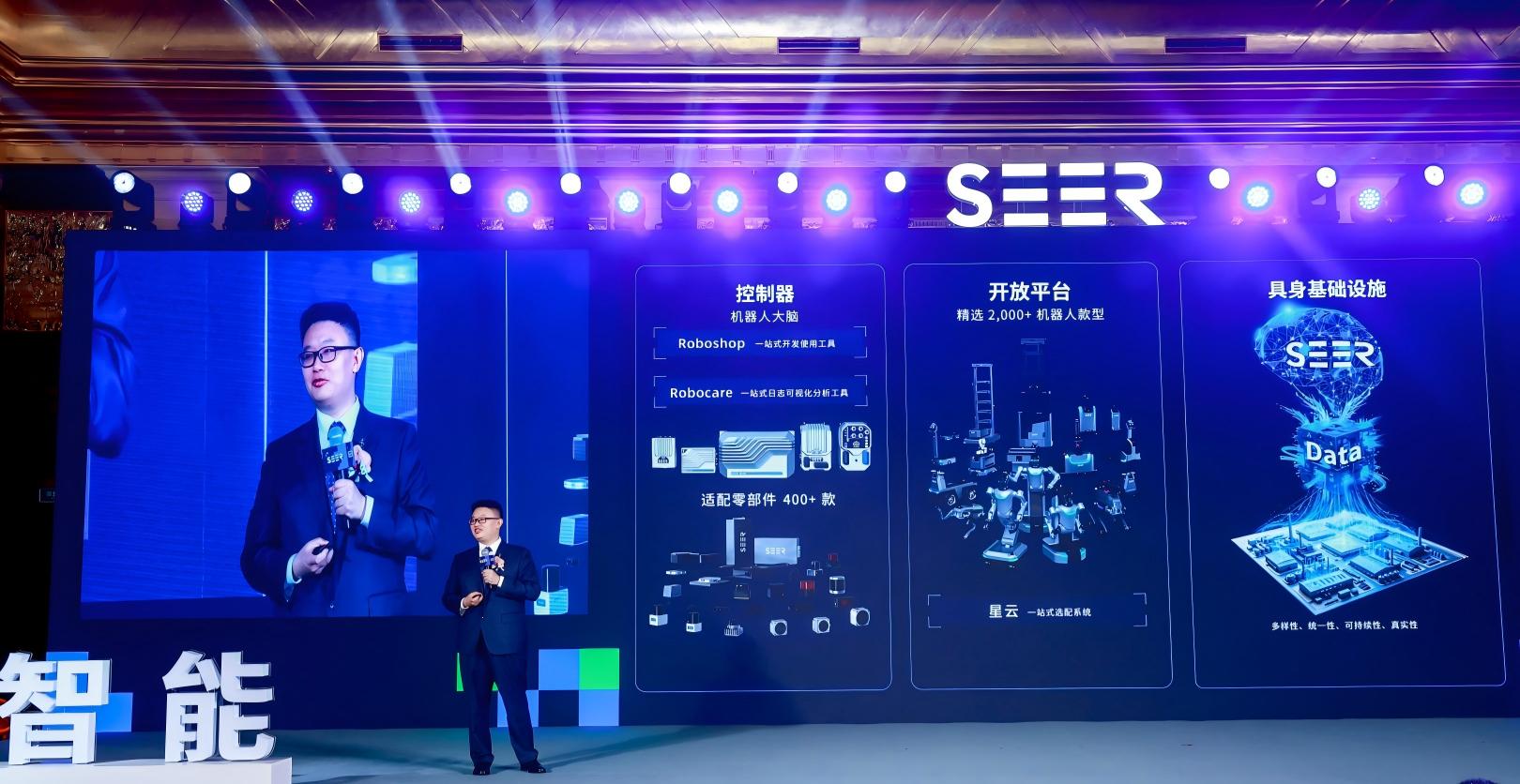
Looking ahead, what matters most will not be the intelligence of a single robot, but whether an entire network of robots can continuously learn and evolve together.
This vision is powered by a self-reinforcing data flywheel:
Robot Deployment → Data Feedback → Closed-Loop Training → Model Iteration → Expanded Deployment
Built around this flywheel, SEER Robotics will focus on three strategic priorities over the next three years, accelerating the transition from technological innovation to large-scale industrial adoption.
1. Enabling Robots to Understand the Real World
In the future, robots will not only move—they will understand the real world. They will comprehend environments, tasks, and collaboration while continuously improving their ability to generalize across diverse scenarios.
SEER Robotics will continue advancing core capabilities, including its AGI Robot Brain and World Model, enabling robots not only to execute tasks, but also to develop cross-scenario generalization and continuously learn and evolve in real-world environments.
2. Enabling Robots to Share the Real World
As more robots connect to the same infrastructure, the knowledge accumulated across diverse scenarios will continuously flow back into the network, empowering every robot to learn from the collective experience of the entire fleet and evolve together.
3. Bringing Embodied Infrastructure to the Real World
From industrial manufacturing and logistics to commercial spaces and future embodied AI applications, an increasing number of physical devices, environments, and operational workflows will connect to the SEER Robotics network, giving the physical world an intelligent foundation that can continuously connect, learn, and evolve—just as the internet transformed the digital world.
SEER Robotics' public listing marks the beginning of a new Long March.
What is truly worth anticipating is not simply the next technological breakthrough, but the emergence of an embodied infrastructure that enables the real world to continuously learn and evolve. SEER Robotics will continue laying the foundation for that future.


/1.png?x-oss-process=image/format,webp)
/1.png?x-oss-process=image/format,webp)
 Contact Us