
DATE: 2026/07/30
TMTPost Speaks with Ye Yangsheng, Co-Founder of SEER Robotics: From Robot Brains to Embodied Intelligence Infrastructure
The following article originally appeared on TMTPost Venture Capital, authored by Guo Hongyun.
A company whose core business is robot brain control systems generates less than 20% of its revenue from controllers. How, then, can it lay claim to a trillion-yuan story?
SEER Robotics listed on the Hong Kong Stock Exchange this June, becoming the first "robot brain" stock in the Hong Kong market. Yet its prospectus revealed a seemingly awkward figure: controllers—the very carrier of its core technology—accounted for less than 20% of revenue. On that ratio alone, the company would appear to have limited upside.
Ye Yangsheng, Co-Founder and Executive Director, sees it differently. "The price tag on a controller is not what matters. What matters is the data asset we accumulate—real-world, cross-scenario, multi-task, and multi-embodiment. Once the data flywheel starts turning, growth is no longer constrained by the unit price of controllers." From controllers in the past to the open platform of today, what SEER Robotics is building is the foundational capability for real-world intelligent systems.
Capital has voted with real money. HHLR, an affiliate of Hillhouse, subscribed for HK$118 million; together with Yuanbao, 3W, GF Fund, Ruihua Investment, Zhonghe Capital, Yishao, and ACCF Capital, eight cornerstone investors subscribed for a total of HK$462 million.
In 2026, the scarcest resource in the embodied intelligence industry is neither algorithms nor computing power—it is data. Since its founding in 2020, SEER Robotics has deployed 50,000 robot brains and accumulated more than 500,000 hours of real-robot data across multiple embodiments, including humanoid robots, quadruped robots, embodied forklifts, composite robots, and cleaning robots.
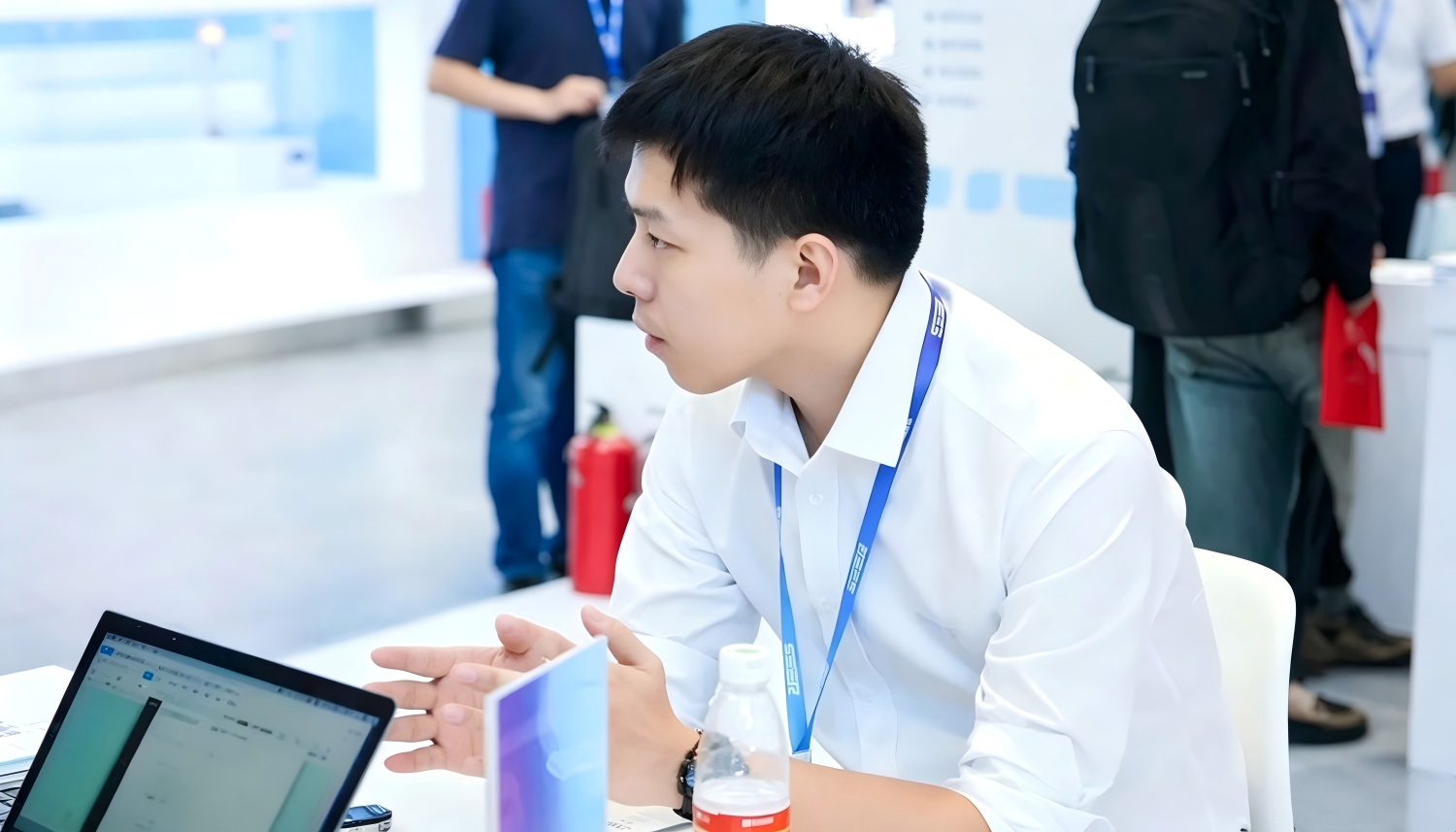
(Ye Yangsheng, Co-Founder and Executive Director)
"The real world is the best training ground for robot brains," Ye observes. "The greater the diversity of robot embodiments and the broader the range of scenarios, the wider the model's understanding of the real world becomes."
SEER Robotics has built a closed data loop spanning data collection, model training, deployment validation, and continuous optimization. As its installed base continues to expand, real-world data will keep the growth flywheel turning, providing an enduring engine for the iteration of embodied intelligence models.
This flywheel is SEER Robotics' real second card.
The First Curve: An Installed-Base Network Built on Controllers
The SEER Robotics story begins in 2013. Ye Yangsheng and his two co-founders—Zhao Yue, Founder, and Wang Qun, Co-Founder—won the RoboCup robot soccer championship three times. At the time, there were few domestic robot companies to join, so they decided to start their own.
For the first two years, the team built complete robots for clients one by one. They soon realized this path was not scalable: each customer had different requirements, and a solution built for one robot could not be replicated for the next.
"We founders all came from software backgrounds and lacked expertise in mechanical structures and hardware," Ye recalls. "So we asked ourselves: what in this stack is actually standardized? The answer was software—and the carrier of that software is the robot controller."
The turning point came with their first controller customer—a large electronics manufacturer. The company approached SEER Robotics with a straightforward proposition: "You'll never outbuild us when it comes to robot bodies. Focus on the controllers, and leave the rest to us." The two sides clicked immediately, and a business model took shape: SEER Robotics builds controllers; customers build robots—each doing what they do best.
A decade later, the strategy has delivered hard numbers. According to a CIC (China Insights Consultancy) report, SEER Robotics has ranked first globally in intelligent robot controller sales for three consecutive years. By 2025 robot controller sales volume, it leads both globally and in China, with market shares of 24.8% and 45.2%, respectively.
Yet the prospectus raises a question worth pondering. Gross margins stand at 79.8% for controllers, 89.3% for software, and 38.4% for complete robots, but the high-margin core products account for a relatively small share of revenue, and economies of scale have yet to fully materialize. Controller revenue share declined from 26.5% in 2023 to 19.3% in 2025, with rapid volume growth offsetting downward pressure on price.
"Selling controllers alone is indeed a market with a relatively low ceiling," Ye acknowledges. "A controller may be the single most expensive component in a robot, but it accounts for only 10% to 20% of the robot's price—naturally generating less revenue than selling an entire robot." His response is not a defense but a redefinition of the rules of the game.
Within SEER Robotics, the core KPI is not controller revenue but installed base: regardless of who builds the robot, every unit running a SEER controller counts as one installation. Over 90% of these robot bodies are not manufactured by SEER itself; customers use SEER controllers to build their own robots, which SEER then brings into its ecosystem. This is how a company that does not engage in manufacturing ends up with the broadest portfolio of robot embodiments in the market.
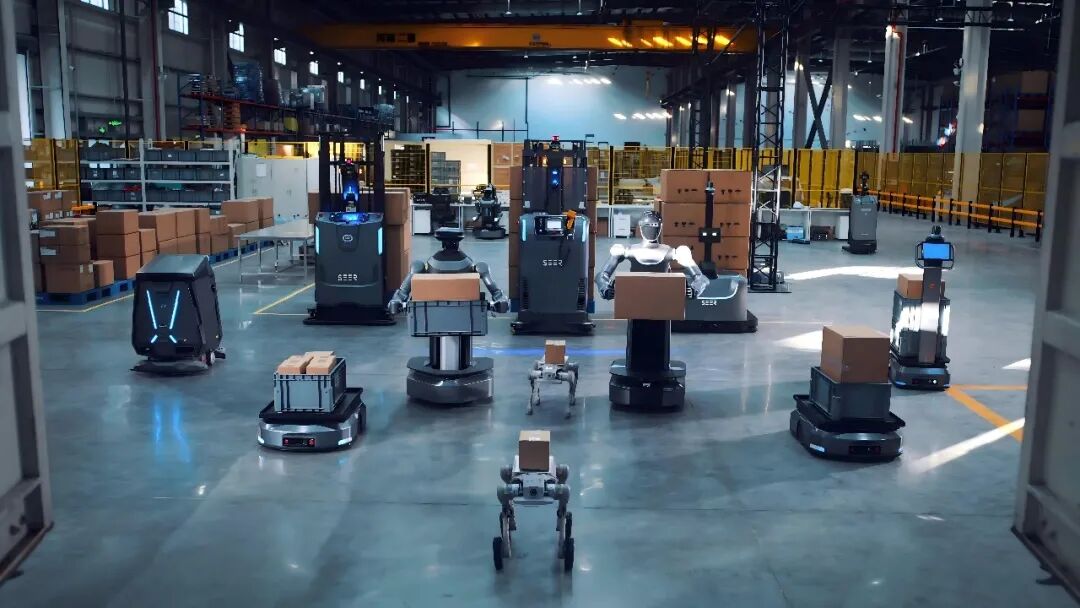
Before the concept of embodied intelligence gained traction, the industry referred to an AMR base paired with a collaborative arm as a "composite robot." The AMR had its own controller and the collaborative arm had its own controller—essentially a forced marriage that made on-site commissioning extremely cumbersome, which is why the product never sold well.
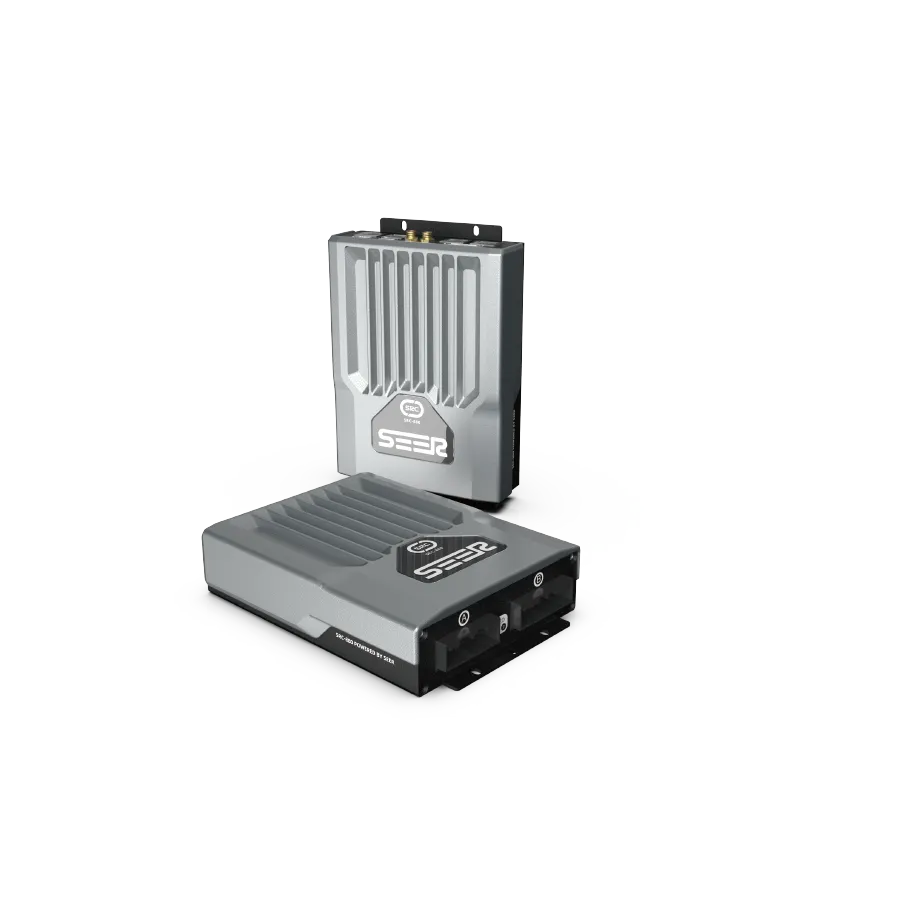
Now, with embodied intelligence on the rise, SEER Robotics has integrated mobility, dual-arm manipulation, vision, and force control into a single controller. Its proprietary embodied intelligence robot brain, the SRC-5000, delivers unified control, scheduling, and coordinated operation, providing stable support for the large-scale deployment of humanoid robots.
"When a person on a production line needs to move, they don't walk to a spot and then reach out—they reach out while walking," Ye explains. "Those operations were virtually impossible under the old architecture; they require an integrated control architecture." What SEER Robotics has truly accumulated, he says, is not just the number of robots, but the fact that the real world is beginning to be unified into a single intelligent system.
He even offers a litmus test: observe whether a wheeled-arm robot on the market can move its arms while moving; if it cannot, it is likely still running on a traditional solution.
The Second Curve: 500,000 Hours of Real-Robot Data and the World Model
In 2026, the embodied intelligence industry is at an inflection point.
The China Embodied Intelligence Industry Development Report (2026) projects that China's embodied intelligence market will reach RMB 1.09 trillion; a Frost & Sullivan white paper shows the global market growing from RMB 94.9 billion in 2025 to RMB 408.4 billion in 2030, a CAGR of over 33%. Yet every industry report points to the same bottleneck: a severe scarcity of high-quality, physical-world data.
This is no empty claim. Companies building embodied foundation models are scrambling for data: simulation data is not realistic enough, teleoperation data lacks diversity, and real-robot, real-scenario data is both scarce and expensive. SEER
Robotics, leveraging its controllers, has already amassed 500,000 hours of real-robot, real-scenario data from more than 1,000 factories running continuously online worldwide.
Ye divides real-robot data into two categories. The first is laboratory teleoperation data, collected by having humans remotely operate robots in constructed experimental settings; its diversity is poor. The second is real-robot, real-scenario operational data, generated as robots perform actual work in real factories—the highest quality available. SEER Robotics' data falls into the latter category and meets four criteria: authenticity (a large volume of real factory scenarios), diversity (more than 20 industries and over 2,000 robot models), consistency, and sustainability.
Consistency is SEER Robotics' most distinctive moat.
The industry faces a widely acknowledged challenge: data from different sources uses inconsistent formats and misaligned timestamps, and aligning multi-source data for joint training requires extensive preprocessing. Because all SEER robots run on its own controllers, the company can define unified data schemas and formats within the controller itself, with hardware-level timestamp alignment across all joints and sensors.
"Data coming back from any robot running a SEER controller can be used directly for training, with no special processing required," Ye reveals.
On data security, Ye does not shy away from the debate. Robot data is operational in nature—similar to data generated by a human operator—and its sensitivity is limited after desensitization. What is more valuable is anomaly data: data captured when a robot encounters an error, along with the data from the normal operations immediately before and after. Much like the takeover rate in autonomous driving, the data at the moment of human intervention is the most valuable. Customers are typically willing to provide such high-quality data.
In the second half of this year, SEER Robotics will play its second card: releasing an embodied world model and open-sourcing hundreds of thousands of hours of real-robot data.
In Ye's view, the technology roadmap for robots resembles that of autonomous driving: use traditional planning-and-control operational data, train a foundation model via a Mixture-of-Experts (MoE) architecture, then apply reinforcement learning fine-tuning in vertical scenarios to ultimately produce specialized models for autonomous forklifts, cleaning robots, manipulation robots, and more. The foundation model is trained on all data together; the vertical models are the result of targeted fine-tuning.
SEER Robotics' ambitions extend beyond robot controllers.
Going forward, the company will build VLA (Vision-Language-Action) world models while also selling cleaned, semantically enriched data to companies training models. This means SEER Robotics is shifting from "selling hardware" to "selling models, data, and infrastructure." Once the flywheel turns, installations generate more data; data trains stronger models; stronger models make robots smarter; and smarter robots attract more installations—so that growth is no longer constrained by the unit price of controllers.
For the flywheel to turn, real scenarios must feed it a continuous supply of data. What do those scenarios look like?
Bringing the Flywheel to Life: Scenarios and Markets
Ye has a clear principle: not every scenario needs to be embodied.
"The scenarios worth pursuing with smarter, more generalizable robots are those that traditional methods simply cannot handle. On a factory assembly line, what matters is not generalization but efficiency; adding too much 'intelligence' can actually reduce efficiency and compromise success rates—that doesn't make sense. Scenarios that assembly lines or traditional robots already handle well have no need for embodiment."
What is worth replacing with intelligent robots are the steps that still rely on human labor and that traditional automation cannot handle. Ye cites three scenarios.
The first is loading and unloading. At Foxconn, for example, production lines are already highly automated, but the steps of moving materials from carts or racks to the line, removing finished items to the next station, and performing initial inspections along the way still depend on people. The reason is that the shape and position of materials vary each time, beyond what fixed routines can cover. This is precisely where dual-arm robots with vision and force control can step in: they do not require millimeter-precise positioning, but can see the material, feel the grip force, and perform flexible operations.
The second is forklift unloading at docking bays. Trucks park in different positions each time, and once the trailer doors open, the shape and arrangement of the cargo are unpredictable—rendering the preprogrammed routines of traditional automated forklifts useless and forcing reliance on human drivers. The autonomous driving industry shifted from rules-based planning to end-to-end, data-driven models precisely because the rules cannot all be written down. The same logic applies to forklifts in factories: only models trained on real-robot data can handle unstructured environments and make true unmanned operation possible.
The third is flexible cable insertion. Before computers or servers are assembled into finished products, they require power-on testing, which involves plugging and unplugging flexible cables such as Ethernet cords. Human hands do this effortlessly, but purely mechanical structures cannot: the cables are soft, their deformation varies each time, and the motion cannot be repeated along a fixed trajectory. This requires dexterous hands, force-controlled arms, and a model that understands the semantics of the cable-plugging action. Such flexible manipulation scenarios are extremely common in manufacturing yet have long been overlooked by automation—precisely the domain where embodied intelligence models can deliver the greatest value.
The three scenarios share a common characteristic: they are open or semi-open, unstructured, and demand generalization. Generalization is precisely what models trained on real-robot data can provide. This means that every robot deployed into these scenarios is not only working on site but also continuously generating high-quality data that flows back into the flywheel, creating a positive feedback loop between scenarios and data.
SEER Robotics' deployment strategy also serves this positive feedback. According to Ye, the company does not limit itself to a single scenario but pursues scenario diversity, collecting data wherever it can. This is critical for data diversity and model generalization. At the same time, it does not restrict data collection to dual-arm humanoid-like robots; data from other embodiments is collected in parallel, with the proportion of humanoid-like data gradually increasing over time.
Overseas markets are another growth engine. International revenue currently accounts for nearly 20%, and replicating the data flywheel abroad requires deploying the same infrastructure overseas. The flywheel, in other words, is not only turning but also expanding globally.
The central focus is one thing: accelerating the flywheel by continuously deploying more robots and refining the cloud-based data infrastructure so that data flows back continuously and at low cost. This is the goal Ye has set for the next three to five years. "Leveraging our robot brains, open platform, and multi-embodiment robot products, we aim to build out the embodied intelligence infrastructure and lower the barriers across the entire chain—from hardware setup to data acquisition to model training and deployment," Ye says.
In Summary
SEER Robotics spent a decade proving out its first curve. It has ranked first globally in controller market share for three consecutive years; tens of thousands of robots running SEER controllers operate in real factories, and the installed base continues to double each year. That 19.3% revenue share on the prospectus is not a ceiling—it is a starting point.
In the second half of this year, the embodied world model will be officially released, and hundreds of thousands of hours of real-robot data will be open-sourced to the industry. When the data network built by controllers begins to feed the models, and the models make robots smarter—thereby attracting more installations—the flywheel will truly be in motion.
Ye believes that the future competition in robotics will not be about models and data alone, but about the embodied intelligence infrastructure that supports models in running, learning, and evolving continuously.
SEER Robotics holds two cards: one has been played, and the other is about to be turned.


/1.png?x-oss-process=image/format,webp)
/1.png?x-oss-process=image/format,webp)
 Contact Us