
DATE: 2026/09/15
From Tug-of-War to Ball Retrieval: Inside the Foundational Capabilities of the SEER Robotics Robot Brain
On September 15, the 2026 Feishu Future Infinite Conference and Doubao Work Launch Event was held in Beijing.
At the event's robotics stage, a tug-of-war challenge featuring a quadruped robot quickly drew a crowd. Tim, founder of MediaStorm, along with other industry guests, also joined the interactive challenge.
Powered by the SEER Robotics Robot Brain, the quadruped robot went head-to-head with participants on site. Despite its compact form, it continuously generated force through its joints while maintaining posture and stability under changing loads, giving visitors a close-up view of its physical strength and dynamic motion capabilities.
On the surface, the demonstration looked like a simple test of strength.
For the robot, however, the real challenge was not merely how much force it could generate, but how reliably and coordinately it could control its own body.
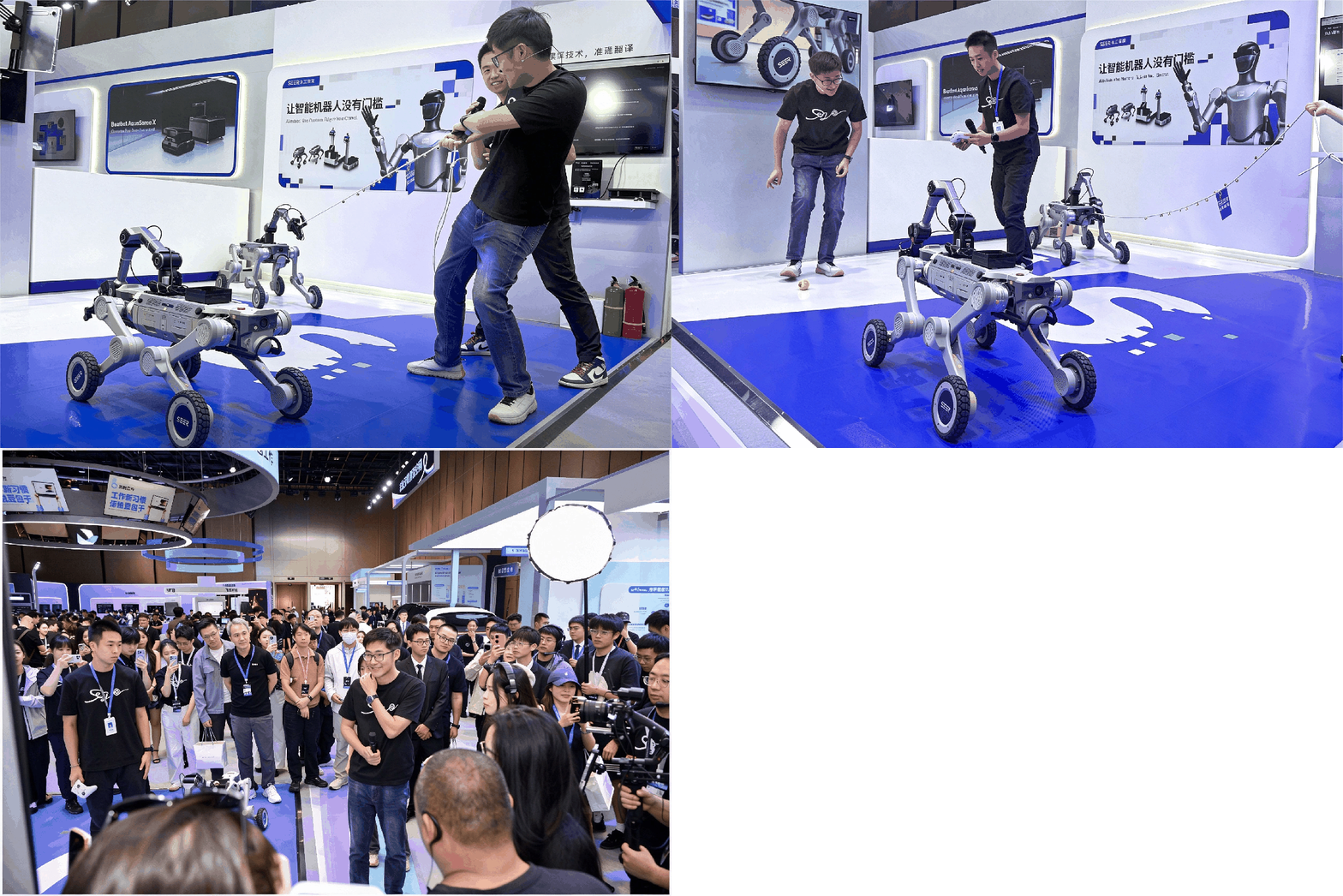
Tug-of-War Tests More Than a Robot's Strength
A robot's ability to stand, walk, turn, and physically interact with its environment cannot be attributed to hardware alone.
Joint torque determines how much force a robot can produce. Turning that force into stable and controlled movement, however, depends on the robot's underlying control capabilities.
This becomes particularly important during dynamic interactions such as tug-of-war.
As the pulling force continuously changes, the robot's posture changes with it. To remain stable while maintaining force, the quadruped must adjust its movements in real time according to its own state and coordinate multiple joints simultaneously.
What the audience sees is a tug-of-war challenge. What is actually being tested is the robot's ability to continuously control its own motion under changing physical conditions.
Hardware determines the force a robot is capable of producing. The Robot Brain determines how that force is coordinated, controlled, and translated into stable movement.
From Controlling the Body to Understanding the Task
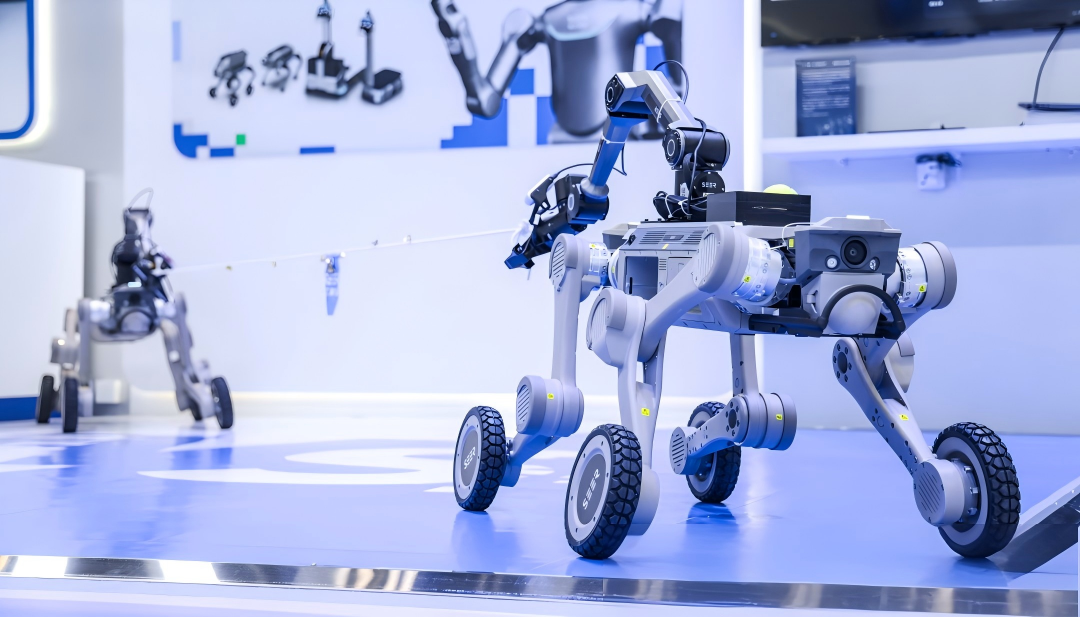
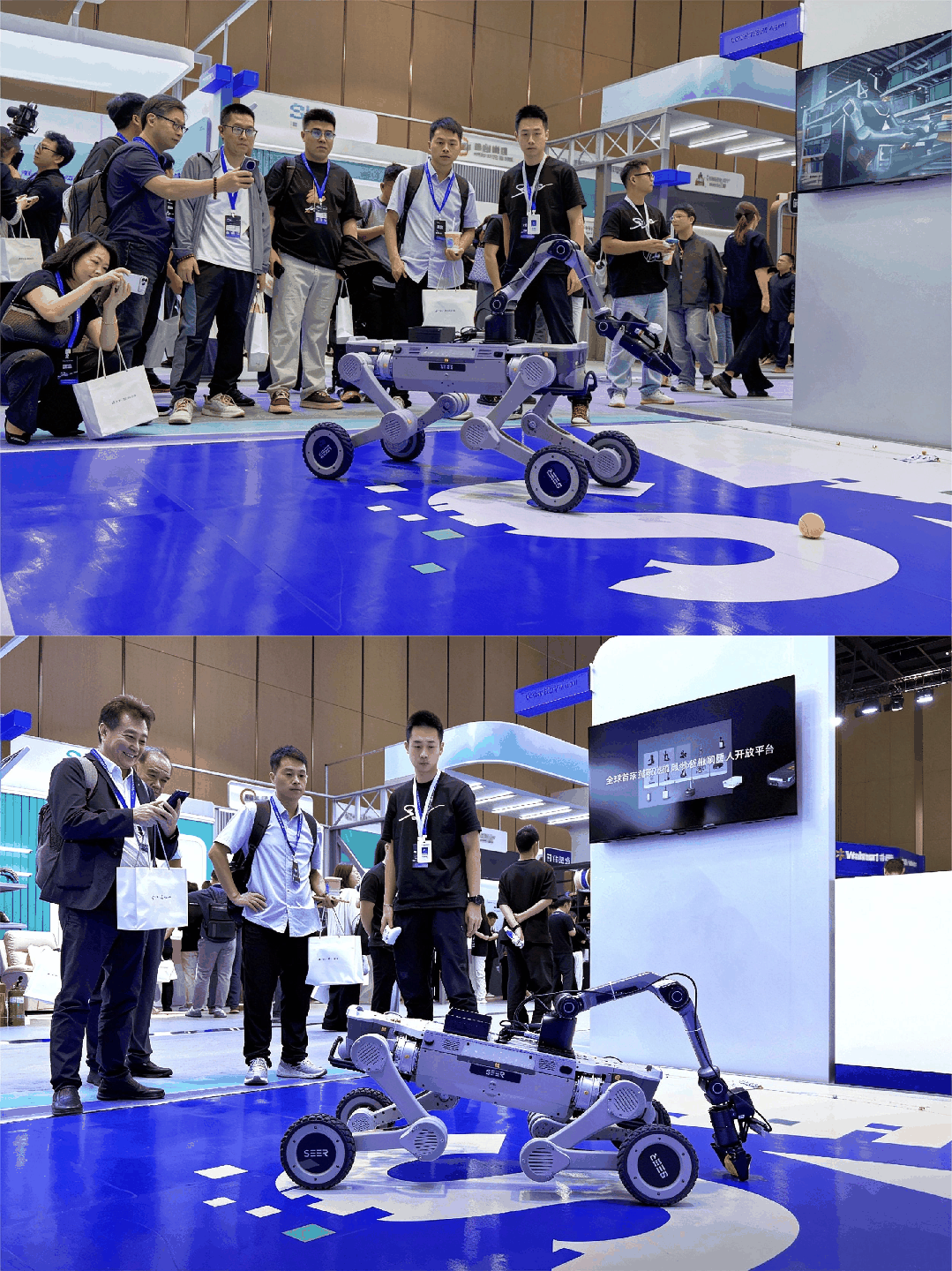
A second quadruped robot demonstrated another dimension of the SEER Robotics Robot Brain: its ability to perceive the environment, understand a target, and complete a task autonomously.
During the demonstration, visitors could throw a tennis ball onto the floor. The robot autonomously detected and located the ball, approached it, picked it up, and placed it into a basket mounted on its back.
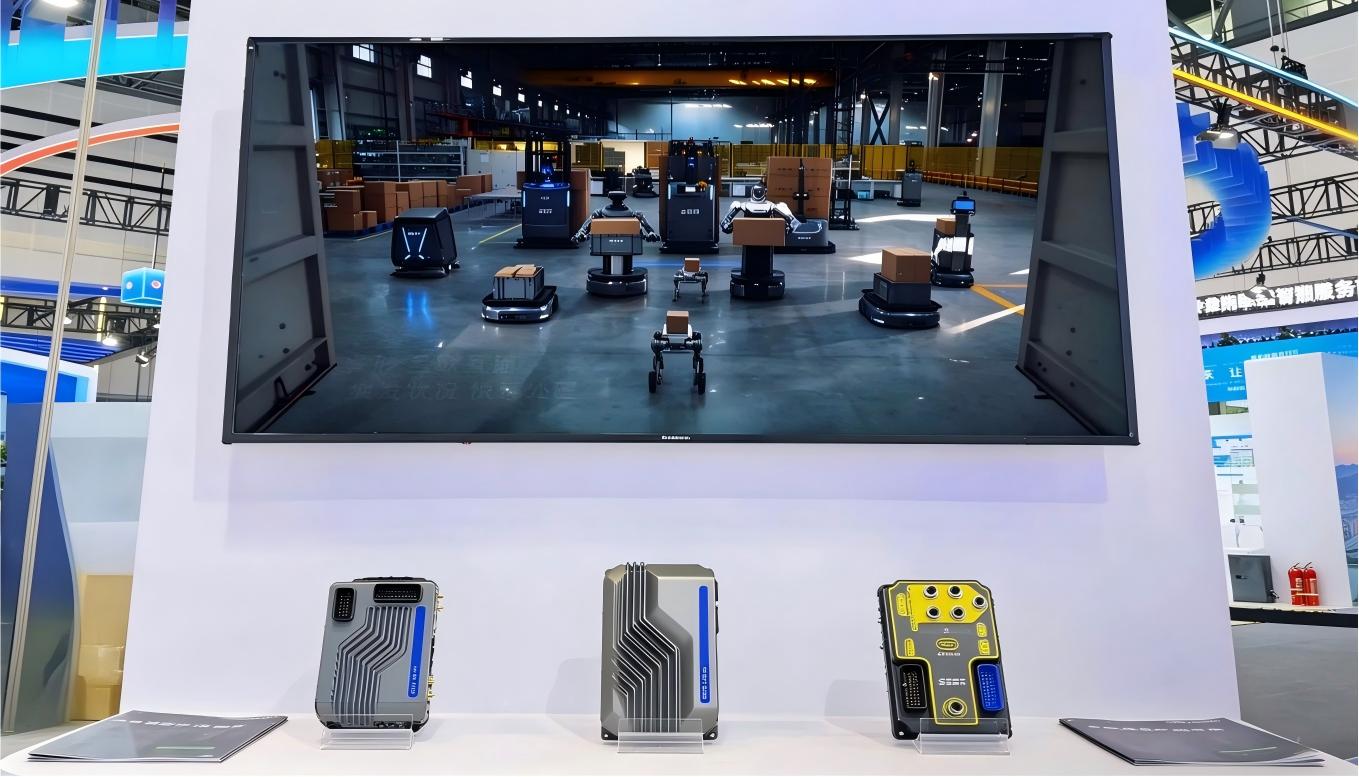
The SEER Robotics Robot Brain is built on a three-layer architecture comprising Model, Cerebellum, and Nerve.
The Model is responsible for understanding tasks, processing information, and making decisions.
The Cerebellum translates those decisions into stable and coordinated motion.
The Nerve connects the Robot Brain with the physical robot, transmitting commands to the body while continuously feeding real-world operating states back into the system.
From maintaining stable force during tug-of-war to detecting, picking up, and placing a ball, the two demonstrations may appear very different. Underneath, however, they rely on the same complete chain of capabilities spanning perception, decision-making, motion control, and physical execution.
The purpose of the Robot Brain is not simply to make a robot move. It is to enable the robot to understand what needs to be done and translate intelligence into physical action.
When AI Becomes a Partner at Work
While bringing AI into the physical bodies of robots, SEER Robotics is also integrating AI into its own internal workflows.
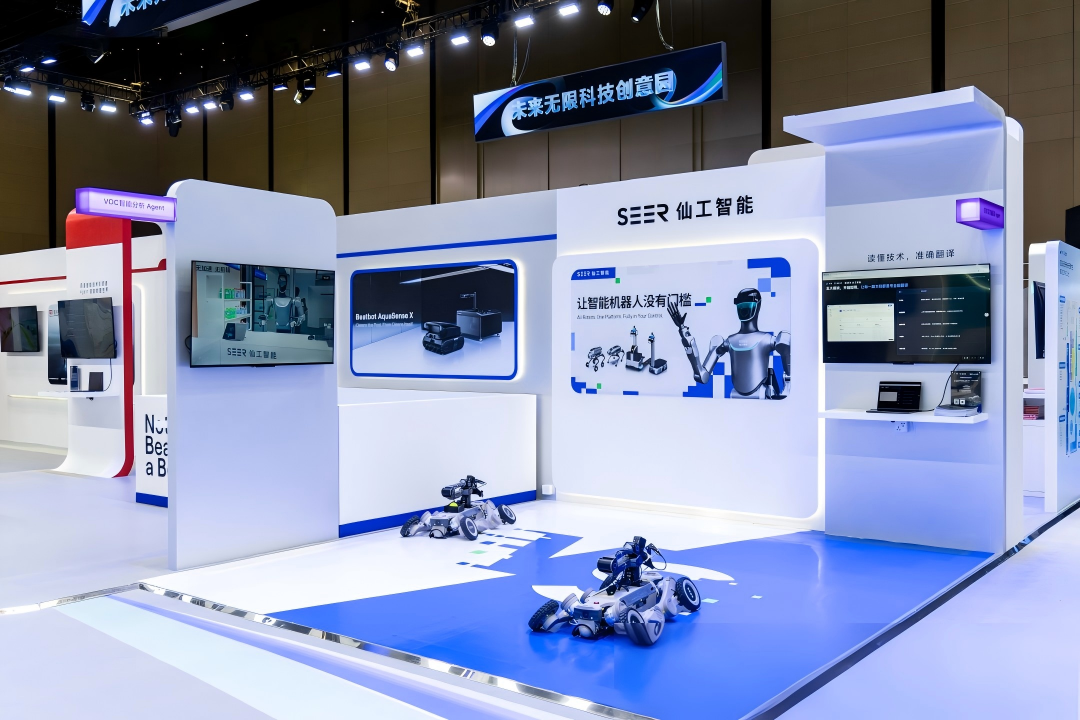
At the conference, SEER Robotics presented a Technical Documentation Translation Agent developed together with Feishu.
When teams need to process large volumes of technical documentation, the AI Agent can assist with understanding and translating specialized content, moving AI beyond information retrieval and question answering into concrete business workflows.
It also offers a practical example of one of the ideas highlighted at the Feishu conference: what happens when AI agents become partners at work.
As agents become part of everyday workflows, AI is changing how organizations operate.
And as intelligence becomes part of the Robot Brain, AI is also changing how robots interact with the physical world.
From understanding and translating technical documents to enabling robots to perceive, decide, and act, AI is moving beyond information processing in the digital world toward task execution in the physical world.
For SEER Robotics, the goal is to give robots of different forms a shared Robot Brain capable of perception, decision-making, and action—turning intelligence into real-world productivity.
Register below to request tickets
 Contact Us