
DATE: 2026/08/20
From Foresight to Reality | SEER Robotics: From One Million Robots to a Universal Brain for Embodied Intelligence
On August 19, the 2026 World Robot Conference (WRC) officially opened.
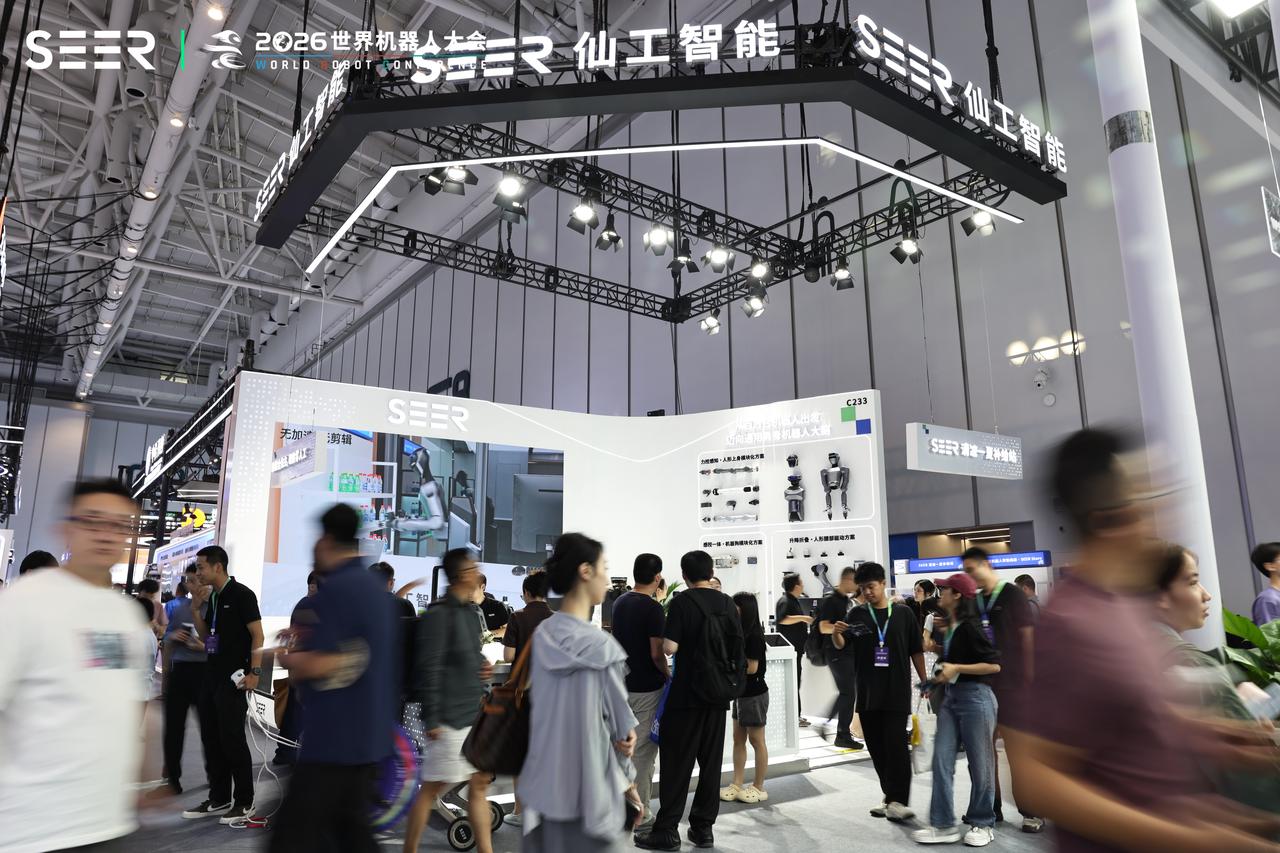
This year, under the theme "From Foresight to Reality," SEER Robotics brought its robot brain, world models, real-robot data, and multi-form robots to the show floor.
When it comes to the future of embodied intelligence, the industry has produced no shortage of predictions: more powerful models, stronger generalization, longer task chains, and robots entering an ever-wider range of real-world scenarios.
What truly matters, however, is whether these predictions can move beyond models and laboratories—into real robots, real tasks, and real environments—and withstand sustained validation in the physical world.
This is precisely the answer SEER Robotics brought to WRC: putting the robot brain into robots of different forms, running embodied models on real tasks, and enabling robots to continuously generate real-world data on the job—turning foresight into something that can truly be seen.
On August 20, SEER Robotics held a press conference to officially unveil three strategic directions for embodied intelligence, advancing its mission of making embodied intelligence universally accessible:
- Universalizing the robot brain: Through sustained investment in robot-brain hardware, a modular ecosystem, and model capabilities, SEER Robotics is building a universal robot-brain architecture that spans diverse robot forms.
- Building real-world data infrastructure: The company has established an embodied-intelligence data subsidiary to connect the full pipeline of real-robot data collection, governance, training, evaluation, and model feedback, creating the data infrastructure for the robot brain's continuous evolution.
- Co-building an evolution network of one million robots: Through the "Ladder Program," SEER Robotics is working with ecosystem partners to deploy one million embodied robots into the real world.
Guided by these three strategies, SEER Robotics will prioritize the stable deployment of embodied intelligence in core scenarios in the near term. Over the long term, the company will evolve toward an embodied-intelligence foundation that spans degrees of freedom, robot configurations, and modalities—gradually moving complex models and data behind the scenes and leaving behind capabilities that robots can use directly.
I. Universalizing the Robot Brain
SEER Robotics plans to further strengthen its robot-brain capabilities. Building on its existing strengths in robot control and platform technology, the company will continue to extend into embodied models and intelligent decision-making. Through sustained investment in robot-brain hardware, a modular robot ecosystem, and embodied-model capabilities, it is building a universal robot-brain architecture for diverse robot forms.
- At the hardware level, the robot brain must accommodate an increasingly diverse range of robot configurations and computing demands, progressing from localized control to whole-body coordinated control;
- At the ecosystem level, SEER Robotics aims to connect modules such as robotic arms, joints, dexterous hands, sensors, and actuators, enabling different components to be assembled more rapidly into new robot forms;
- At the model level, the company is continuing to build capabilities across spatial understanding, task reasoning, motion generation, world modeling, and long-horizon tasks, so that different model capabilities can be invoked according to the scenario and task—and ultimately delivered into robots through a single, unified robot brain.
In SEER Robotics' view, the robot brain is not simply a large model running on a robot, nor a domain controller, nor a computing board.
Robot Brain = Model + Cerebellum + Nervous System—a three-in-one architecture that endows robots with a complete intelligence system.
- The model layer serves as the cognitive center, responsible for "perceiving and reasoning": environmental perception, task understanding, and intelligent decision-making;
- The cerebellum layer serves as the execution center, responsible for "carrying out the motion": motion planning, trajectory generation, and real-time execution, ensuring that robot movements are accurate, stable, and safe;
- The nervous-system layer serves as the connectivity center, responsible for "linking brain and body": through unified interfaces and a protocol stack, it adapts to more than 400 core components, connecting sensors, joints, and actuators. It sends control commands down to joints and actuators while feeding real-time position, velocity, torque, and sensor status back up, forming a complete closed loop.
II. Building Real-World Data Infrastructure
If universalizing the brain answers how embodied-intelligence capabilities are formed, real-world data answers how those capabilities continue to evolve.
SEER Robotics has officially established an embodied-intelligence data subsidiary—Hangzhou Kaiwu Innovation Embodied Intelligence Technology Co., Ltd.—to connect the complete pipeline of real-robot data collection, multi-source ingestion, data governance, model training, simulation-based evaluation, and capability feedback, building the data infrastructure for the robot brain's continuous evolution.
As robots operate in real-world scenarios, they continuously generate authentic data on perception, motion, state, and feedback. After multi-source ingestion and data governance, this data enters model training and iteration; the continuously improving model capabilities are then brought back to the production floor, creating new task value and generating further real data.
This creates a closed loop in which real robots generate real data, data drives model iteration, and models return to production to continuously create new data.
Around this data closed loop, SEER Robotics will further build high-quality real-robot data covering autonomous robot operation, human takeover, robot simulation, cross-configuration real robots, and human behavior. This wi
ll form a comprehensive dataset comprising scene-level 3D Gaussian digital-twin assets, high-fidelity first-person human demonstration data, real-robot operational data, and task-level intervention data.
At the same time, SEER Robotics will build a next-generation embodied-intelligence data and agent platform, and plans to open-source a comprehensive embodied dataset and its in-house evaluation benchmark in the fourth quarter of this year.
From a single real task, to continuously accumulated data, to ever-evolving models and robot capabilities—SEER Robotics is enabling robots to form a genuine evolutionary cycle in which they grow smarter the more they work.
III. The Ladder Program: Co-Building an Evolution Network of One Million Robots
At the press conference, SEER Robotics announced that the "Ladder Program," launched jointly with Mars Accelerator, is now officially underway, and unveiled the first cohort of 20 ecosystem partner companies spanning multiple key links in the embodied-intelligence value chain.
The addition of the first partners marks the program's transition from goal-setting to ecosystem co-building and real-world deployment.
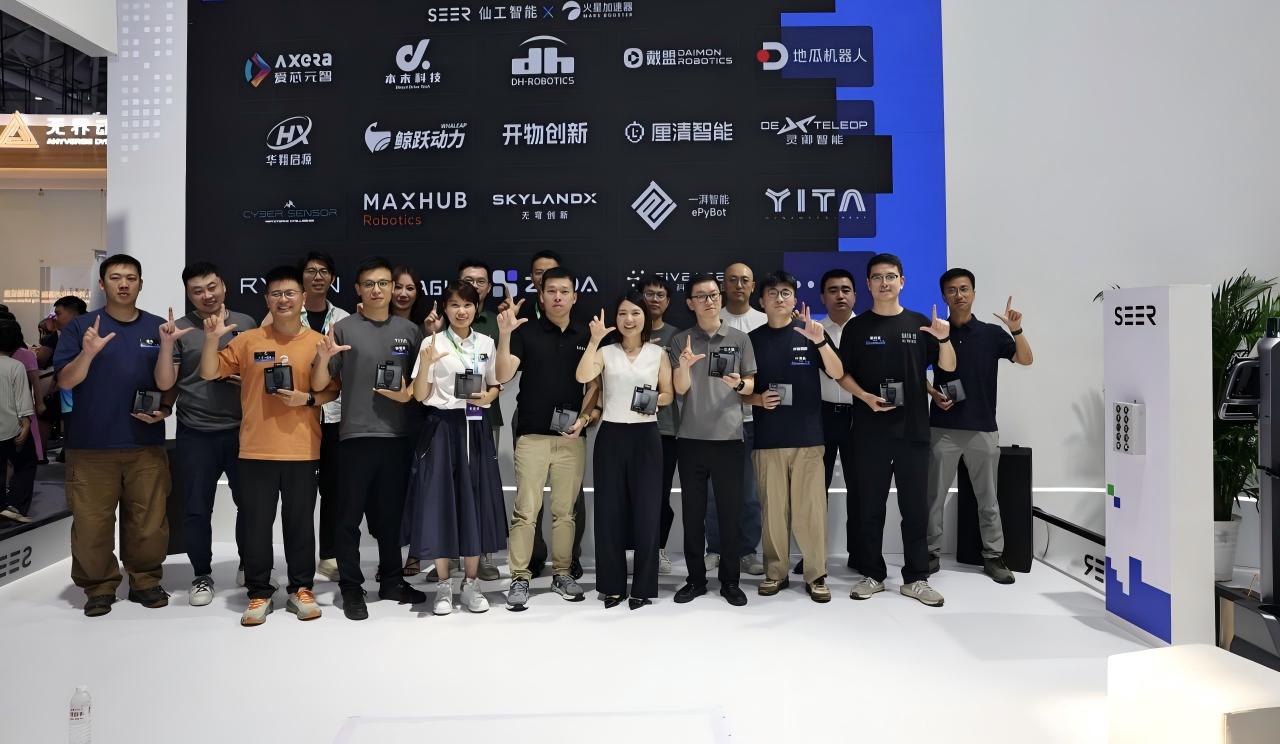
The core objective of the Ladder Program is: by 2030, to work with ecosystem partners to deploy one million embodied-intelligence robots, covering diverse robot forms and capable of continuously performing a wide range of manipulation tasks across all kinds of real-world scenarios.
This goal is not simply about the number of robots, nor is it something a single company can achieve alone.
Behind embodied intelligence lies a long and complex industrial chain: data, models, chips, computing power, components, robot bodies, scenarios, applications—every link is indispensable.
Accordingly, the Ladder Program is not a simple partner-recruitment drive. It aims to join hands with more industry partners to co-build a broad embodied-intelligence ecosystem that is open, symbiotic, interconnected, and mutually prosperous.
In this process, SEER Robotics will open up its accumulated expertise in industrial and commercial scenarios, industry applications, and robot adaptation. Together with ecosystem partners, the company will drive the large-scale deployment of embodied robots through joint validation in real scenarios, productization and scale collaboration, industrial capital and startup incubation, and global connectivity.
To date, SEER Robotics has served nearly 3,000 customers across pan-industrial and commercial scenarios, built expertise in more than 20 industry verticals, and established an adaptation system for over 400 core components.
These real-world industry assets will serve as a critical foundation for the continued expansion of the Ladder Program's one-million-robot evolution network.
When one million robots enter the real world, what truly increases is not just the number of robots. It is more real tasks, more real data, more model experience—and a physical world that the robot brain is continually understanding and learning from.
From a single robot, to more robots entering real scenarios, to data feeding back into intelligence—this is an evolutionary path that cycles continuously and climbs ever upward.
There are no shortcuts in the evolution of intelligence; it can only be climbed step by step.
IV. Seen at WRC: Making Robots Smarter with Every Task
If the press conference answered where SEER Robotics is headed, the WRC booth showed what that path looks like today—what can already be seen with one's own eyes.
1. From Single Motions to Long-Horizon Tasks
Once embodied intelligence truly enters the real world, robots no longer face isolated motions. They must understand tasks, handle environmental changes, plan sequential steps, and execute those decisions reliably.
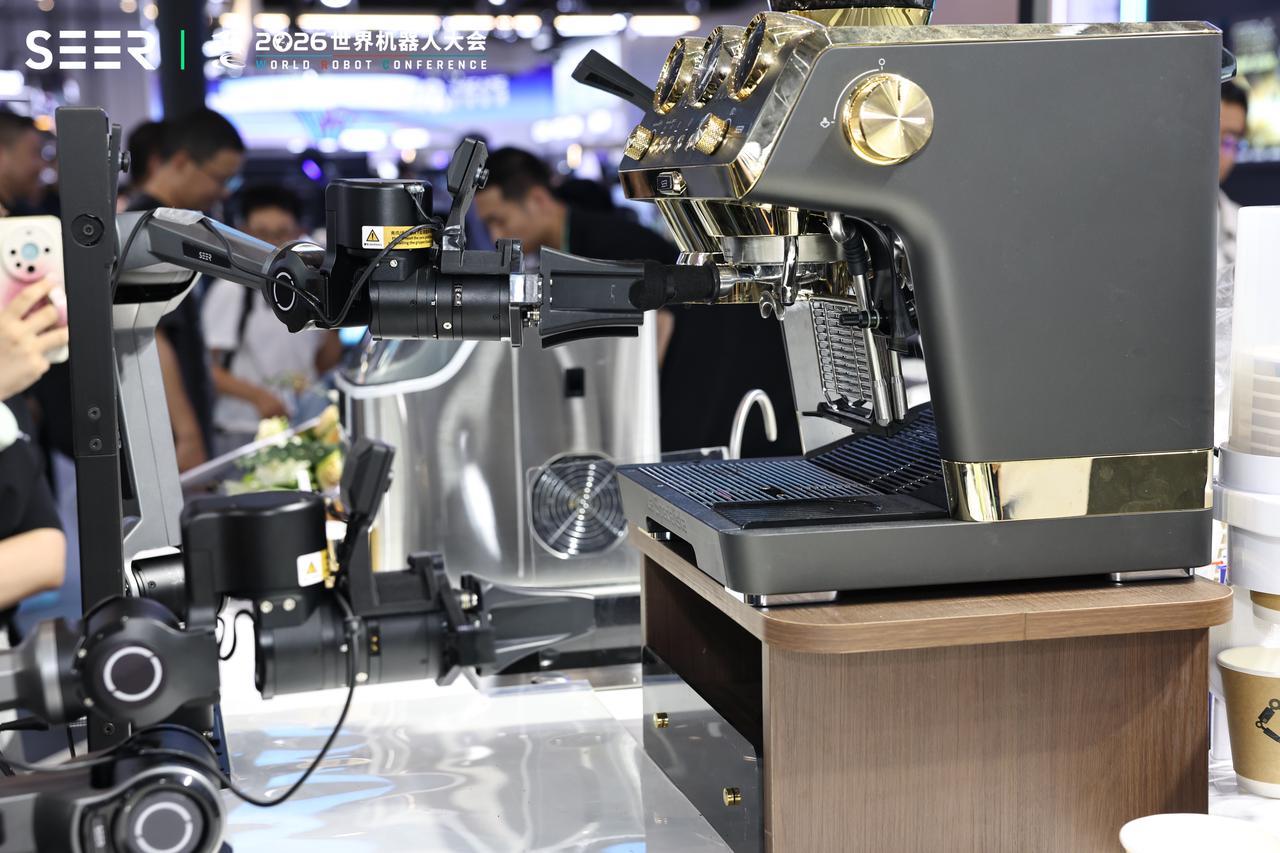
What is truly noteworthy about the live coffee-making demonstration is not that the robot can make coffee, but that it is executing a goal-directed, multi-step long-horizon task. This demonstration further advances long-horizon task-execution capabilities in terms of both step complexity and execution speed.
Nearby, a Tower of Hanoi demonstration further tests the robot's ability to understand and execute when conditions change.
The robot must understand the rules of the Tower of Hanoi, remember sequential steps, and perform multiple high-precision pick-and-place operations.
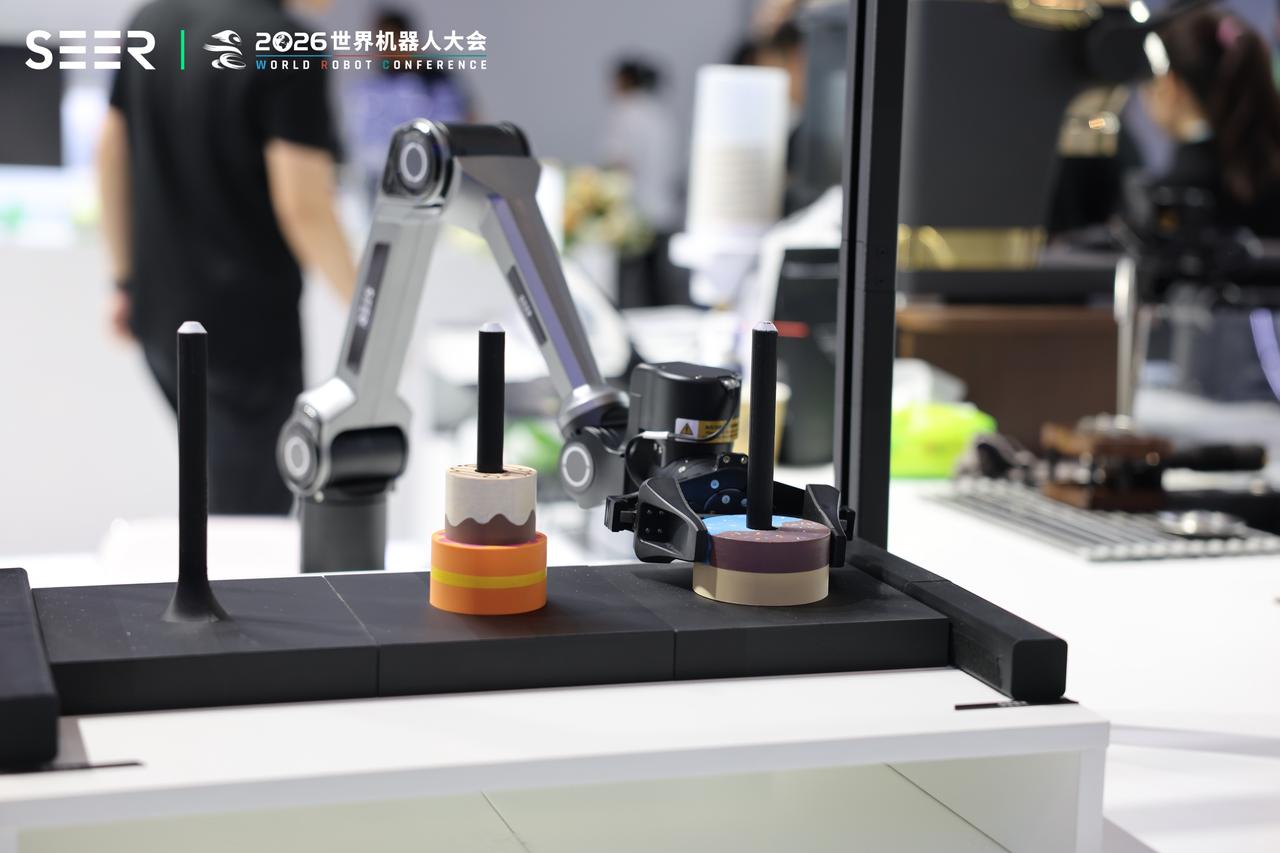
On site, not only can the ring colors be changed, but the positions, colors, and shapes of the disks and bases can also be altered. In every case, the robot can identify the target and continue stacking without any reprogramming.
Behind these seemingly simple variations lies a test of the robot's integrated understanding of rules, spatial relationships, and object properties, as well as its ability to move from understanding to continuous execution. This means the robot is no longer running a pre-scripted set of motions—it is understanding the task itself.
2. Helping Robots Enter the Real World More Naturally
In the interactive zone, SEER Robotics extended this capability into direct human-robot interaction.
When visitors extend a hand to shake the robot's hand, the robot responds in sync with the person's movements. At the moment of actual palm contact, there is no noticeable rigid impact; instead, the interaction exhibits a natural, compliant feel.
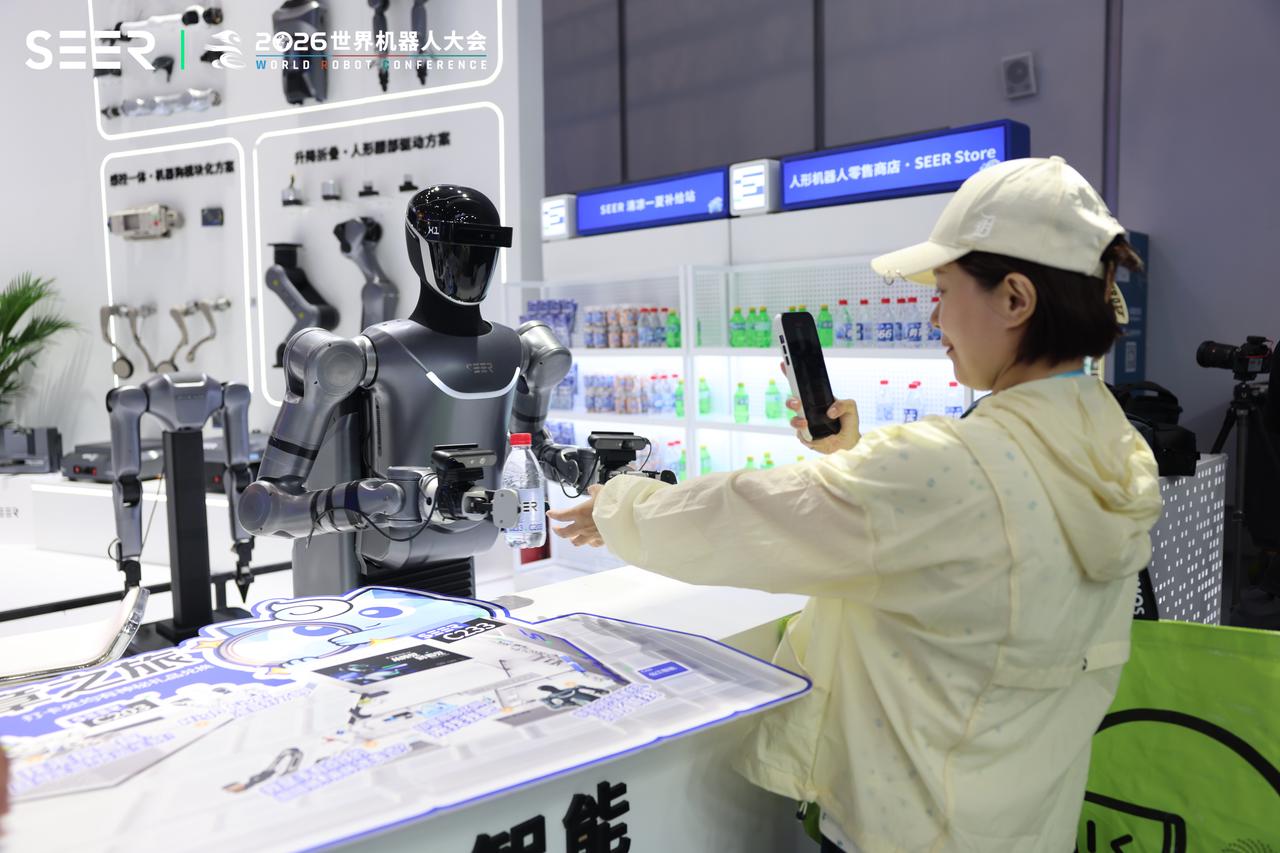
For humanoid robots, this seemingly subtle capability has a direct bearing on whether robots can truly enter environments where humans and machines work side by side. A robot must not only know what to do—it must also express that intent through its body in an appropriate way.
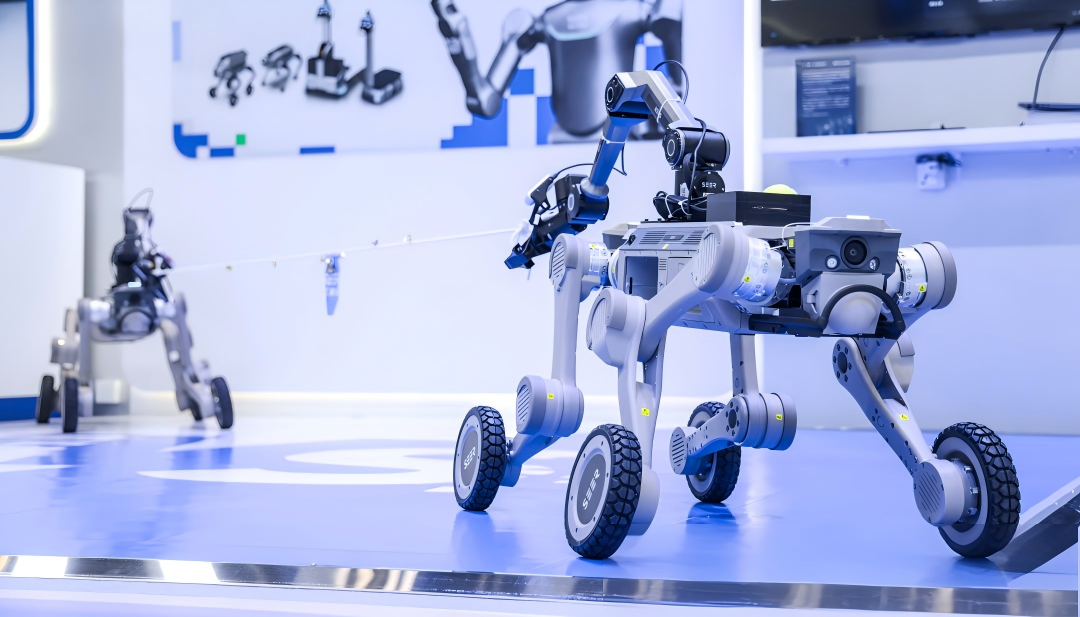
This capability extends to quadruped robots as well. The robot dog on site is equipped with a robotic arm, enabling leg locomotion and arm manipulation to work in coordination. Rather than two independent systems—"the legs handle walking, the arm handles work"—the entire body completes the task together.
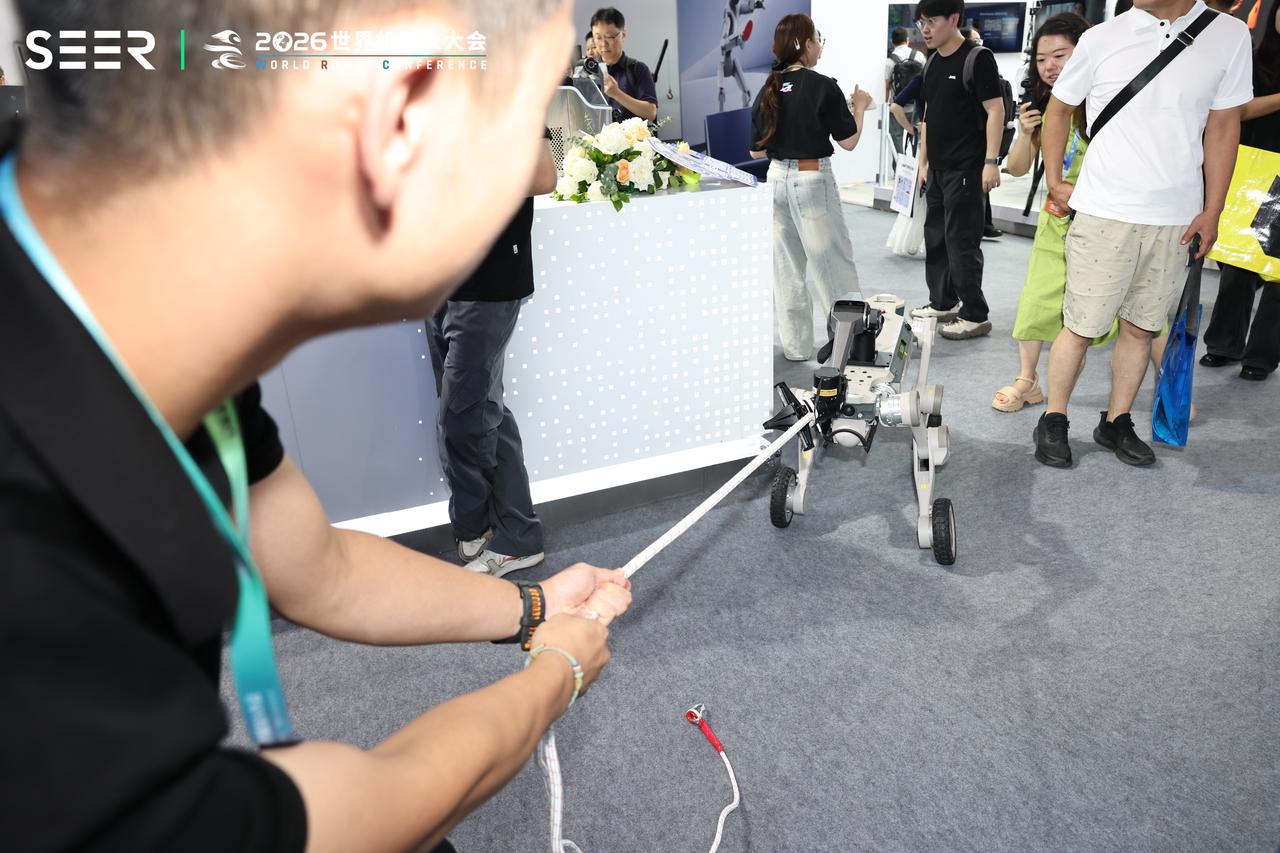
Different bodies present different control challenges—and the robot brain is precisely what solves the problem of bringing intelligence to these diverse robot embodiments.
3. VLA + High-Frequency Control for Delicate Manipulation
The embodied fortune-stick drawing demonstration is a showcase of SEER Robotics' integration of VLA (Vision-Language-Action) with high-frequency control for delicate manipulation—a textbook example of brain-body coordination.
The seemingly simple act of shaking a fortune stick is in fact a delicate operation that demands high control frequency and motion stability. VLA handles understanding and decision-making, while high-frequency control executes the precise, steady shaking motion—underpinned by the full coordination of perception, understanding, decision-making, control, and interaction capabilities.
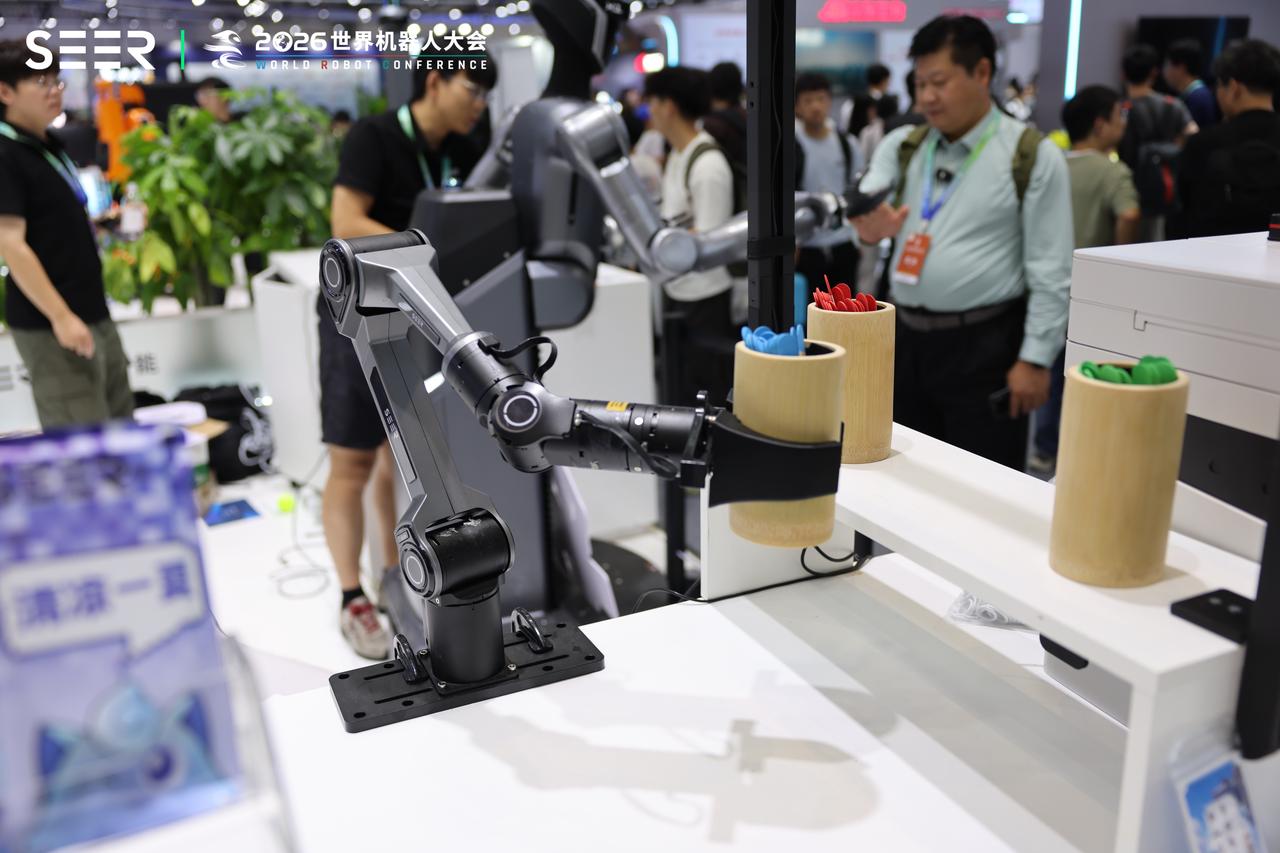
Even when the position of the fortune-stick tube changes or different types of tubes are presented, the robot's strong generalization enables it to identify, grasp, and shake the tube, demonstrating adaptability to real-world variations. After the stick is drawn, visual recognition and a large language model further interpret the fortune.
4. Bringing Embodied Intelligence into Real Industries
An AI delivery robot equipped with a robotic arm demonstrates how embodied capabilities can be brought into traditional commercial delivery scenarios. The robot can perform grasping, navigation, obstacle circumvention, 3D obstacle avoidance, and elevator interaction—connecting steps that previously required multiple devices or even human involvement into one complete delivery task.
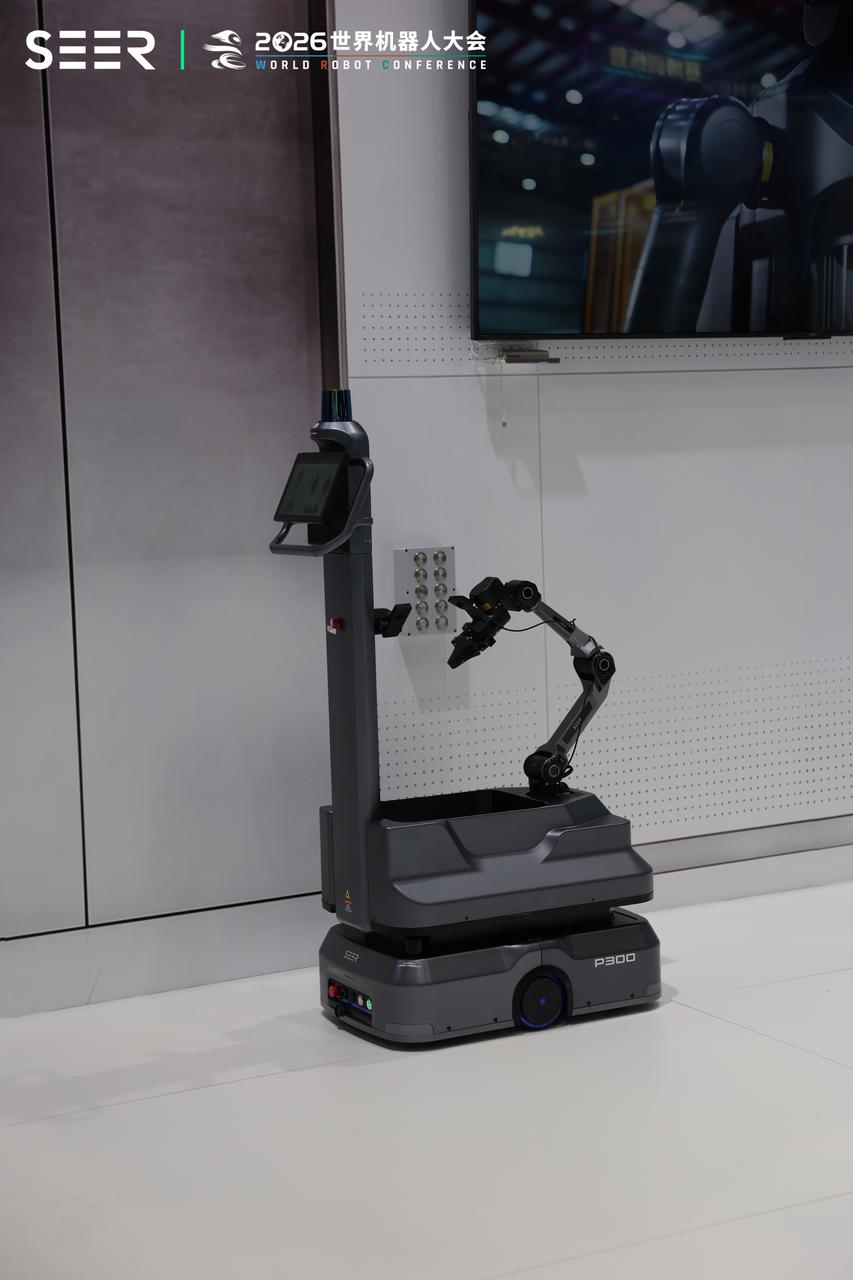
The on-site demonstration uses a dock-and-grasp approach. Compared with traditional delivery robots that simply transport items from one point to another, the more significant advance here is that the robot has gained the ability to pick up objects, handle them, and then deliver them to their destination.
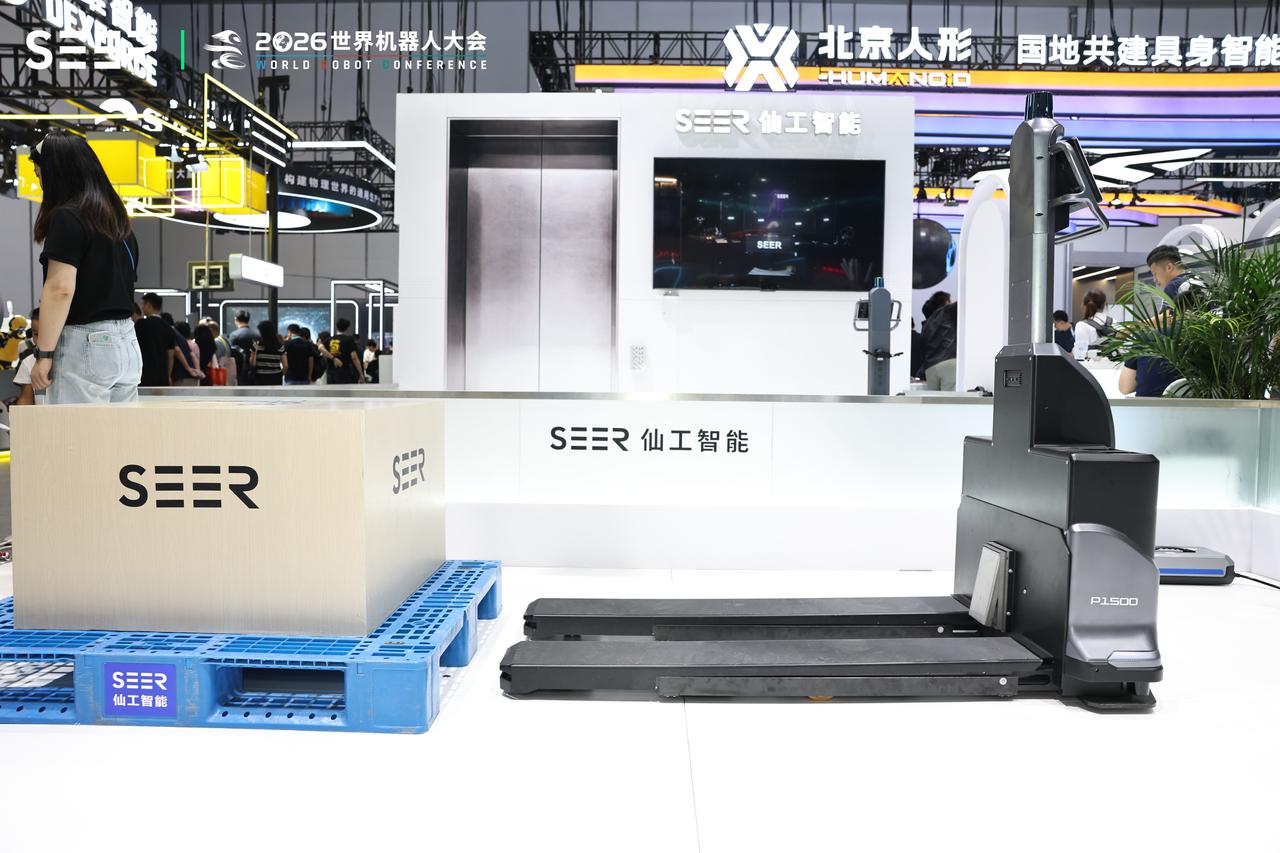
On the other side of the booth, an embodied forklift demonstrates an application in a more quintessentially industrial setting.
Faced with pallets in two different colors—black and blue—the embodied forklift can continuously identify and fork them. The live BEV (Bird's-Eye-View) perception display also updates in real time as visitors and the environment change: where people are, where equipment is located, and what spatial changes are occurring are all continuously perceived and recorded.
Robots are not only working—they are continuously generating data as they work. This forms the most vital loop in embodied intelligence: the real world produces data, data drives model evolution, and model capabilities return to the robot.
V. From One Million Robots to a Universal Brain for Embodied Intelligence
From the robot brain, to real data, to one million robots entering the real world—SEER Robotics is progressively building an evolutionary path that runs from intelligence capabilities and data accumulation to large-scale deployment.
Every capability visible at WRC today is a cross-section of this path; and as more robots enter real scenarios, they will bring more tasks, more data, and more experience.
From seeing capabilities demonstrated, to enabling robots to truly enter and understand the world—and to continuously evolve within it. This is not the finish line; it is the beginning of a universal brain for embodied intelligence.
From Mobile Manipulation to AI Delivery: SEER Robotics Showcases Broader Possibilities for Robotics at Two Hangzhou Events
LTT 2026 Recap | Recreating a Japanese Factory on the Show Floor: How SEER Robotics Adapts to Real-World Operations
From Tug-of-War to Ball Retrieval: Inside the Foundational Capabilities of the SEER Robotics Robot Brain
Register below to request tickets
 Contact Us